
'What I walked into, I wasn’t prepared for': Greensboro man led cleanup of Ground Zero
The smoke was visible even before they hit New Jersey, driving up Interstate 95 North in their black Suburban.
The hairs stood on the back of David Griffin Jr.'s neck as he stole a glance at wife Donna.
Two days after the worst terrorist attack on American soil, and Griffin and his wife, who packed up the kids and said they were going with him, were headed to literal Ground Zero, even as more attacks were expected.
They had prayed and Griffin, a Greensboro, North Carolina, native and the son of one of the most known names in demolition, wanted to do something, even if it meant passing out cold bottles of water.
"What he really wanted to do," said Donna, who had made hotel reservations before they left, "was help them find people alive."
Terrorists hijacked four planes and flew the commercial airliners into the twin towers of the World Trade Center, the Pentagon and a field in rural Pennsylvania on Sept. 11, 2001.
All had seemed normal that September morning, when at 8:46 a.m., the first airplane hit the North Tower of the World Trade Center.
By the time the second tower was hit at 9:03 a.m., millions of people had tuned their televisions to the morning news programs and were watching it live. About a half hour later, at 9:37 a.m., a third airplane in the coordinated attacks crashed through a wall of the Pentagon. A fourth plane, nearing Washington, never reached its target, and crashed in an open field in Pennsylvania at 10:03 a.m. with Greensboro flight attendant Sandy Bradshaw, who with the others on board helped thwart the hijackers’ plans to hit another target.
Airplane travel halted across the country.

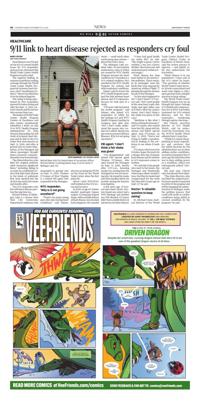
Griffin (left in the blue) at Ground Zero after the terrorist attacks. D.H. Griffin, the company founded by his parents, was responsible for much of the cleanup there. Nearly 4,000 people were working on the site at any given time.
The American Red Cross put out an emergency plea for blood donations and financial help for those in the immediate area affected by the devastation.
Twenty-five years later, Griffin, a Western Guilford graduate, still sees himself as one of the ordinary Americans who took action.
New York City was more pragmatic about his eventual work overseeing cleanup at Ground Zero. Sacred ground. Even as his strong Southern drawl and boyish looks in the heart of New York City drew attention.
"Your knowledge of construction demolition, environmental hazards, metals recycling and your ability to work with and coordinate so many different personalities/agencies added immeasurable value to the effort at hand," wrote Michael Burton, executive deputy commissioner of the city’s Department of Design and Construction, to Griffin when his work was complete.
The project, which involved 1.7 million tons of debris — including the world’s heaviest steel — was nine months ahead of schedule and $400 million under budget, according to Burton’s letter.
At just 33, even Griffin didn't realize the journey he was on that day, as they crossed into New York City.
"I admit there were nights when I cried on-site," Griffin said.
Soldiers toting machine guns
What David and Donna saw as they made their way to where one of New York's most iconic skyscrapers and a global marketplace had been was a giant hole with indiscriminately scattered steel and cement. The attacks had left thousands dead and reduced 16 acres of Lower Manhattan to rubble.
It smelled of death and jet fuel.
Burning piles of debris and partially collapsed buildings posed danger to anyone who ventured onto the site. Thick dust had settled on every imaginable surface.

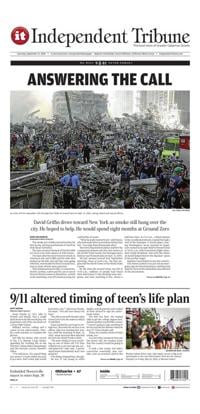
An army of first responders sifts through the rubble at Ground Zero on Sept. 12, 2001, during search and rescue efforts.
What had been the World Trade Center was fenced for blocks, in all directions, the perimeter patrolled by soldiers toting machine guns.
Hundreds of flowers and memorials were stacked up for the dead, in contrast to the dark and somber surrounding.
With Donna and the kids — the youngest just 8 months old — back at the hotel room the next morning, Griffin, who had learned the demolition business on his daddy’s knee back in Greensboro, ventured out to one of the checkpoints with his safety goggles and hard hat.
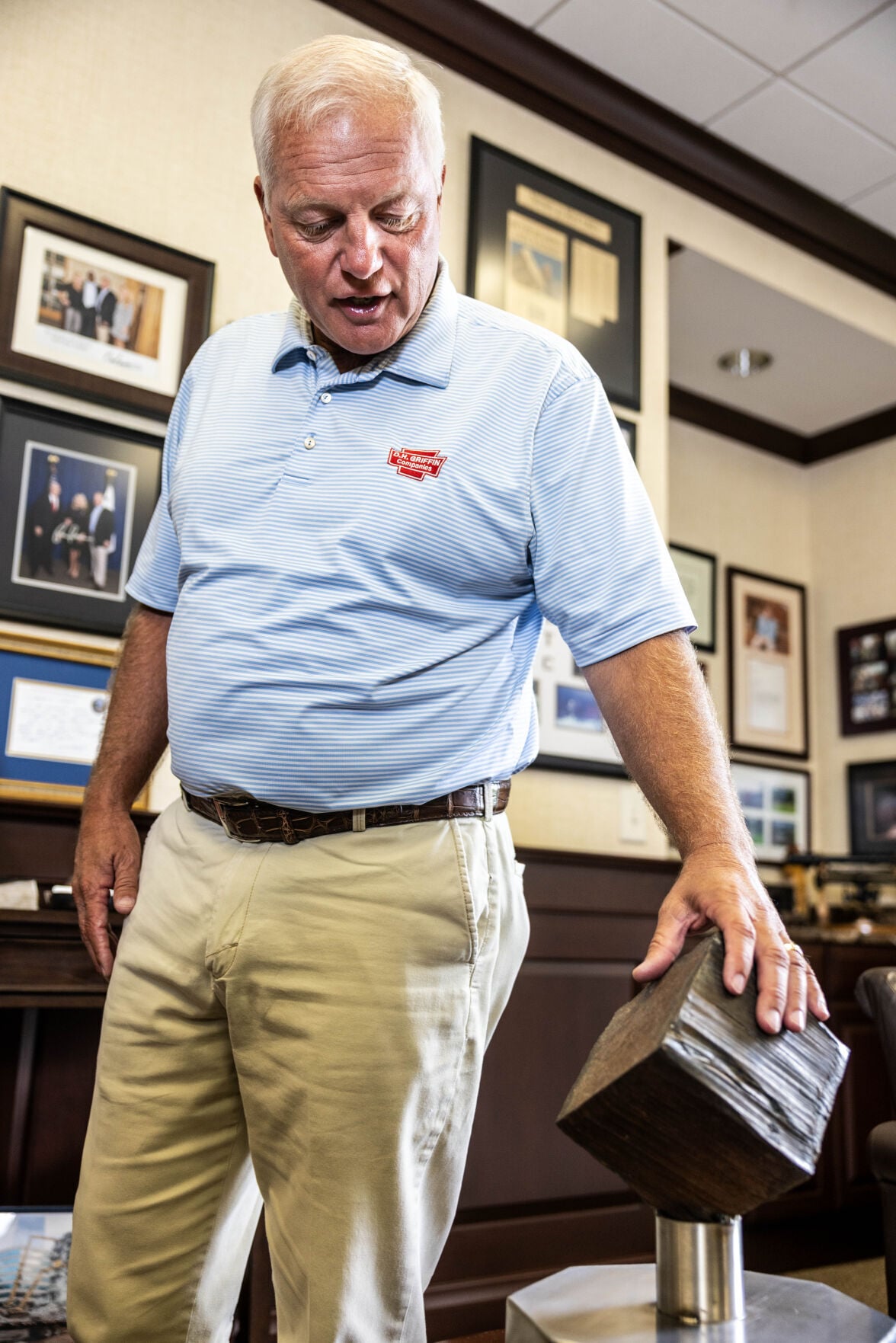
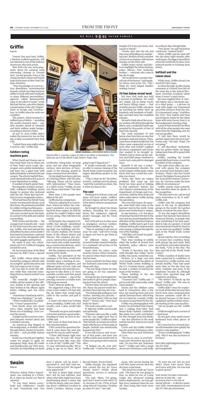
David Griffin Jr. touches a piece of steel in his office in Greensboro. The steel was part of the World Trade Center’s Tower Two.
He made it past two checkpoints, his D.H. Griffin ID hanging around his neck.
He was turned away at the third because he didn't have a special pass.
But Griffin, whose father had started the company with his wife on an eighth-grade education and $50, had come too far to stop.
He was able to evade the officers while they removed something from an American Red Cross vehicle.
The normally straight-laced Griffin said he looked at the officers, looked at the opening and then looked at the officers again before walking past the entry point.
"Sometimes I look back and it's, ‘What was I thinking?’” he said.
"What I walked into," he admitted, "I wasn’t prepared for."
Even blocks away, just about every other window had been blown out of buildings. Dust covered the streets.
A bright red fire truck lay crumpled beneath twisted metal and crumbled concrete.
An American flag flapped in the background, as workers sifted through debris, bucket by bucket, for clues — and, possibly, human remains.
Inside was a hastily put together center for people to apply for emergency help, drop off combs and toothbrushes for DNA tests, and later, for help filling out death certificates. Along halls, on lamp posts and any other imaginable surfaces were pictures of thousands of the missing, posted in hopes someone had seen them.
Up top might have been a picture of a missing father, with the plea, "Missing. Please call for anyone with information." Then lower, at a child’s reach, "Daddy, we love you. Please come home." One after another.
More than 2,700 people were killed at the site.
Griffin had no comparison.
When he called back to Greensboro, where his father, the company's president, was recuperating from knee surgery, he told his mother he couldn't believe what he was seeing. They told him to be careful.
At that point, the company D.H. Griffin had already demolished about 12,000 buildings, including high-rise buildings and Fulton County stadium, the former home of the Atlanta Braves and Falcons. The company also processes construction and demolition waste into usable materials, has a construction division, and is a full-service metal recycler.
But the company was more well known in the South.
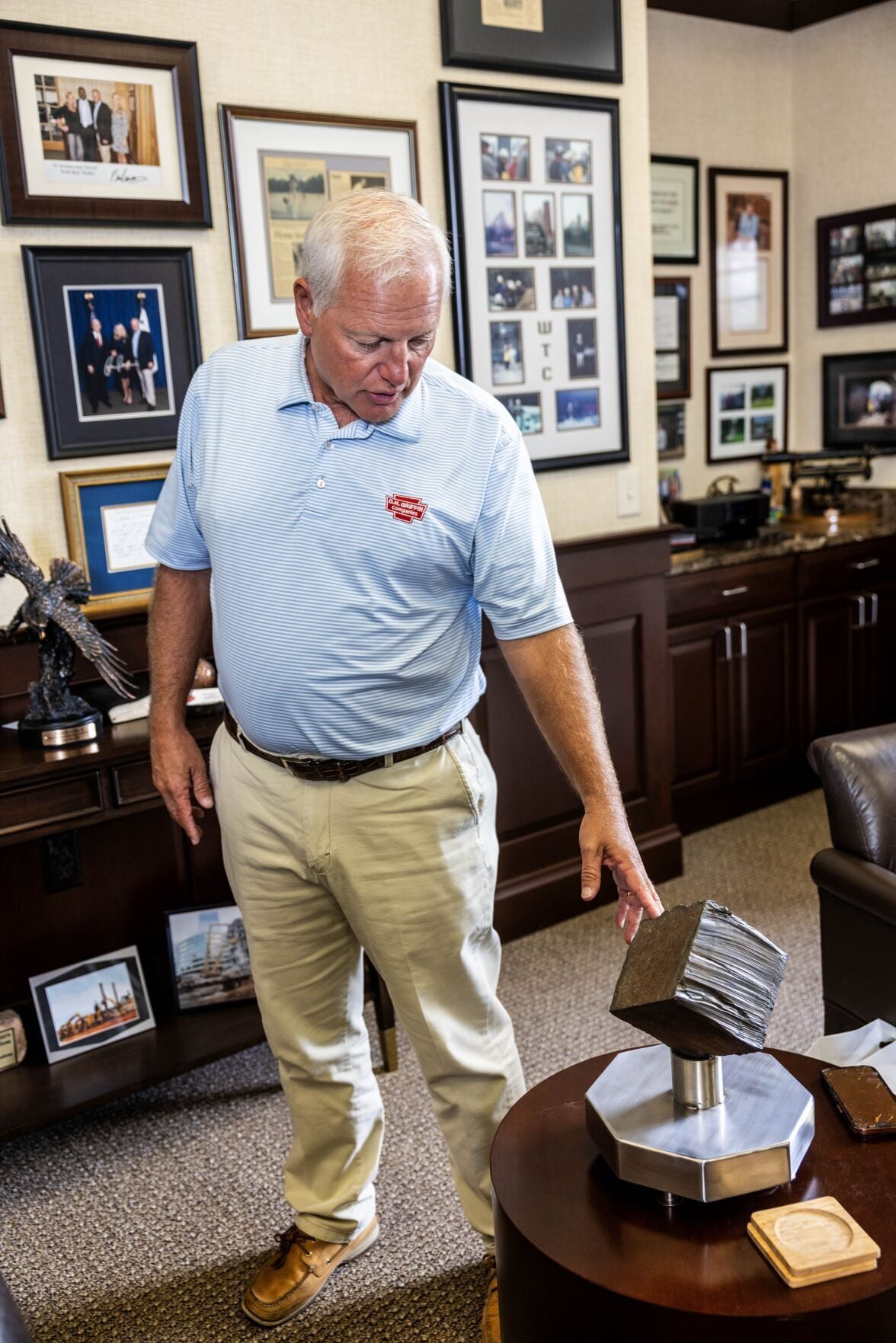
David Griffin Jr. reverently touches a piece of steel in his office in Greensboro on Aug. 27. The steel was part of the World Trade Center’s Tower Two.
Griffin, vice president of the company at the time, would later stumble upon a meeting of construction workers, engineers, and different layers of local, state and federal officials who were discussing how to take down a 27-story unstable curtain wall that posed a danger to workers — one of the pressing concerns as bodies were still being recovered.
That's when he spoke up.
He suggested using a 500-ton crane to put workers 250 feet into the air, where they would hook cable to the section and pull it down.
It wasn't the ideal way to bring down a building, Griffin said. And usually, such a plan would take weeks.
"Normally we go in and weaken a structure and have a good understanding of what we have to do," Griffin said.
But none of them had been in that situation before.
CNN carried the operation live. And it came down the next day exactly the way he said it would.
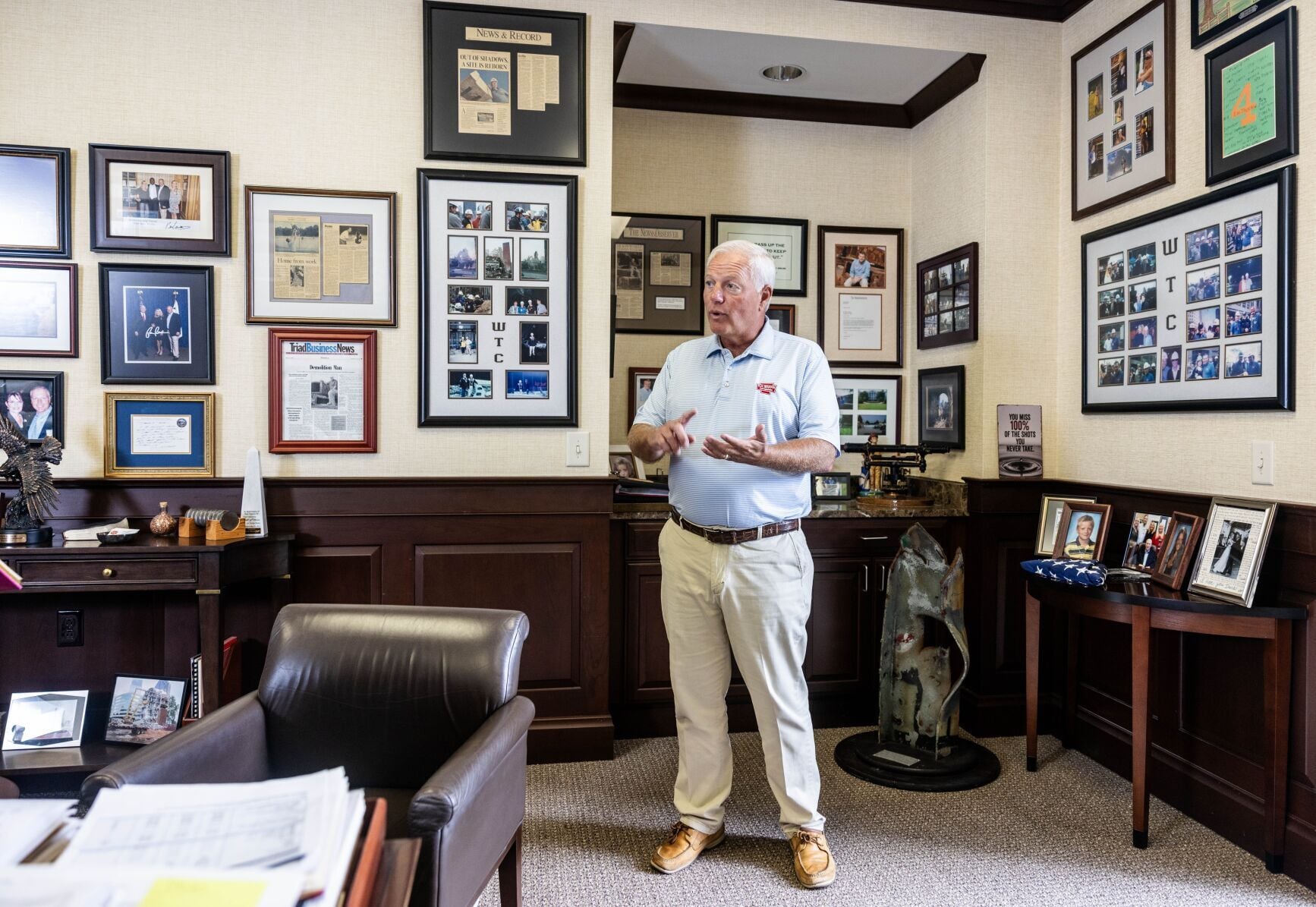
David Griffin Jr. has a large collection of memorabilia from the cleanup of Ground Zero on the wall of his office.
"I have chill bumps right now because the 58-year-old David would have been like, man, this is a lot of risk," Griffin said. "The 33-year-old David was like, 'We're going to get on in there. We're going to get it figured out.’”
It would eventually earn him an offer to oversee cleanup of the World Trade Center footprint, the largest demolition project in the world.
"This is what we do," his father, David Sr., told him over the phone, "and if the Lord led you there, this is what you have to do."
The cost
Working 16 to 18 hours a day and many 100-hour weeks, Griffin’s job was to figure out how to get rid of the debris without causing more damage.
He brought in about two dozen workers, including his cousin, Rusty, the company's regional project manager, and his Uncle Jimmy.
Part of the job was to clear areas so emergency services workers, and later families, could get in.
"They’re wanting to get into an area," he said, "and we’re trying to figure out how to get them in there."
At different times, police escorted broken-hearted families to a cordoned-off section of the devastated area.
Some went for solace, some went for closure. Others wanted to be close to where their loved ones had last been.
Donna wanted to be there when her husband came home at night those early days.
"The one thing I knew we were not going to do was separate," Donna said.
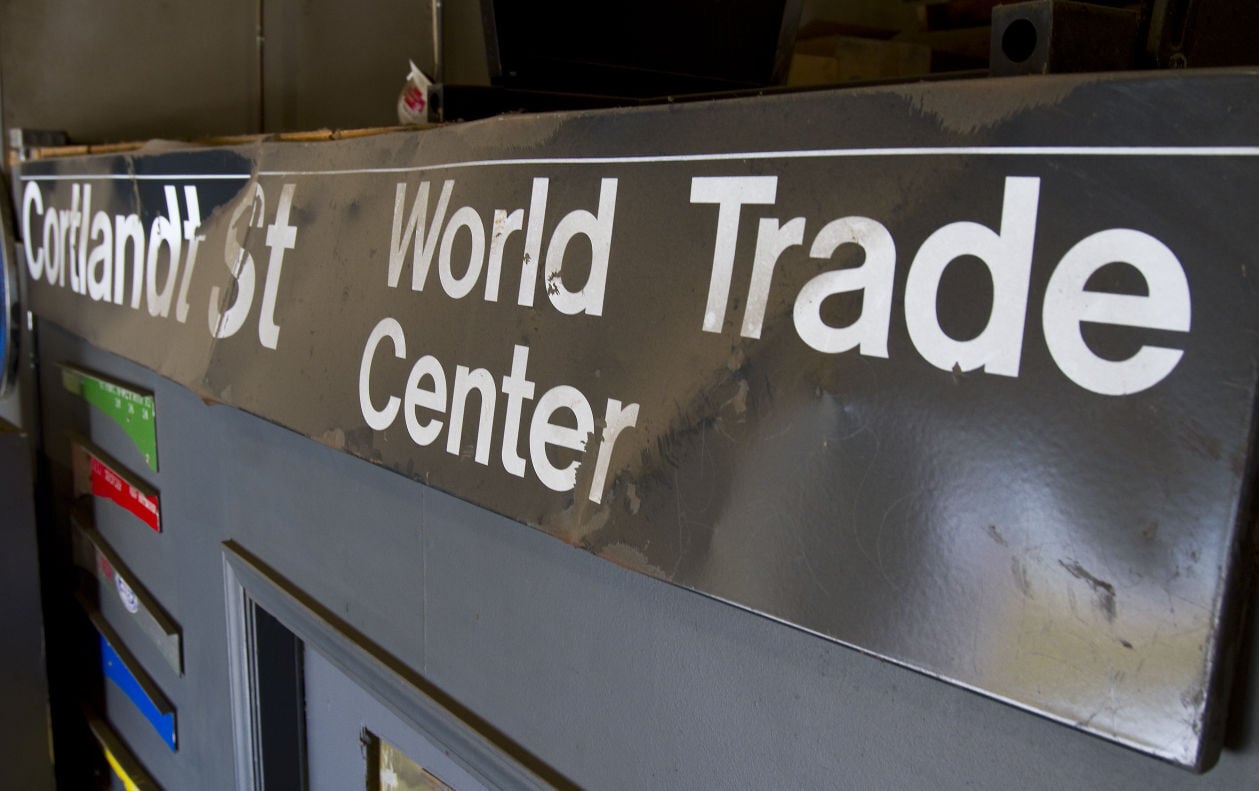
Among the items Griffin salvaged from the World Trade Center was this sign.
During the day, she bought bottled water to give to people cleaning dust from the streets.
The few times she went onto the site, those she passed would desperately thrust pictures her way.
"You had people pulling on your clothes, showing you pictures — ‘Did you find them? Did you find them?’” Donna said. "Your heart broke for them."
The work came with a cost.
It affected Griffin emotionally and spiritually.
"Firemen said even like a really bad fire, you might have five or seven people die," Griffin recalled. "But nobody on American soil has dealt with the loss of thousands of people. Nobody was emotionally prepared for that."
It was still a rescue-and-recovery at that point, and every day Griffin and his men would work as if they were going to find someone alive.
"It helped you do your job," Griffin said. "I said to the workers, imagine if it were your mom, dad, cousin or friend."
Twenty days into the job and they were still pulling out smoldering steel. Workers found a window section of an airplane with human remains on the other side.
Griffin shares stories and photos to highlight the toll on firemen, police officers, Port Authority workers — everyone who came to the site to help.
"He would never consider himself one of the heroes," said daughter Deven, now in her 30s, "but I think his work helped families seeking closure."
70 feet below street level
His New York work area held a myriad of problems. He could not simply roll in dump trucks and heavy-lifting cranes — that would be easy for Griffin, who grew up watching his father blow up hundreds and hundreds of buildings and haul away the crumbled remains.
He had to think about the recovery workers still sifting through the debris and a weakened landscape pounded by thousands of tons of steel and concrete.
The work extended 70 feet below street level into an area that included a mall and subway. There, some floors looked unaffected, but others were compacted on top of each other and couldn't support the heavy equipment and trucks that needed to be brought in. Workers had to shore up the subway and build ramps overhead so trucks had a safe path to damaged areas.
Beneath it all was a potential environmental disaster: the world's largest chiller plant, where Freon that once cooled the complex was stored.
"Every day there are unique problems that come up, and David has been good at helping us find solutions," Burton, the city's deputy commissioner of the Department of Design and Construction, told the News & Record when asked about Griffin during the operations.
The core of the towers, for example, were built with some of the heaviest steel in the world. Some pieces were twisted into S-shapes.
In one instance, a 23-ton piece of steel had traveled 300 feet to the west and was found impaled in the 18th floor of the American Express Building. Griffin had to get it out without setting off a chain reaction and causing a collapse through the rest of the building
"I felt like God’s hand was guiding us," Griffin said.
They were working in rubble when the bodies of several Port Authority police officers were discovered.
"Psalm 23 becomes real. You walk through that valley," Rusty Griffin, the cousin, would later say.
Pictures of a huge cast-iron cross found beneath the debris of World Trade Center Building 6, the U.S. Customs House, quickly became a symbol of renewal for many of the workers.
Those working at the site became like family.
"I learned a lot," Griffin said. "I got to work with some really, really smart people."
Donna and the children came back to Greensboro after a few days, but would go back and even spend Christmas there. After living out of a hotel for a month, Griffin was given an apartment by the city.
Griffin was photographed with former Vice President Dick Cheney and a smiling then-New York Mayor Rudy Giuliani. Celebrities like Jamie Lee Curtis and Robert De Niro brought food and drinks — but also attention to the work and the need for Americans to pull together.
Curtis sent the Griffin children toys for several Christmases after.
Then there was Jack Nicholson at 2 a.m.
"He was as crazy as you'd pictured Jack Nicholson because he said, ‘Do you have any Teamsters here?’” Griffin said with a laugh about how Nicholson could make an ordinary line unforgettable.
"You know," he said Nicholson continued, "I played Hoffa."
When Griffin and his team left the site about eight months after work began, the biggest demolition job in the world had, by then, been reduced mostly to trucking away debris.
Softball and the talent show
While away, Griffin missed son David III’s first steps.
So when the high-profile closing ceremony at Ground Zero fell on the same day as the annual Wesleyan Christian Academy talent show, it wasn’t a hard choice.
He even supplied then-8-year-old Dakota and a classmate one-of-a-kind props — a picture he took with singer Lee Greenwood and other pictures from the site. It’s Greenwood’s song, "God Bless the USA," that Dakota had been practicing for weeks for the talent show with sister Deven, then 11, in the background, hoisting a flag.
A part of him wanted to be there with all the other people who were there from the beginning, just for one last goodbye.
"I told him there would be another talent show the next year," Donna said. "He said, ‘Nope, I’m not going.’”
A self-described workaholic who has gotten better, he began taking more time off to spend with his family.
Griffin, awaiting his fourth grandchild from Deven, is now the president of the company.
The walls of his office are covered with praise the company has received from industry publications. There’s also the Crystal Award, the highest honor given by the Associated General Contractors, for "services under the most difficult circumstances.”
Griffin sounds more patriotic than boastful when he speaks of the recognition.
"We had a job to do, and we had extra motivation to do it well,’’ Griffin said.
Griffin said the company had been in the top 30 demolition groups in the world. He's gotten plenty of work in the years since.
"It was the largest demolition project that had ever been done in American history, so people who were wondering if we were qualified to take on a project, it would have been kind of hard for them to say we were not qualified," Griffin said of the World Trade Center project.
He has told the story of working at Ground Zero countless times with groups big and small. Both he and Rusty were interviewed for the book, "City in the Sky: The Rise and Fall of the World Trade Center."
While a number of deaths have been connected to conditions at Ground Zero, Griffin and his crew remain healthy. They had spent more time on the site than any other company and none of his employees became ill, although others have reported lung and respiratory problems.
"We weren’t 10 blocks up the street," Griffin said. "We were in the pit every day."
Griffin didn’t wear his respirator mask all the time because they had to have clear communication because someone could die or be injured because of the heavy equipment and the number of people working in the same location.
"All our people are OK," Griffin said.
Griffin brought back a section of a steel beam.
He also gave away small crosses fashioned from other pieces of steel.
He’s been back to Ground Zero. He still remembers how quickly the country came together.
"It was a challenging job," Griffin said. "But it was also an honor to be there."