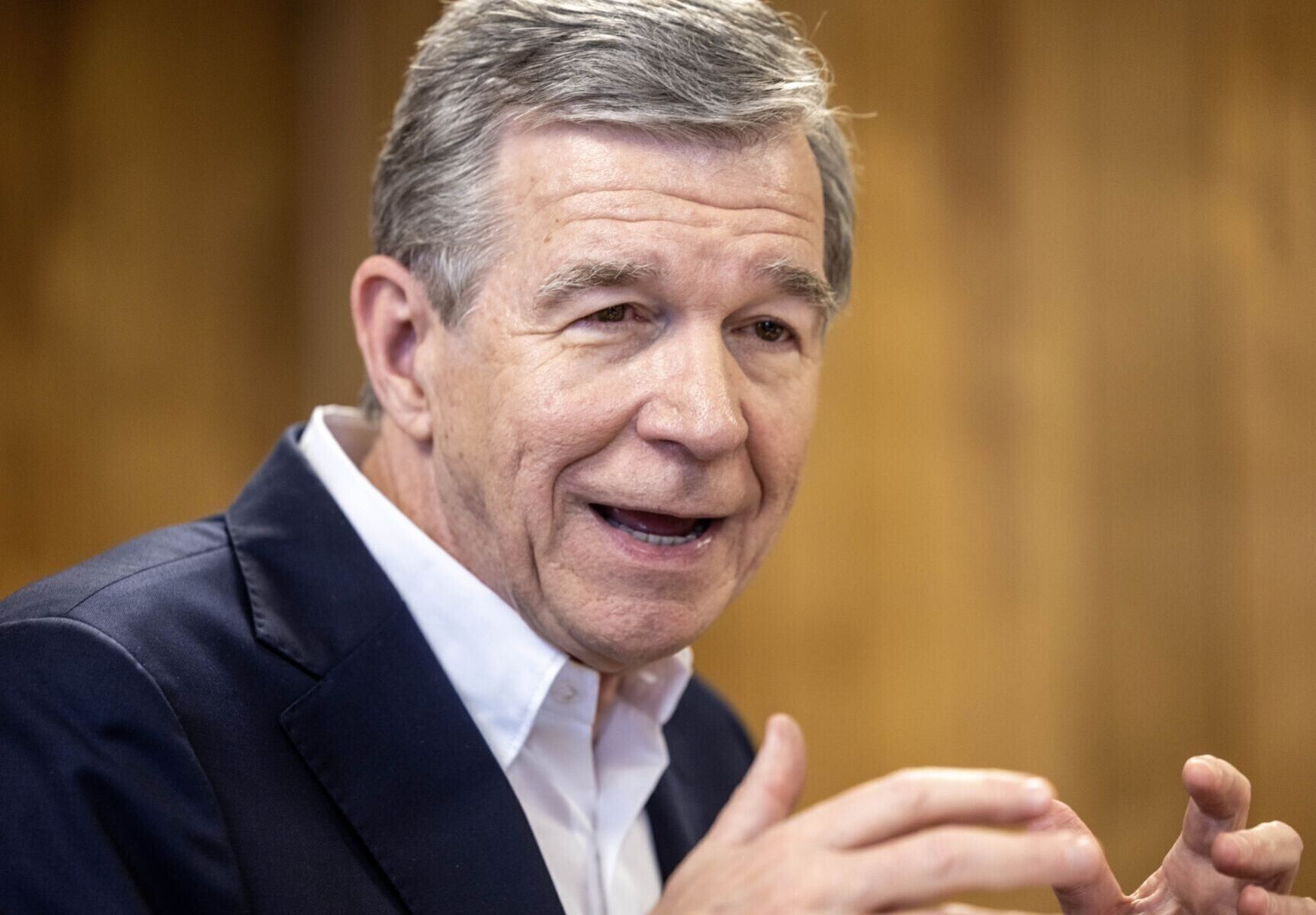
The polling gap continues to widen in favor of former two-term Gov. Roy Cooper in his high-profile U.S. Senate race against Republican nominee Michael Whatley.
The latest Catawba College/YouGov poll, released Tuesday, shows Cooper with a 48% to 34% advantage over Whatley among 905 likely voters. Cooper was up by 15 percentage points in the March poll.
Whatley is the former Republican National and North Carolina convention chairman.
"Cooper's advantage is not simply a function of Democratic support," said Michael Bitzer, director of Catawba College's Center for North Carolina Politics & Public Service.
"His lead is being driven by independents, who currently support him by more than two-to-one over Whatley."
Cooper and Whatley are vying to succeed retiring Republican U.S. Sen. Thom Tillis. Political analysts predict the campaign will be the most expensive U.S. Senate race ever with overall spending — likely primarily from out-of-state contributions — exceeding $1 billion.
Cooper has not lost an election in his political career: seven terms in the state legislature, four terms as attorney general and two terms as governor.
The latest Catawba poll was conducted June 1-10 and has a margin of error of 3.8%.
Bitzer cautioned that nearly a quarter of independents are undecided about the contest at this point. That independent vote can often be a decisive factor in statewide North Carolina elections.
Bitzer said Cooper also appears to be benefiting from "what is setting up as a classic mid-term environment: a referendum on the president and his party."
"Cooper has a commanding portion of those North Carolinians who disapprove of the president, which is a majority of likely voters so far.”
The Catawba poll found Trump with a 54% disapproval rating and a 43% approval rating.
Of the six Cooper-Whatley polls listed on the Real Clear Polling clearinghouse website since early March, not only is Cooper ahead in all of them, but the margin ranges from 3% to 14%.
On June 11, the Sabato Crystal Ball from the Center for Politics shifted the campaign between Cooper and Whatley to lean Democratic. That poll did not provide a percentage lead for Cooper.
Recent general election results of statewide races typically hold a 40% floor for Republican candidates.
"The amazing thing about these polling results is the consistency," said Christopher Cooper, political science professor at Western Carolina University.
"The sponsor and the mode doesn’t seem to matter much. In every one I’ve seen, Cooper is up, Whatley has low name recognition, and independents are swinging heavily towards Cooper."
Bitzer said the poll shows Democrats remain challenged in trying to pick up voters among suburban voters outside the Triad, Charlotte and the Triangle.
Regionally, Cooper leads among city voters by 37 points and among rural voters by 11 points. He leads by 5 within the highly competitive urban suburbs, while Whatley leads by 5 in the surrounding suburban/exurban counties.
"Trump performs best in the state's exurban counties that surround the urban counties, where 54% approve and 44% disapprove,” Bitzer said.
In contrast, Democratic Gov. Josh Stein has a 53% approval and 27% disapproval rate, according to the poll.
The poll found a noteworthy distinction increasing among N.C. Republican voters in that they view themselves more as "Party Republicans than Trump Republicans."
“This is a significant shift among Republicans in North Carolina,” Bitzer said. “This shift seems to signal a noticeable ‘cooling’ to Trump-centered Republican identity, driven by suburban and female respondents."
![]()
Roy Cooper
WOODY MARSHALL
In the state Supreme Court race — the other prominent statewide race on the November general election ballot — Democrat incumbent Anita Earls holds a 40% to 35% lead over former state Rep. Sarah Stevens of Surry County.