
Tools for the trek
Despite strides in digital navigation, experts say hikers and hunters still need to carry a map and compass

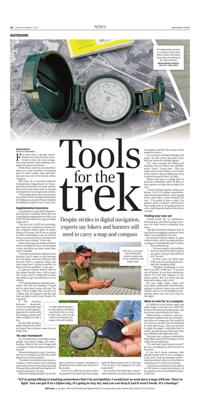
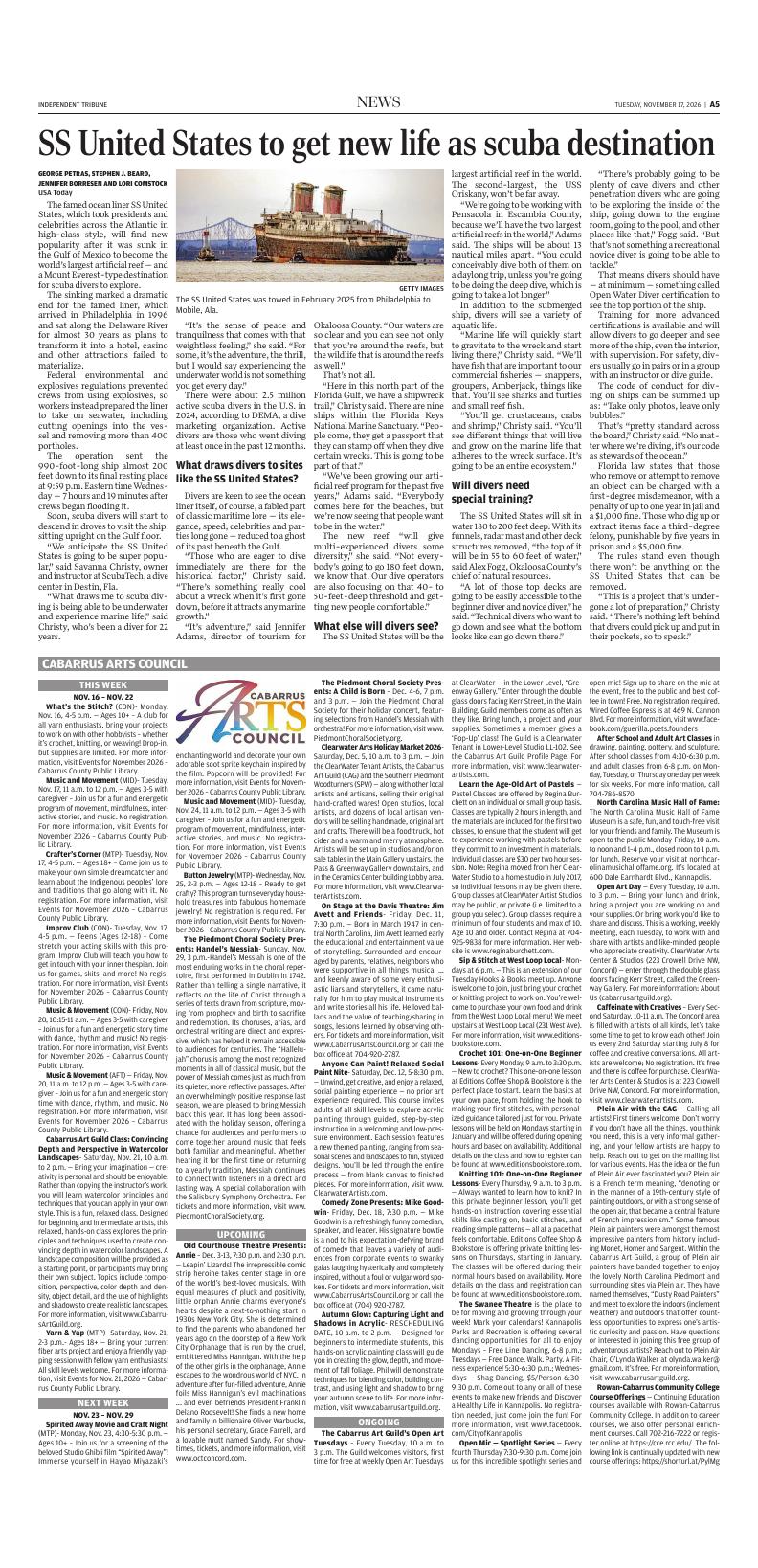
An engineering compass is a compact device that helps hunters and hikers know they are walking in the right direction.
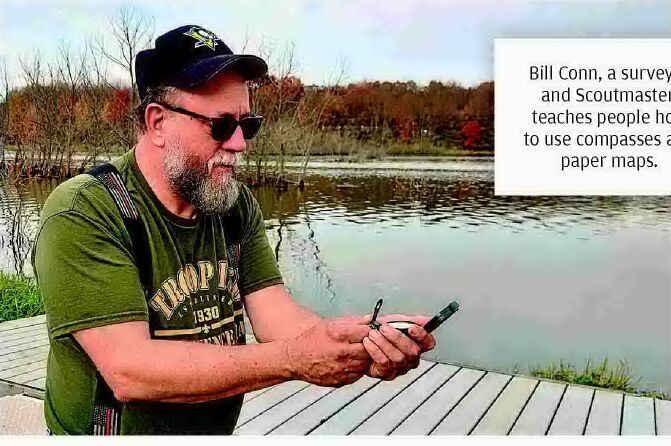
Bill Conn, a surveyor and Scoutmaster, teaches people how to use compasses and paper maps.
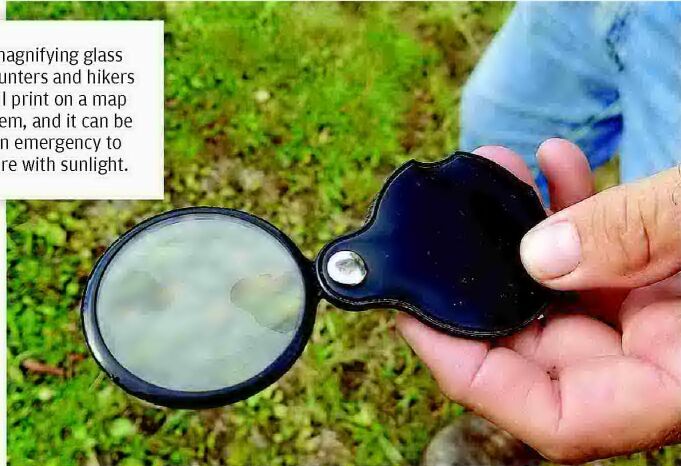
A small magnifying glass can help hunters and hikers read small print on a map or other item, and it can be used in an emergency to create a fire with sunlight.
OUTDOORS
For more than a decade, smart-phone users have become accustomed to turn-by-turn navigation map features and marking waypoints for places of interest.
While those services are excellent, there are some benefits of knowing how to read a paper map and finding your way out of the woods with a compass.
Bill Conn, 56, is a surveyor with the Pennsylvania Department of Transportation and in his free time teaches Boy Scouts and others how to depend on themselves to navigate new terrain.
"Technology gives you an answer, but if you don't have a background of what it's telling you, you don't know whether it's telling you right or not," Conn says.
Supplemental insurance
Learning basic map skills helps people feel more confident when they are using digital mapping because they can tell if the directions the app provides make sense.
"We use a lot of GPS for surveying, and what I try to tell (new workers) is, the computer stuff is great. It makes things a lot easier. But if you are going to enter something to get an answer from it, you need to have a background on what you're doing," Conn says.
Many of the apps are foolproof when they're working and you can download a map, but there are times when they aren't available.
"If you get somewhere and don't have internet, and it relies on the internet for your maps, you may still have GPS because that's a separate thing, but your maps aren't going to update. So that could be a problem," Conn says.
If a person's phone battery dies or the phone breaks from a fall or gets wet, Conn says it's important to have the ability to get yourself back to your vehicle.
"If I'm going hiking or hunting somewhere that I'm not familiar, I would just as soon have a map with me," he says. "They're light. You can put it in a Ziploc bag, it's going to stay dry and you can drop it and it won't break. It's a backup."
If the situation becomes desperate, Conn says the paper map and the small magnifying glass he carries with his compass can be used with sunlight to start a fire.
He also likes having a paper map because they are larger than a phone screen to see a larger area.
'Do your homework'
As a Scoutmaster, Conn helps young people earn merit badges for orienteering, which is the use of maps and a compass to find locations and plan a journey.
When printing out a map, Conn says the key is making sure that the north direction is clearly marked.
"You learn to orientate your map to a compass, which means you're turning your north arrow of your map, directing it toward the north and learning how to scale the distance," he says.
With the training, people can use the apps and have a compass and paper as an optional way to find your way out of the woods.
"A lot of it is like the Scout's motto, 'be prepared.' You don't just buy an app, put it on there and go use it," Conn says. "You've got to be prepared, do your homework."
He uses the OnX Hunt app, as it provides relatively accurate property line boundaries and lists the names of the property owners.
As a surveyor working with apps and maps, he fine-tunes boundary lines that are shown by satellite signals.
"It's close enough for hiking and hunting, but you know the satellites aren't exact," Conn says. "The tax maps aren't exact either, so you have to be careful" about walking too close to private property lines, he adds.
When Conn goes to a large tract of land he's unfamiliar with, he likes to have options to help him navigate the area.
"I have nothing against using your phone, but if I'm going somewhere, and I've never been there, and it's going to be a day's hike, I want a backup," he says. "I'm going to have a map, I'm going to have a compass. All the more they weigh, they're not going to hurt to carry. Anything mechanical, electronic can fail."
Finding your way out
Charlie Groff, 46, of Confluence, Pennsylvania, also likes having a compass on hand when navigating new areas.
"My dad started teaching me how to read and use mapping compasses back when I was probably 8," he says.
He hunted with his father in open western states, and it was apparent how a compass could help them get to where they wanted to go.
"He was always a firm believer that you should be able to get in any place and get yourself back out," he says.
In later years, he spent time with Conn in scouting and teaching basic mapping skills.
"Modern technology is nice but it can fail," Groff says. "I can run out of battery, it can lose orientation, which I've had that happen on my phone before. But I've never had my map and compass fail on me."
He says older paper maps also may depict additional land features, springs or places where you can find shelter, such as in old building foundations where you can tuck away for the night.
What to look for in a compass
In addition to his phone apps and paper maps, Conn also has small GPS devices that have preloaded maps, and he carries extra batteries for them.
When buying a compass, Conn recommends engineering and orienteering styles of compasses that easily fit in a person's pocket but are designed to work with maps. They can be used to align the paper's map direction to north, and the person will know they are walking in the right direction.
The map-and-compass combination help hikers keep their bearings as they walk toward landmarks.
"It's not hard to get turned around," he says of walking in thick terrain or flat areas.
If you don't know someone who already knows how to use a compass, Conn and Groff recommend watching educational videos on YouTube or reaching out to a local Scout group.
"Even if you are reliant on your phone or GPS device, a map and compass, in my opinion, are an invaluable backup," Groff says.
"If I'm going hiking or hunting somewhere that I'm not familiar, I would just as soon have a map with me. They're light. You can put it in a Ziploc bag, it's going to stay dry and you can drop it and it won't break. It's a backup."
Bill Conn, a surveyor with the Pennsylvania Department of Transportation who teaches Boy Scouts in his free time