
Back-to-school jabs
Here's what to know about vaccinations as classes resume
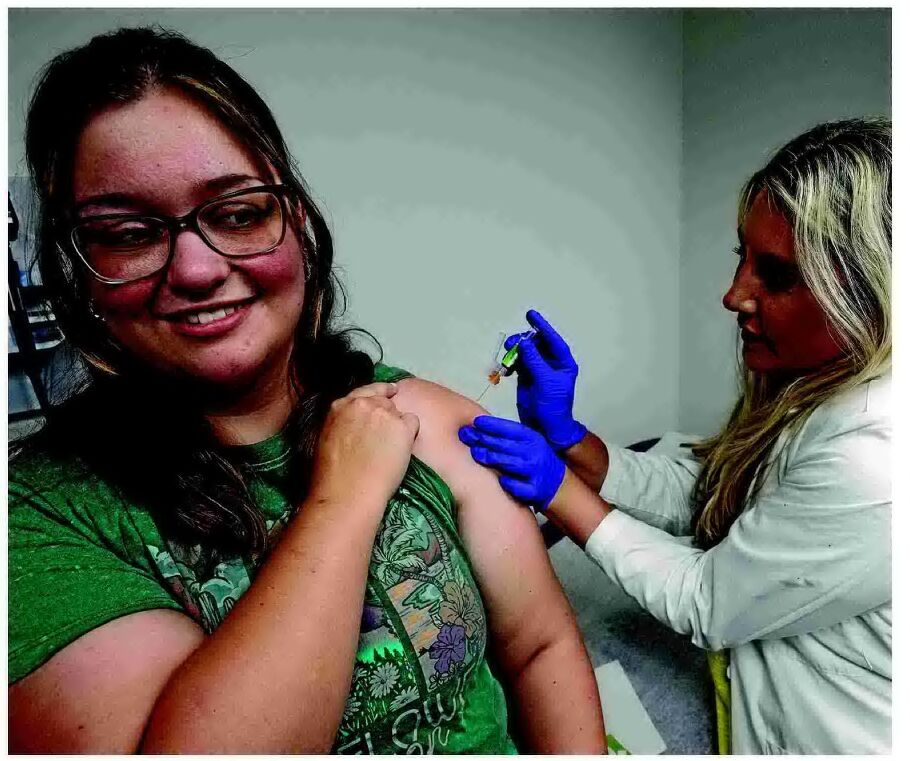
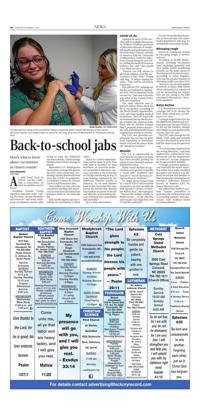
CVS MinuteClinic family nurse practitioner Rebecca Raymond gives Crockett Elementary School special education teacher Tara Shade a back-to-school flu shot Aug. 10 at the CVS MinuteClinic in Thompson's Station, Tenn.
As kids head back to school, vaccine confusion is everywhere. So what do families need to know?
President Donald Trump signed an executive order "calling for more vaccine flexibility and research" and fewer childhood vaccinations months after trying to slash the childhood vaccine schedule. A federal judge blocked some of these changes in March.
Meanwhile, U.S. kindergarten vaccination coverage fell again in the 2025-2026 school year, continuing a mostly downward trend since the COVID-19 pandemic, according to Centers for Disease Control and Prevention data.
And stalled vaccine advisory committee meetings left Americans in even more immunization guidance limbo as we enter the fall.
Still, health experts say vaccinations are essential for student safety.
"Back-to-school immunizations matter more in 2026 than they have in decades," Dr. Julia Rosebush, an associate professor and pediatric infectious-diseases specialist at the University of Chicago said during an Aug. 21 news briefing organized by the Infectious Diseases Society of America. "As we send children back to the classroom this year, here is the bottom line: Routine vaccinations are proven to be safe and effective at preventing diseases with high rates of morbidity and mortality."
Here's what else to know.
COVID-19, flu
Updated flu and COVID vaccines will be available this season, Dr. William Schaffner, professor of infectious diseases at Vanderbilt Health and spokesperson for the Infectious Diseases Society of America, told the University of Minnesota's Center for Infectious Disease Research and Policy, adding the medical insurance industry has said "they would cover those vaccines."
"Parents can still choose to give their children all of the vaccinations if they wish," Trump said Aug. 10 before signing his order. "They will be covered by insurance."
The official CDC webpage for the flu, last updated in September 2025, still recommends the flu vaccine for "everyone 6 months and older in the United States, with rare exception."
The most effective way to prevent serious illness from the flu is vaccination, according to the World Health Organization, CDC and other leading medical institutions. The CDC especially recommends the vaccine for people at higher risk, which includes those over 65, children younger than 2, pregnant women and people with underlying health issues ranging from asthma to obesity.
The CDC also generally recommends the vaccines be given from September to November, before cold and flu season kicks off, "ideally by October."
Measles
The U.S. is experiencing its worst measles resurgence in more than three decades, putting the nation at risk of losing its measles elimination status.
While recent declines in vaccination coverage may sound like a "small shift," Rosebush said, measles is "one of the most contagious diseases we know."
"A single unvaccinated child in a school full of unvaccinated classmates can start an outbreak that spreads to dozens of families within days," she explained. "The measles, mumps, rubella, or MMR vaccine … is safe, effective and remains our single best tool to stop this outbreak."
At least two people died of measles in Pennsylvania, the state's health department said Aug. 25, noting both were unvaccinated.
Whooping cough
Pertussis, commonly known as whooping cough, is another concern.
According to health professionals, declining vaccination rates, declining immunity and slow public health monitoring systems are the main causes of the most recent increase in cases. According to Johns Hopkins, 2025 saw the greatest number of whooping cough cases since 2012.
"Pertussis can circulate quietly in schools or infect older adults whose immunity has waned and can be devastating for infants who are too young to be fully vaccinated themselves," Rosebush explained.
Rates decline
U.S. kindergarten vaccination coverage fell 0.1% during the 2025-2026 school year, according to CDC data.
Coverage ranged from 92% for the diphtheria, tetanus and acellular pertussis vaccine (DTaP) to 92.4% for the measles, mumps and rubella vaccine and the polio vaccine, the CDC said.
The CDC said coverage for the MMR, DTaP, polio and varicella vaccines decreased in more than half the states from the previous year.
"It's continuing a long trend in the wrong direction," said John Grabenstein, a pharmacist who previously ran the Department of Defense's vaccine programs for troops and their families.
"Changes in federal guidance, and especially the recent executive order, have really muddied the waters and made it very difficult for people and families to find trustworthy information on vaccines," Infectious Diseases Society of America CEO Dr. Jeanne Marrazzo said.
She added that medical societies "remain committed to reviewing the evidence base and to providing patients and physicians with evidence-based recommendations."