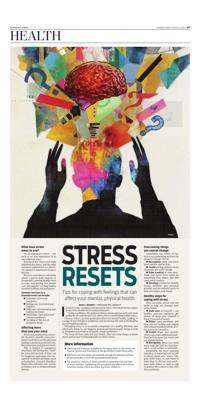


STRESS RESETS
Tips for coping with feelings that can affect your mental, physical health
ISTOCK
In today's ever-changing and uncertain times, the role that stress plays in our lives should not be underestimated.
Living conditions, the political climate, financial insecurity and work problems are some factors U.S. adults cite as contributing to their stress. Chronic stress can have profound effects on mental health, leading to a range of psychological symptoms and increasing the risk of developing mental health problems.
Managing stress is an essential component of a healthy lifestyle, and effectively doing so can improve mental and physical well-being as well as minimize exacerbation of health-related problems.
The issue of stress does not just vanish. Here are some things to think about and pursue to help diminish our stress levels.
More information
■Check out the resources available on managing stress at the Centers for disease Control and Prevention at cdc.gov/mental-health/living-with/.
■„ Brochures and fact sheets are available through the national Institute of Mental Health at nimh.nih.gov/health/publications.
„■The American Institute of Stress provides a comprehensive overview of stress statistics, highlighting the prevalence and effects of stress on American society. Check out stress.org/stress-research/.
What does stress mean to you?
We all experience stress — yet each of us may experience it in very different ways.
Because of this, there is no single definition for stress, but the most common explanation is a physical, mental or emotional strain or tension.
Stress is a reaction to a situation where a person feels anxious or threatened. Learning healthy ways to cope and getting the proper care and support can help reduce stressful feelings and symptoms.
Common reactions to a stressful event can include:
■Disbelief, shock and numbness.
■Feeling sad, frustrated and helpless.
■Difficulty concentrating and making decisions.
■Headaches, back pains and stomach problems.
■Smoking or the use of alcohol or drugs.
Affecting more than just your mind
When you are placed in a stressful situation, specific stress hormones rush into your bloodstream leading to an increase in heart rate, blood pressure and glucose levels.
This is helpful in emergency situations, but having this "rush" for extended periods of time can be dangerous and make you susceptible to health problems such as headaches, stomach disorders, depression and even very serious problems such as stroke and heart disease.
Overcoming things you cannot change
Sometimes the stress in our lives is not something we have the power to change. Try to:
■ Recognize when you don't have control, and let it go.
■Avoid getting anxious about situations you can't change.
■Take control of your reactions and focus your mind on something that makes you feel calm and in control.
■Develop a vision for healthy living, wellness and personal growth, and set realistic goals to help you realize your vision.
Healthy steps for coping with stress
Here are some moves you can make to help you manage your stress levels:
■Take care of yourself — eat healthy, exercise regularly, get plenty of sleep, give yourself a break if you feel stressed.
■Share your problems and how you are feeling and coping with a family member, friend, doctor, pastor or counselor.
■Avoid drugs and alcohol. These can create additional problems and increase the stress you are already feeling.
■Recognize when you need more help and talk to a psychologist, social worker or counselor.
Potentially the most valuable takeaway is knowing how to talk to others about your stress. This goes both ways, as you need to know how to discuss your problems with others as well as talk to anyone who comes to you with their problems.