


North Carolina's warming climate opens door to new invasive threats
Spotted lanternflies are moving in from the north. From the west, the emerald ash borer beetle is quickly migrating toward the N.C. coast. To the south of Wilmington, armadillos are following the well-worn track of fire ants and quickly colonizing parts of southeastern North Carolina. And offshore, the lionfish is now the undisputed king of the artificial reefs off the Cape Fear coast.
Invasive species have been part of the Tar Heel State's environment since the first Europeans arrived, bringing crops like wheat and grapes and animals like starlings and honeybees from the Old World to the new one.
But in recent decades, global trade and the ease of moving goods and people thousands of miles via air and sea has brought a new wave of uncontrolled migration to North Carolina.
Some species, like kudzu and beach vitex, were intentionally brought here. Others, like the recent arrival of the yellow-legged hornet, were accidental. But all are having meaningful and, in many cases, negative impacts on North Carolina's environment.
Now, a new factor is allowing a host of invasives to not only reach North Carolina, but also thrive in the Tar Heel State. And that means the potential for a new raft of impacts, including diseases and viruses, that native species − and even N.C. residents − could have trouble handling.
"Climate change is becoming a major factor in the spread of invasive species," said Dr. Kelly Oten, an invasive species expert at N.C. State University. "It's allowing them to spread to new areas and thrive, because we used to be able to rely on cold temperatures to limit the spread of new species, especially going north. That's no longer the case."
Hot and getting hotter
According to the N.C. State Climate Office, July 2026 with an average temperature of 79.3 degrees was the 10th-warmest July since 1895.
Locally, it was the 7th-warmest July in Wilmington.
Overall, July was a sizzler for the Tar Heel State, with the Port City hitting 102 degrees on July 8 − the hottest day in the city since 2012.
The steamy weather follows a recent trend that has seen Wilmington, and North Carolina as a whole, in the past decade experiencing some of the hottest years ever recorded since the late 19th century. In 2019, the state's average temperature was 2.7 degrees above the 20th-century average. In 2024, North Carolina sweltered to the second-warmest year on record. Three of Wilmington's five hottest years ever recorded have occurred in the past decade.
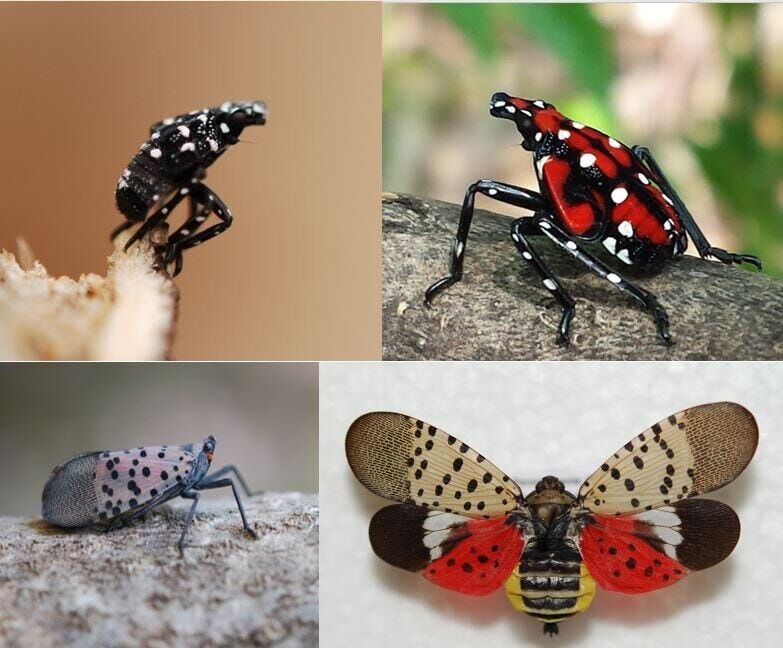
The spotted lanternfly nymph starts as a black bug with white polka-dots and eight legs. As it grows during the nymph stage, the black turns to a bright red. Adult spotted lanternflies look very different, now sporting a striped body with two sets of wings – one will be tan in color with black spots, and one will be red with black spots and other designs.
According to the 2020 N.C. Climate Science Report, most parts of the Tar Heel State are projected to see at least two to three additional weeks of very hot days − maximum temperature of 95 degrees or higher − by 2040.
Coming hand-in-hand with the hot temperatures has been long periods of dry weather pocketed with a few heavy rain events. The result has been a series of droughts in North Carolina the past few years that have played havoc with farming schedules, weakened native trees and plants, increased wildfire risks, and prompted the adoption of water conservation measures in some areas. And when the rains do come, they often come in the form of heavy storms that lead to flooding events, since the ground can't handle such high volumes of water all at one time.
While 2026 has been extremely dry for North Carolina, the state saw some relief in July as showers soaked much of the state. Still, most of the state remains "dry" or in early stages of drought, according to the N.C. Drought Monitor.
In Wilmington, the National Weather Service said the Port City had received nearly 23.5 inches of rain in 2026 through Wednesday, Aug 5. That's 9 inches, or about 32%, below normal levels.
Warmer weather, more bugs
North Carolina's warming climate is allowing temperate and tropical insects, and the diseases they carry, to push into the state and thrive.
Since bugs are exothermic, meaning they rely on the environment to control their temperatures, Oten said the hotter weather is allowing insects to survive in areas where frost historically knocked them back. Many invasives also are emerging earlier in the year and having multiple generations thanks to the warming climate.
The elm zigzag sawfly, for example, was first discovered in North Carolina in 2022. The invasive bug from East Asia that feeds and defoliates elm trees was found to have two generations per year in Virginia, where it also is causing problems. But in North Carolina, Oten said four generations of the invasive per year have been observed − tied to warming temperatures in western N.C.
North Carolina isn't the only state dealing with bugs piggybacking on climate change to expand their range and impacts.
The Southern pine beetle, as belied by its name, is found in the southeastern U.S. and the warm climates of Mexico and Central America. But it now has been found in Maine for the first time.
"That's not an insect that should be found in the pine forests of Maine," Oten said.
Voracious plant eater
Among the latest invasives in North Carolina that has caught the attention − and worry − of researchers is the spotted lanternfly.
The plant-sucking invasive native to Asia was first discovered in the U.S. in 2014, and has since spread quickly. The bug was first spotted in the Tar Heel State in 2022.
Oten said the pest feeds on more than 100 species of plants, including grapevines and many popular landscape plants, and is also a major nuisance when the fly congregates in large numbers in homes and on trees and shrubs.
Like many invasives, the lanternfly largely relies on humans transporting infested plant material to colonize new areas.
"All you need is a couple moving to a new area and you can start a whole new population," Oten said, noting that the infestation is currently estimated to be limited to around 10 or so central N.C. counties.
As in many cases, researchers largely rely on residents and interested citizen-scientists to report sightings.
"Like all invasives there are treatments and things we can do to stop or at least slow their spread, so that's why the earlier we know about them, the better," Oten said.
And about total eradication?
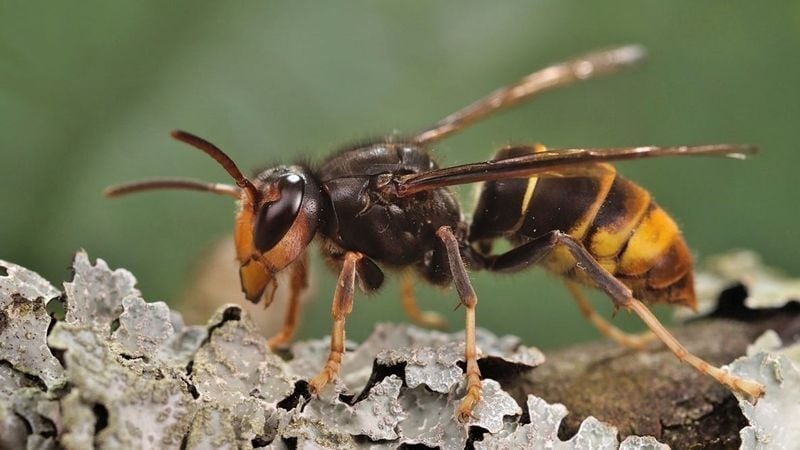
Yellow-legged hornets have been discovered in North Carolina, near Charlotte, for the first time since the invasive insect was first spotted in South Carolina in 2023.
"We are past that point," Oten said, noting that's true of almost all invasives once discovered by scientists. "We are going to have to learn to live with them and create better tools to deal with them."