
What's the goal of youth sports?
World Series champ Ryan Zimmerman offers perspective
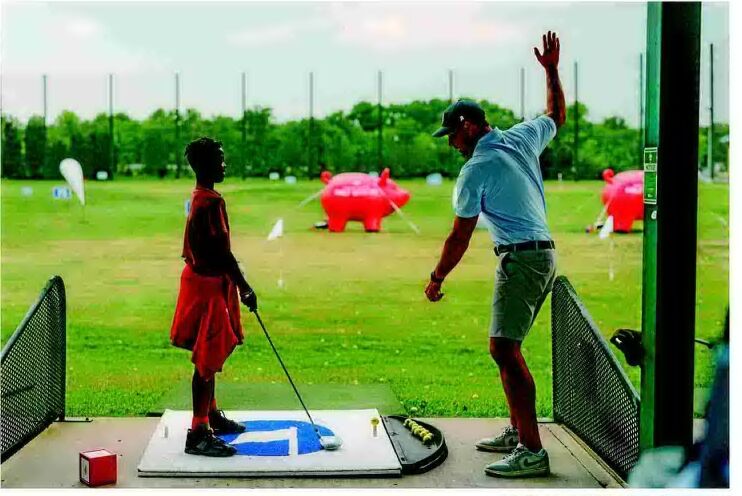
Former Washington Nationals All-Star Ryan Zimmerman taught youth golf and life lessons at a May 19 event in Maryland.

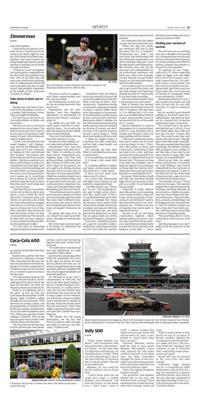
Ryan Zimmerman, shown during his last season, played for the Washington Nationals from 2005 to 2021.
COLLEGE PARK, MD — To Ryan Zimmerman, the field was a safe space.
"You can fail, you can succeed," says the former World Series champion and father of four. "Whatever happens on the field happens on the field, and you learn that lesson, good or bad.
"And then you go to the snack bar." There was just so much else to do. "I enjoyed playing baseball, basketball,
I played football," says Zimmerman, 41. "I grew up a couple blocks away from the beach, so I surfed and did water sports. Some days I didn't do anything. Just played with my friends."
Something since his salad days of the mid-to-late 1990s has changed. As Zimmerman sees it, parents have lost their grip on the percentages of getting to where he did. He is spot on.
He isn't deep into youth sports — at least not yet — but he has talked about the experience with Hall of Famer Billy Wagner and fellow former MLB star Jeff Francoeur, whose sons have followed them into the game.
Francoeur directs a youth sports podcast. Wagner has started gearing instruction toward coaches, "teaching (them) and these parents to calm down, man," Zimmerman says, laughing.
"It's not the end of the world. It's youth sports. We all want to win. We all want to teach lessons, but it's gonna be OK."
USA TODAY Sports caught up with Zimmerman at a Bank of America "Golf With Us" event. Along with other local sports celebrities, he taught golf and shared lessons learned through the sport to kids from Baltimore and Annapolis, Maryland, and greater Washington, D.C.
He has real-life advice for you and your sons and daughters.
"I feel bad for the parents, honestly," he says, "because you're just trying to do what's right for your kid. And I think a lot of these organizations and travel (teams) are being bought up by private equity, and they're putting a lot of people in tough situations.
"I think we've sort of forgotten that youth sports is supposed to be fun, first of all. That probably more than 99% of the kids here will never play professional anything, over 90-some percent of them will never probably even play in high school. And probably somewhere in the middle of that, will never even play in college."
Take stock in what you're doing
Zimmerman, who spent 16 seasons in the big leagues, mostly as a standout third baseman, knows what you might be thinking.
Oh, well, it's easy for you to say. You made millions of dollars and you made it.
The issue, he says, is a matter of perspective we can all share: The point of youth sports isn't to get on a track to get a scholarship or make money. It wasn't why he played as a kid in Virginia Beach.
"I never, ever thought that this would happen," says Zimmerman, who was the Nationals' first draft pick out of the University of Virginia in 2005 and debuted that summer. "My parents only always had one rule for me and my brother: That they would take us to places and do things as long as we committed to do it and didn't quit. Even if you started something and you didn't like it, you're gonna play the season, you're gonna practice, you're gonna go to everything, you're gonna try and get better. And then when the season's done, then if you don't want to play next year, you can (stop).
"I just hope that we can continue to have lots of kids be able to play sports, 'cause I think the travel ball stuff is starting to price a lot of kids out and burn a lot of kids out. A lot of those kids are stopping when they're 13 and they're missing out on those last two or three years, and then, what do they do with that chunk of time? Do they sit around the house? Do they pick up their iPad? Are they staring at a screen instead of being outside? Are they getting in trouble?
"It's just such an interesting thing to navigate for parents now."
The process starts, he suggests, with better understanding your kid, and your family.
We should know our kids best. But are we asking them what they want to do?
Zimmerman and his wife, Heather, have two daughters (Mackenzie, 12, and Hayden, 10) and two sons (Henry, 6, and Benjamin, 4).
He admits he's not fully "in" youth sports, and that is somewhat by choice – his as well as his kids'. Mackenzie has tried softball, lacrosse and basketball.
"She's not a bad athlete, but she does what she does," he says.
Hayden has tried softball, soccer, basketball and field hockey.
Zimmerman's boys have just started playing coach pitch baseball, "which is nothing to write home about," Zimmerman says, laughing again, "but they love getting out there. And then we just play a bunch of stuff in the yard. And I think for the parents, you get caught up in driving everyone (around), and if you don't play on this team, you're not gonna do this. I think we sometimes forget to be a family, to be around your kids, and to spend time with your kids, and communication's important, too, 'cause a lot of the kids I talk to, they like playing, but they don't love it.
"If your kid loves it and your kid's good, and you're doing everything you can to basically give them what they want, that's a different story. But our kids, they enjoy it and I'm here to help them do whatever they want, just support 'em however we can."
He admits, like many of us, he can still get too caught up in their sports. Naturally, we want the best for them.
But is this what everyone wants to be doing? It's Memorial Day weekend, after all.
"Sometimes what you think is the best for your kid, if you just talk to your kid, might not be what they think is the best for them," Zimmerman says. "Sometimes missing a tournament, and going to a family vacation, is worth a million times more than going to a tournament. If your kid is good, your kid's gonna be seen, and your kid's more than likely gonna make it, whether you miss the fourth tournament in five weeks, and you and your husband are driving all around, and don't even get to be married anymore because you're doing it. Think about your family in all that as well.
"I think my biggest advice is sometimes just take a step back, and just take a deep breath, and communicate."
Ask yourself and your kids: What is your definition of success in youth sports?
Is success getting a scholarship?
Is it being a first round draft pick?
Is it making millions of dollars and being a professional athlete who never has to "work" again?
If those are your goals, your chances are 2% or less.
At a recent talk, Zimmerman told high school athletes he just wanted to congratulate them.
"I feel like nobody says, 'Way to go,' " he says. "You're playing varsity sport in high school. Everyone's like, 'what's next?' If this is it, you did better than (most) other people. So celebrate that. Enjoy the moment. Don't always think, 'I gotta do this in high school to get to college.' Just hang out with your friends and have fun, and work hard, do the things that you think that are gonna make you better, and then if it happens, it happens."
If you love competitive sports, set a goal for yourself to make a varsity team, and perhaps even play on it for more than two seasons. And put your mind squarely in the moment.
Just remember that the higher you rise, the more it feels like a job.
"When you play pro sports, you obviously still love to play the game, but it is a business," Zimmerman says. "And I was very lucky. My relationship with the (Nationals) organization was always amicable and great. I went through injuries and had bad years, like everyone does, but, for the most part, you could probably say my professional experience was fairly easy, where a lot of people, you get released, you get traded, you get cut, you learn the business side of it really quickly.
"So, to kind of get out of that, and to get around the youth, and see their energy, and (them) just playing the sport for what it really is, has been really rewarding."
Ask yourself and your kids: What is your purpose in youth sports?
Bank of America has enrolled more than 150,000 kids in its Golf with Us program. Through June 15, it is offering kids 6-18 a free one-year membership to Youth on Course, which provides access to tee times for $5 or less at thousands of U.S. courses.
Everett Schlendorf, 15, is part of the program. He is a hockey player in the D.C. area, traveling as far as Canada and Florida to play, but enjoys golfing with his friends.
"I like more complicated sports than sports where you just have to do one thing," he says. "That's why I like hockey so much, and I think golf is interesting in that you have to hit a shot, and then you have to be with yourself for 30 seconds or a minute before you hit the next shot. That gives you time to be with your thoughts, and it helps me improve my psychology on things like that and just how I think about bouncing back from a bad shot or something like that."
He doesn't think hockey or golf will take him anywhere beyond high school, but he wants to play golf as an adult. It can help keep him grounded.
"Especially in really affluent areas, like up here, you're spending a ton of money and it's a huge risk if you end up not getting a scholarship, if your kid doesn't want to play when they turn 15 or 16," Zimmerman says. "I think we've sort of forgotten that youth sports is supposed to be fun.
"Second of all, (it can) bring communities together, which nobody really does anymore. They just play travel ball and go wherever. And I think most importantly to teach life lessons through what happens on the field. … You're learning so many things that you're gonna use forever in life."
Finding your version of success
The next time you are watching your son or daughter, look around you. Zimmerman says you can spot the two or three kids who stand out at a youth sporting event within 10 minutes. Genetics, he estimates, is about 95% of the equation.
"It's glaring," he says. "Especially (at) 12, 13. Those couple kids might be bigger now and might lose it but if you're good, somebody's gonna find you. You don't have to pay a ton of money. You don't have to do all this crazy Instagram stuff. I get it both ways, but it just seems like a lot of pressure on the kids at a young age, which is very detrimental, I think."
Zimmerman played at 6-foot-3 and around 215 pounds and still looks fit and trim. He says with four kids, it's hard to commit to coach.
But he recently found himself subbing as the head coach for a softball game, and when he went out for a mound visit, he had the opportunity to get a closer look.
"It's so much fun to do sports with kids that age, 9, 10 to 12, 13 and that whole range, they really just have fun," he says. "I mean, they care. They want to win, they want to know who wins or loses. They get upset when they make a bad play. They get so excited when they make a good play, but literally 2 minutes after the game is over, whether or not they win or lose, they're just more excited to hang with their friends, run around the field."
When we get older, we might realize all the lessons we learned, too. Walt Williams, who starred at basketball for the University of Maryland and played 11 years in the NBA and was also at the Bank of America event, urges us to have our kids look for them sooner.
"Pay attention," he says. "This is advice my dad gave. The smartest people in the world, they learn from anything, everything, all people, all circumstances. Mediocre people, they learn from things that happen to themselves. They don't learn from, so much, outside things. But if it happened to me, I learned from it. And the dumbest people you know, they don't learn from anyone, anything, because they think they know everything already.
"The good thing about it is you could choose which one you want to be."
And when the game's over, don't forget to hit the snack bar or the beach.