
Warmer winter
For much of US West, season was among the hottest on record
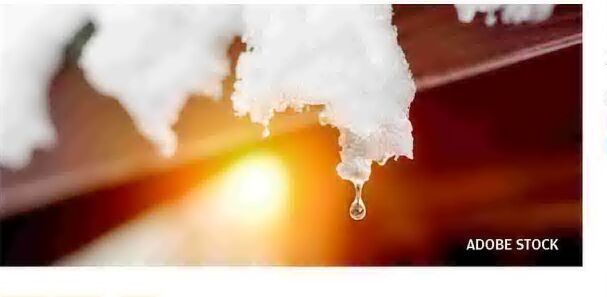

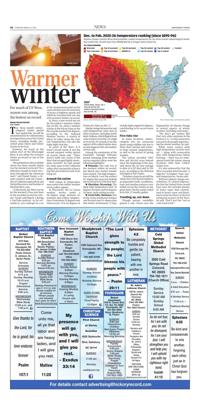
The three-month meteorological winter period that ended Feb. 28 will be remembered for its wild extremes in temperature across the United States, including deadly, persistent polar blasts and winter storms in the East.
However, for much of the nation west of the Mississippi River, it was either the warmest winter on record or one of the warmest.
The preliminary data available shows the three-month winter was the warmest on record "by a ridiculous margin in many locations throughout the American west," said Daniel Swain, a climate scientist with the University of California Agriculture and Natural Resources and founder of WeatherWest.com.
"Collectively, the West was by far the warmest it has ever been in the recorded record for winter," Swain said March 3 during a YouTube podcast. As he calculates it, you could get in a car at the westernmost point on the coast and drive east for more than 20 hours at highway speeds and still be in a location that saw one of its warmest winters on record.
In Texas, a new record was set for the nation's warmest winter day on Feb. 26, when a weather station at the Falcon Dam on the Rio Grande reached 106 degrees, according to the National Weather Service. A stretch of about 30 miles along the river saw temperatures soar into the triple digits that day.
In much of the West, if it wasn't record warm, it was the second warmest winter period on record, Swain said. "There wasn't really any corner of the West that escaped highly anomalous warmth," he said, except for some areas in the California valleys that saw periods of heavy fog that prevented records from being set.
Around the nation
Wild swings in temperature were noted even within weather service office regions.
In Wisconsin, the La Crosse weather service noted a 98-degree range between its warmest and coldest temperatures, from minus 32 degrees near Owen on Jan. 25 to 66 degrees at Prairie du Chien on Feb. 17. Similar swings between hot and cold temperatures were seen in other locations, including South Bend, Indiana, which flipped from a low of minus 10 on Feb. 1 to a high of 65 on Feb. 18. Overall, it was the region's 45th coldest winter since records began in 1893, the weather service said.
Among the summaries of the December through February period emerging from weather service regional offices were the following highlights:
■ Phoenix: Not only was it the warmest winter on record, but March also started warmer than normal. The high temperature on March 1 was the earliest 93-degree day on record, beating the record set in 1972 by four days.
■ Sheridan, Wyoming: The daily high temperature beat 50 degrees 44 times and 60 degrees 20 times, both setting records.
■ Great Falls, Montana: Five of the seven monitored stations saw the most ever 50-degree days this winter. In Bozeman, 37 days of daily highs topped 50 degrees, contributing to its record warm winter.
Fire risks rise
In many locations, meteorologists also are concerned about rising wildfire risk due to drier-than-normal and warmer-than-normal temperatures, as well as the arrival of spring weather.
The nation recorded 7,895 fires and 385,991 acres burned since the beginning of the year, well above the 10-year average to date of 4,323 fires and 91,529 acres, according to the National Interagency Fire Center.
"Numbers alone do not tell the whole story, but they do reinforce an important truth: Conditions, fuels and weather patterns vary widely across the country at any given time," the fire center stated in its Feb. 27 weekly update.
Trending up, not down
Though natural variability played a role, Swain sees the fingerprints of climate change in several aspects of winter weather, including cold snaps.
"We don't get winters like that very often anymore in the Eastern U.S.," so they seem more unusual to the people experiencing the winter weather, he said.
While many coolest daily high temperature records were set — along with consecutive days with temperatures below freezing — there was no widespread trend this winter among locations with their coldest winter ever.
It's also noteworthy that the West exceeded what became "a high bar" for higher-than-normal temperatures, Swain said.
Without climate change contributions, it's almost impossible that the United States would have seen the extreme plumes of water vapor that contributed to heavy snow and flooding in some locations or the low snowpack in parts of the West, he said. That's just the "not so cold, hard truth."