

AI heads to big screen
Chinese cities, regions make push to support filmmakers' use of tech

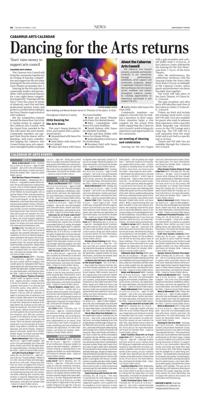
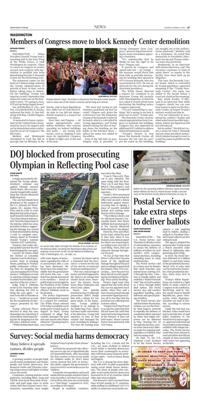
Visitors watch a screening of short films that included artificial intelligence-generated content Sept. 9 at the FIRST Fantastic film festival in Beijing.

Zhu

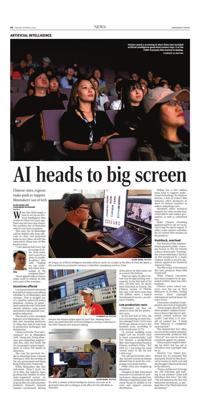
Wu Xingyu, an artificial intelligence animation director, works on a project at the office of China Wit Media, a film and television production company, in Shenzhen, Guangdong province, China.

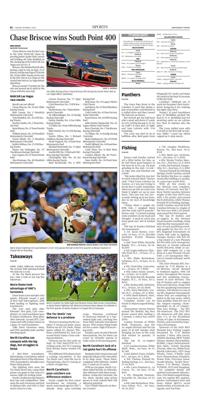
Director Pan Xiaojun speaks about his short film "Wedding Time," which was generated with artificial intelligence, during an interview at the FIRST Fantastic film festival in Beijing.

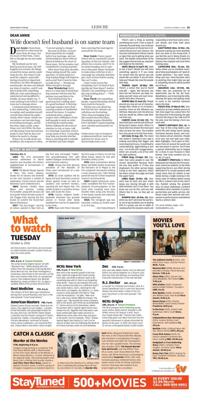
Zhu Zhili, a Chinese artificial intelligence director, discusses an AIgenerated video with a colleague at the office of China Wit Media in Shenzhen.
ARTIFICIAL INTELLIGENCE
When Zhu Zhili sought a base to set up an artificial intelligence film studio in China two years ago, there was just one clear choice: the southern city of Shenzhen with its vast tech ecosystem.
This year, the AI filmmaker said he fielded calls from officials in cities and industrial parks across China, all with the same pitch: Bring your AI film business here.
"I am approached every day by a range of cities, from major metropolitan areas to smaller localities," Zhu said, "hoping we can establish either technology or the company there."
Those appeals reflect China's major push to embed AI into every part of the economy.
Incentives offered
Local governments promised to build tech clusters and offered subsidies to AI filmmakers and startups. That is straight out of a familiar industrial policy playbook, treating AI-generated content the way China built electric vehicles, solar panels and robotics into globally competitive industries.
The result is a fast-emerging industry of AI filmmakers, studios and streaming platforms in China that seek an early lead in production techniques and distribution.
China created the "best environment" for AI filmmakers with "cheap rent, living allowance and computing support," said Zhu, who also heads the AI-Generated Content department at China Wit Media in Shenzhen.
Zhu runs his personal studio in Shenzhen from a shared workspace with the backing of the city government and Hong Kong Polytechnic University.
While filmmakers like Zhu welcomed China's push for AI in film, the industry faces growing risks familiar to other state-supported sectors. As companies step up production of goods like cars and consumer products, domestic demand remains constrained, driving down prices in what many see as a race to the bottom.
There are signs AI video content may be approaching overcapacity. In the first half of the year, 221,900 new AI shows were launched on Douyin, the Chinese version of TikTok, but only 1,055 drew more than 100 million views, a typical benchmark of success, according to DataEye.
Low production costs
Filmmakers say they are drawn to AI by the low production costs.
In the first half of 2026, the cost of producing AI short dramas plunged from 5,000 yuan ($747) per minute to just a few hundred yuan, according to state broadcaster CCTV.
"A normal wedding scene might cost me 60,000 yuan to shoot conventionally," said Pan Xiaojun, a postgraduate film-directing student based in Hainan, southern China. "But with AI, I can bring the same surreal scene to life for just 1,400 yuan."
Pan said government subsidies and rent waivers in Hainan allowed him to push his computing costs down further.
Other cities also stepped up incentives.
Shanghai in May introduced measures to accelerate AI-powered micro-drama production, offering computing power and cloud-based AI models to cut costs and support overseas distribution.
Beijing has a 260 million yuan fund to support audiovisual technology. Its Huairou district, a hub of China's film industry, offers producers of short AI dramas vouchers to reduce computing costs.
Shenzhen offers technical support for video production, visual effects and content generation, as well as subsidized rent.
Major Chinese streaming platform iQIYI is "all-in" on AI, CEO Gong Yu said in August. It offers some creators subsidies for AI content that streams on the platform.
Pushback, overload
The National Film Administration granted a public-screening license to the 90-minute science-fiction epic "Sanxingdui: Future Memories," the first AI film produced by a major Chinese studio to receive regulatory approval for theatrical release in China.
The film is due to be released this year, producer Bona Film Group said.
While Chinese consumers have been receptive to AI-generated content, there was still a backlash.
Chinese actors raised concerns over the use of their likenesses in AI films, fueling worries about copyright infringement and job losses for voice actors.
Consumers complain of plagiarism and a lack of originality.
"Some people directly blend other people's original characters or dance clips into AI-generated content without any credit," said Wen, a 22-year-old AI content fan. "I think that behavior is completely unacceptable."
The unexpected box-office success of the crudely animated, conventionally produced film "Niu Lai" was seen by some as a backlash against AI content.
China requires explicit labeling for AIGC but has yet to introduce clear copyright rules for it.
Director Cao Yiwen premiered her AI-animated film during the World AI Film Festival in Cannes in April, and said she thought China took the lead in the industry.
"France and the rest of Europe are still watching and waiting to see whether China will introduce clear laws," she said. "We fell behind in the first two industrial revolutions, so perhaps this is the Third Industrial Revolution."