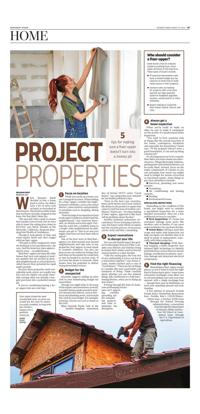


PROJECT PROPERTIES
5 tips for making sure a fixer-upper doesn't turn into a money pit


Fixer-upper properties need considerable work, so prices are usually low. But costs for repairs can easily snowball, turning what was initially a bargain into a potential money pit.
When Breanna Reish decided to buy a home back in 2009, she didn't have a lot of extra cash on hand, so she looked at foreclosures. She found an older home that had been virtually stripped to the bone, but that didn't deter her.
"We were left with a shell of a home that needed a ton of work, but we were able to lower the asking price down to $27,000," says Reish, founder of the Riverside, California, financial planning firm Wealth of Confidence.
Though it took plenty of time and sweat equity, Reish says she's happy with her fixer-upper.
"We paid so little compared to what we would pay to live anywhere else," she says. And the home has since appreciated in value — an added bonus.
Ideal fixer-uppers are typically older homes that lack curb appeal or modern updates but are located in desirable neighborhoods or school districts, which boosts their potential for rapid equity growth.
Because these properties need considerable work, prices are usually low, but costs for repairs can easily snowball, turning what was initially a bargain purchase into a potential money pit.
If you're considering buying a fixer-upper, here are a few tips:
1 Focus on location
While you can fix up a home, you can't change its location. When looking for a fixer-upper, consider the neighborhood's attributes, such as the school district, crime statistics and proximity to amenities such as shopping, dining and parks.
"Seek the help of an experienced real estate agent to help you understand the neighborhood," says Donovan Reynolds, an Atlanta real estate agent. Putting the work into a shabbier home in a sought-after neighborhood, he adds, means you get to "live in an area you might otherwise not have been able to aff ord."
One of the best ways to find fixer-uppers is to drive around your desired neighborhoods and take note of any properties that appear to need repair or cosmetic attention. You also can keep an eye out online for listings that have been on the market for a long time or may be headed to auction soon. If you have the means to renovate, these homes have the potential to deliver strong investment returns.
2 Budget for the unexpected
Reynolds suggests adding an extra 20% to your homebuying budget for renovations.
Though you might plan to do many of the repairs and renovations yourself, consider hiring a professional for projects beyond your skill set, such as electrical and plumbing work, and include this work in your budget. For example, rewiring a house can cost as much as $10,000.
Mina Starsiak Hawk, half of the mother-daughter renovation duo of former HGTV series "Good Bones," says preparing your mindset for inevitable problems is key.
"Even in the best-case scenarios, there can be factors out of your control, like delays in city permits or repairs that come to a halt because of weather conditions," Hawk says. "So when looking at fixer-uppers, approach it like there will be problems down the line."
Another potential unforeseen circumstance: If you're buying a foreclosure, the home could still be occupied, and the eviction process, if necessary, can be costly and time-consuming.
3 Expect renovations to disrupt your life
You can and should expect the project to take longer than you'd like. Consider your lifestyle and whether living in a home that's under construction for several months is a deal-breaker.
"Like the saying goes, the true test of any relationship is if you can live in a renovation together," says Karen E. Laine, Hawk's mother and co-star of "Good Bones." "There are lots of things to consider, like your usual habits and standards of living. Think carefully about whether you can live without things, like a bathroom or a fully functioning kitchen, when you're fixing up your home."
If living through the hum of chainsaws and banging of hammers isn't appealing, consider spreading out the remodeling projects over time to minimize the disruption.
4 Always get a home inspection
When you're ready to make an off er, be sure to make it contingent on the results of a professional home inspection.
"You want to have someone look at things like the overall structure of the home, crawlspaces, insulation and especially the foundation," Hawk says. "If the property doesn't have a good foundation, it can end up being a money pit."
It's also important not to let cosmetic flaws deter you from a home you otherwise love. Things like broken windows, peeling paint and outdated fixtures can be easily fixed. Instead, focus on the major components of a home so you can anticipate how much you might need to budget for serious structural or functional repairs. Some things to pay close attention to include:
■ Electrical, plumbing and sewer systems.
■ Foundation.
■ Air conditioning and heating systems.
■ Roofing.
■ Environmental issues.
SPECIALIZED INSPECTIONS
Depending on the condition of the home, you might want to consider a specialized inspection for a more detailed assessment. Here are a few additional services to consider:
■ Pest inspection: If a home has sustained damage from pests like termites, ants or beetles, it can cause major headaches for you down the line.
■ Sewer lines: Getting a sewer line scope and septic tank inspection can help you figure out whether they're in need of repair or replacement, especially with older properties.
■ Thermal imaging: With ther-mal imaging, a home inspector uses infrared light technology to identify potential issues such as heat loss and air leakage, insufficient insulation, moisture damage and abnormal electrical components.
5 Find the right financing
Remodeling a fixer-upper can get pricey, so you'll want to have the right kind of financing in place. Some home renovation mortgages even allow you to roll remodeling costs into your loan amount with a single mortgage loan — though there may be limitations on both your spending amount and your timeline.
A few options to research include Fannie Mae's Home Style Renovation loan, Freddie Mac's CHOICE Renovation loan, a Section 203(k) loan through the Federal Housing Administration, a renovation loan through the Department of Veterans Affairs and Section 502 Direct or Guaranteed loans through the U.S. Department of Agriculture.
Who should consider a fixer-upper?
Some buyers may be uniquely suited to profiting from a fixer-upper purchase in the long term. These types of buyers include:
■ Prospective homeowners who have a limited budget but the capacity or know-how to build sweat equity in their property.
■ Investors who are looking for property with a low price tag that has high potential based on budgeted upgrades, location, school district or other amenities.
■ Buyers looking to customize their home's layout, fixtures and style.