
MOBILIZED MARKETS
'Cuban Amazons' let relatives keep family on island stocked up
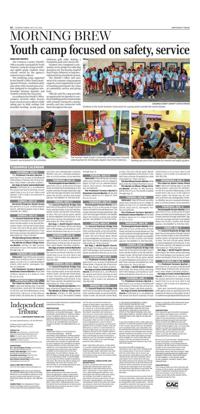
People chat on balconies June 17 during a blackout in Havana.
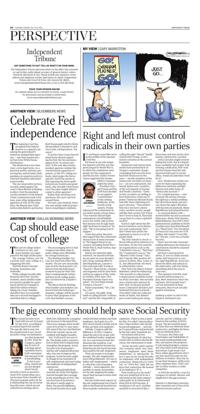
Carmen Deulofeu sits in her kitchen in Louisville, Ky., with her laptop open to a website that allows her to purchase food that is delivered to relatives in Cuba.
Carmen Deulofeu speaks with her son, Daynier Adan, while she browses a delivery site.
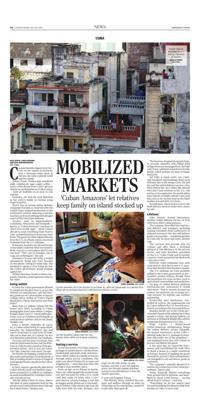
Jorge Luis del Valle, center, his wife, Danneys, and their 4-year-old daughter, Emma, sort through supplies delivered during an extended blackout in their Old Havana apartment.
CUBA
Carmen Deulofeu tapped a few buttons on her laptop in Kentucky and, a thousand miles away in Havana, her sister suddenly could feed her family. Kidney beans, chicken legs, powdered milk, cooking oil, eggs, sugar, coffee — basics often absent from Cuba's grocery shelves or unattainable on a Cuban salary — were all available on an easy-to-use website.
Deulofeu, 68, had the food delivered to her sister's family in Havana using Supermarket23.
That's one of several online delivery companies that play a crucial role after the United States ramped up pressure on the communist country, imposing economic sanctions and an oil embargo that plunged much of the island into darkness.
Services such as Supermarket23, Cuballama, Mercatoria and Katapulk — known as "Cuban Amazons," and most of which have mobile apps — allow Cubans abroad to send everything from food to solar-powered lanterns to loved ones back home. The goods are often shipped directly from the U.S. or a third country, since food is exempt from the U.S. embargo.
In the past, Deulofeu would send money so her family could buy what they needed. Now, scarcity is everywhere and it's not just food. "She's out of shampoo, out of soap, out of detergent," she said.
Deulofeu's 75-year-old sister, a retired optometrist, broke into tears recently on the phone, asking for more help. She declined to speak to USA Today for fear the Cuban government would retaliate against her.
Within a few days, thanks to these companies, Deulofeu could send necessities to her sister.
Going mobile
In 2018, the Cuban government allowed its people for the first time to access the internet on smartphones, said Ted Henken, professor of Cuban studies at Baruch College and co-author of "Cuba's Digital Revolution: Citizen Innovation and State Policy."
More than 2.6 million Cubans left the island since 2020, according to Cuban demographer Juan Carlos Albizu-Campos. Exiled Cubans use U.S.-based online platforms, such as Cuballama and Katapulk, to send goods to relatives still on the island, Henken said.
Once a month, Alejandro de Lucia, 62, a Cuban native living in Long Island, launches the Supermarket23 app and selects food items to send to his in-laws, who are in their 80s, in Cojimar. He also sent them fans and batteries via Cuballama.
De Lucia said the items are pricier than what he'd find where he lives, but the deliveries in Cuba became essential. Even government rations, such as rice, are scarce. "In Cuba, there isn't even food," he said.
For $35 plus $8 shipping, a family in Florida could send 4 pounds of smoked pork, a liter of cooking oil and a carton of 30 eggs in a refrigerated box to a family in the Cuba's, Havana.
In 2025, exports specifically directed to Cuba's private small and medium enterprises reached $173.6 million, according to an analysis published by Columbia University's School of Law.
"All the while Cuba's in crisis, there's this kind of quiet expansion both by the private sector and trade between Cuba and the United States," Henken said.
Testing a service
To test the system, USA Today ordered a package of chicken breast, chicken livers, smoked pork, palomilla steak, and strawberry-filled cookies to a family in Havana through online service Cuballama. The order cost about $55 plus $11 in taxes and shipping fees — more than four times the average Cuban monthly salary.
From an app on an iPhone in Austin, Texas, the order pinged into an electronic cart and was paid for with a U.S. credit card. Just under 24 hours later, a covered electric tricycle hauling a cart full of bagged goods glided up to the building in Habana Vieja where Jorge Luis del Valle lives with his wife, Danneys, and 4-year-old daughter, Emma. The delivery driver checked the contents and address through an order on WhatsApp on his smartphone, handed it to del Valle, then sped off.
The food was wrapped in separate bags, in accurate amounts, still chilled from refrigeration and seemingly fresh, del Valle said. It was a glimmer of good news for the family, which endures 20-hour or longer blackouts.
Del Valle, a visual artist, ran a bedand-breakfast until bookings dried up in February due to the energy crisis. He said he used the online delivery services a few times before but, for Cubans like himself who don't have relatives in the U.S., the service is too expensive. He would rather have friends or family outside Cuba send him cash so he can buy food on the black market or in privately run shops.
In rural areas, where food is scarcer, the food delivery services make more sense, he said.
Lifelines Aldo
Álvarez started Mercatoria, another online delivery service, in 2021 with three other Cuban partners.
The company diversified into logistics, fuel delivery and transport, including hauling containers from Cuban ports to different provinces, but also still delivers goods to households — something families in Cuba rely on more and more, Álvarez said.
The services also provide jobs for Cubans and offer them a firsthand glimpse at the efficiency of the private sector, said John Kavulich, president of the U.S.-Cuba Trade and Economic Council, a trade group that has dealt with Cuba since 1994.
However, some companies may soon scale back or close due to new U.S. sanctions that threaten their business models.
The U.S. embargo on Cuba prohibits selling to the Cuban government or government-related entities, though there are exceptions for some sectors, such as agricultural commodities and medicines.
On June 15, online delivery platform Envioscuba.com announced it would shut down. "Due to reasons beyond our control, our platform can no longer provide services," its website said, without elaborating.
Envioscuba uses warehouses controlled by GAESA, the conglomerate run by Cuba's military the U.S. recently sanctioned, according to the Associated Press.
Keeping money out of the Cuban government's hands while helping the Cuban people is tricky, said Aymee Valdivia, an attorney at Holland & Knight who advises companies doing business in Cuba.
Hugo Cancio, a Miami-based Cuban-American entrepreneur, began the online delivery service Katapulk. He opened warehouses across Cuba — allowed under the U.S. embargo if a business falls under one of the exceptions — and employed more than 300 Cubans to process and deliver the goods.
A few years ago, he closed the warehouses and consolidated his work force to about a dozen in a single warehouse in Havana. Instead of shipping the goods themselves, private Cuban entrepreneurs use Katapulk to sell and deliver goods to customers.
The company's remodel allowed it to remove any connection to the Cuban government, Cancio said.
Today, Katapulk delivers everything from ground beef to batteries and flashlights to about 2,000 homes — serving about 10,000 Cubans — each day.
"Everything we do has always been focused on helping the diaspora help their families in Cuba," Cancio said.