
Emergency assistance
Artificial intelligence allows 911 operators to dispatch help faster
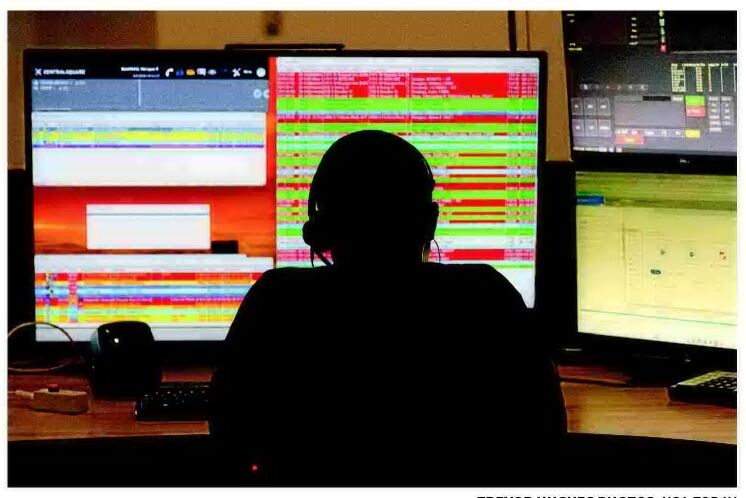
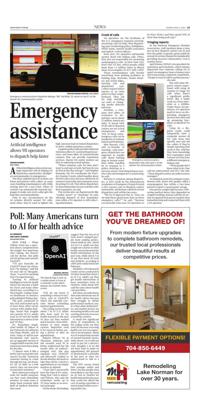
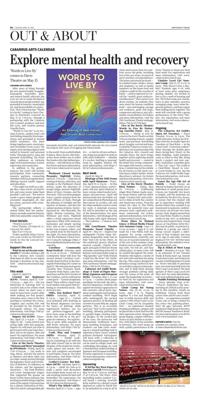
Emergency communications dispatcher Morgan "Mo" Hartfield, 32, works on April 2 at the Denver 911 communication center.

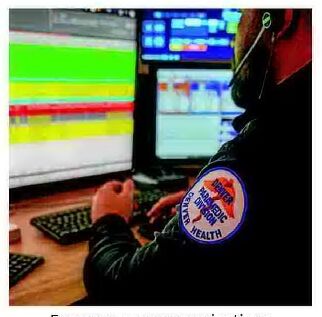
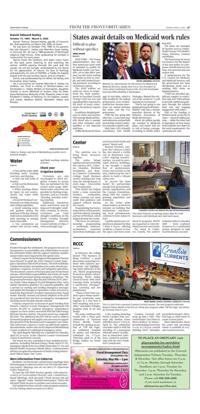
Emergency communications dispatchers take calls April 2 at the Denver 911 communication center.
Artificial intelligence plays an increasingly important role in helping 911 dispatchers speed police, firefighters and paramedics to emergencies.
The most sophisticated AI systems can listen and interact with callers, in some cases handling nonemergency calls while staying alert for a real crisis. Other AI systems can automatically translate languages to make sure every caller gets the help they need immediately.
Only in rare circumstances do the AI systems directly answer 911 calls; more often, they're used to lighten the high-pressure load on trained dispatchers in short-staffed operations centers.
Longtime police radio provider Motorola Solutions offers AI-assisted dispatch services, and Axon offers AI-powered body cameras that can provide translation services. Denver 911 center workers say they're exploring several options.
"When someone calls 911 they don't want to end (up) on hold. But how do you do that in this day and age?" said Stephen Kennedy, the 911 coordinator for Florida's Sumter County, which handles about 80,000 calls a year and uses a Motorola AI system to transcribe and summarize every incoming 911 call. That allows dispatchers to share information in near real time with first responders, he said.
The system also can flag keywords like "cardiac arrest" or "shooting," he said, allowing dispatch of first responders even while a 911 operator is still collecting information.
Crush of calls
911 operators are the backbone of the U.S. emergency response network, answering calls for help, then dispatching and coordinating police, firefighters, SWAT teams, mental-health counselors and animal-control officers.
Each year, 911 operators nationwide answer about 240 million calls. Often, they also are responsible for answering nonemergency calls. In New York City, that's the 311 line, which people called more than 1.3 million times in March alone. In Los Angeles, it's 877-ASK-LAPD.
Those nonemergency calls involve everything from parking problems to barking dogs, fireworks, fender-benders and stolen bikes, missing cats and abandoned cars. Callers request police reports or an extra patrol in their neighborhood. They ask for help installing car seats or changing smoke detector batteries.
Aurelian, a company that offers AI assistance to dispatchers, serves about 12 million Americans daily. It found 64% of all calls to dispatch centers are not actual emergencies, and 70% of those nonemergency calls can be handled by AI without human participation.
Max Keenan, CEO and co-founder of Aurelian, said emergency dispatchers are expected to handle calls about barking dogs or broken water lines while standing by to respond to a police shooting or a terrorist attack. Switching between routine calls and emergencies is exhausting, he said.
Burnout is common among dispatchers. A 2023 study by the International Academies of Emergency Dispatch found a 25% vacancy rate in dispatch centers nationwide, and Keenan said 80% of new dispatchers quit within two years.
"We try to approach this as, 'how can we help them spend more time on those emergency calls?'" he said. "Because you basically train your 911 operators to be Navy SEALs and they spend 70% of their time being mall cops."
Triaging reports
At the National Emergency Number Association, staff members keep a close eye on how dispatch centers use AI and how the public responds, given publicity around AI systems blamed for inexplicably providing incorrect information. Cost is another factor.
April Heinze, NENA's vice president for operations and standards, said it remains important that someone calling 911 to report an emergency hears a human voice that is reassuring, competent, empathetic. "People to want to talk to another person," she said.
She said some dispatch centers experiment with using AI systems to triage 911 calls when there's a significant public event, like a major crash on a busy interstate or a wildfire. Under those circumstances, 911 operators need to focus on dispatching emergency services but often end up answering hundreds of identical 911 calls.
Using AI, a dispatch center could temporarily have a computer answer all 911 calls from that specific area and ask the callers if they're simply reporting that crash or fire, whether they have knowledge first responders need to know or if they have a different emergency, Heinze said.
"When people don't know what to do, they call law enforcement and 911," she said. "These dispatch centers are really resource managers."
At a dispatch center his company assists, Keenan said, about 600 people called a nonemergency line within a two-hour period to report a recent power outage.
One person sought help because a lifesaving medical device they depended on stopped working. Keenan said the AI system recognized that person needed more immediate help and connected them with a 911 operator.