

Running on empty
Charge vehicles by weight to offset sagging gas tax

ANDREW STASIOWSKI
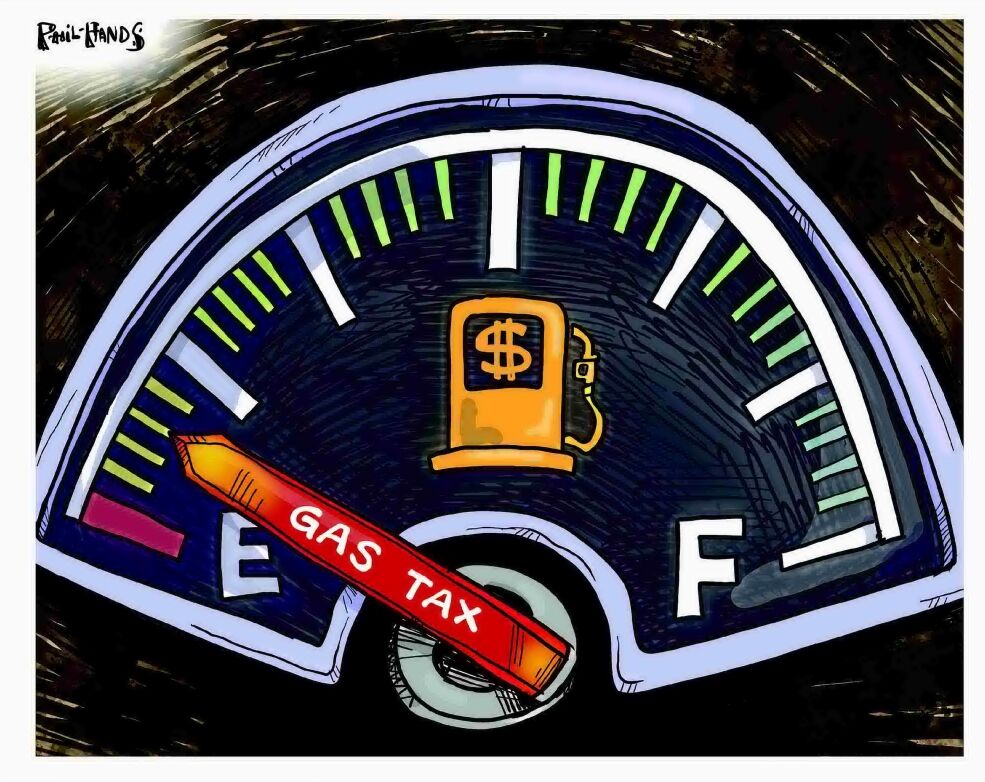
The Highway Trust Fund — the primary federal account dedicated to funding highways, bridges and transit — is going broke.
The fund gets its money largely from federal taxes on gasoline and diesel fuel — revenue sources designed decades ago for a very different transportation system. That revenue isn't keeping up with surface transportation needs.
The problem?
Congress has not increased the federal gas tax since 1993. Yet it has consistently increased funding for roads and bridges to account for rising construction costs and a growing backlog of needs.
Congress shouldn't cut investments in roads and bridges, but it must figure out how to pay for them.
Attempting to close this gap solely by raising the gas tax would require a dramatic increase that is unlikely to be politically viable. More important, tying our long-term ability to fund roads exclusively to fuel consumption no longer reflects how Americans travel. The rapid growth of vehicles that use little or no gasoline further undermines this model. In a world of increasing fuel efficiency and evolving powertrain technologies, it makes little sense to tax Americans based on the type of vehicle they drive or the fuel it uses.
The solution is an annual fee based on each vehicle's weight. The states would collect the fee when drivers register their vehicles.
This approach off ers several major benefits.
It would allow for the elimination of federal gas and diesel taxes, lowering gas prices and reducing pain at the pump. This is especially important now as gas prices are rising due to geopolitical events.
Second, it would stabilize the Highway Trust Fund for the long term. The Congressional Budget Office estimates a nearly $300 billion shortfall in this fund over the next 10 years, with insolvency starting in 2028.
Since 2007, Congress has moved general tax dollars into the transportation fund to avoid insolvency. This was never intended to be a permanent solution. Continuing down this path would only increase uncertainty, undermine long-range planning and increase the national debt.
An annual fee tied to vehicle weight would eliminate the need for generalfund bailouts. It would save taxpayers billions while also providing Congress, the Department of Transportation and the states with the necessary resources to maintain and modernize our infrastructure.
Finally, an annual fee based on vehicle weigh could make heavy-duty trucks more affordable to buy. Since World War I, new trucks have been subject to a 12% federal excise tax. As truck prices have risen, that tax became a significant barrier to investing in newer, safer and cleaner vehicles.
This is a simple and fair solution that drivers can understand and support. Every state already has an established vehicle registration system, meaning the infrastructure to collect those fees is in place. This reduces the cost to collect the fee and avoids creating a new federal tax bureaucracy.
Taxpayers can reduce the upfront burden of these fees by breaking their payments into multiple installments. For most passenger vehicle owners, the monthly payment could be less than a Netflix subscription.
A surface transportation reauthorization bill is moving through Congress now. It's the perfect moment to reform and stabilize the trust fund and finally fix our national transportation infrastructure emergency.
Stasiowski is the president and CEO of the American Highway Users Alliance. He wrote this for InsideSources.com.
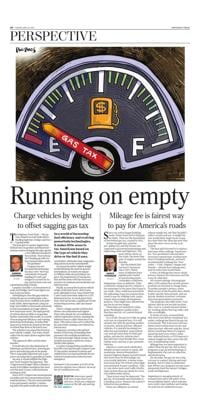
In a world of increasing fuel efficiency and evolving powertrain technologies, it makes little sense to tax Americans based on the type of vehicle they drive or the fuel it uses.
Mileage fee is fairest way to pay for America's roads

BARUCH FEIGENBAUM
Since our nation began building roads, drivers have had to help pay for them. That was the foundation of the federal gas tax, created in 1932.
Drivers bought fuel, paid the per-gallon tax, and the money was supposed to go toward maintaining and improving roads and highways. The more drivers drove on the roads, the more they paid. It largely worked for decades.
But the federal fuel tax hasn't increased since 1993. Thirty years of inflation have significantly eroded its purchasing power.
Lawmakers could have indexed gas taxes to inflation. They could have charged electric vehicles a fee equivalent to the taxes they'd pay to use roads. They could have prevented the siphoning of gas tax revenue from roads to pay for walking trails, parks, transit and economic development projects. That might have allowed the gas tax to survive longer.
Those fixes are unrealistic today, given Washington's political dysfunction and out-of-control federal spending.
As a result, the gas tax is like an aging rock star on a farewell tour. It is still around, but with the growing number of electric, hybrid and fuel-efficient vehicles, it is quickly becoming less effective and outdated. Some hybrid cars now get more than 50 miles per gallon, and electric vehicles don't pay fuel taxes even though they cause similar wear and tear as gas-powered vehicles.
America's roads need a dedicated, reliable revenue stream to repair and modernize. Reason Foundation's Annual Highway Report recently found that more than 42,000 bridges are structurally deficient. A dozen states have more than 5% of their urban highway pavement in poor condition. Thirty-one states have rural traffic fatality rates of more than one death for every 100 million miles driven.
These issues must be improved. The gas tax, increasingly unsustainable as a funding source, worsens the nation's infrastructure problems.
Some are calling for an annual vehicle weight fee, but that wouldn't reflect actual road use. A weight fee also would allow large trucks to pay less than their fair share because they place the most stress on the road system.
The best path forward is to replace fuel taxes with a mileage-based user fee. Two prominent national infrastructure commissions studied more than 25 funding methods, and both recommended a mileage fee. Four states — Utah, Virginia, Oregon and Hawaii — already have mileage fees, and 30 states have tested them.
Critics of mileage fees worry about privacy, fairness for rural areas and the costs of collection.
All current mileage-fee programs off er a GPS option that records drivers' positions in real time to charge them. To protect people's privacy, states block access to the location data, delete it after specific time periods, and use private vendors to protect customer data from government overreach.
The programs also off er lower-tech options that do not include location data, such as a yearly manual odometer-reading option that logs miles and bills accordingly.
In terms of costs, research finds that most rural drivers would pay less under a mileage fee than if the gas tax is increased. This is because rural residents tend to drive more trucks and other less fuel-efficient vehicles. Rural drivers would pay more if Congress raised the fuel tax to today's inflation-adjusted levels, or if it imposed a vehicle weight fee that covers the full cost of maintaining roads.
Mileage fees are more expensive to collect than the gas tax. But as these programs scale up and technology is implemented, the cost of collection should decrease.
For decades, the gas tax was a logical way to connect driving and road funding. But it's time to modernize how drivers are charged to ensure users adequately fund the nation's bridges, roads and highways.
Feigenbaum is managing director of transportation policy and author of the Annual Highway Report, which evaluates every state's road conditions and funding. He wrote this for InsideSources.com.