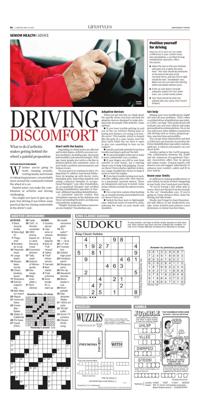


DRIVING DISCOMFORT
What to do if arthritis makes getting behind the wheel a painful proposition
SENIOR HEALTH | ADVICE
Whether you're going to work, running errands, visiting family and friends or taking long journeys, you probably move around the community behind the wheel of a car.
Painful joints can make the combination of arthritis and driving challenging.
You might not have to give up on pain-free driving if you follow some practical tips for staying comfortable in the driver's seat.
Start with the basics
Depending on which joints are affected and to what degree, arthritis can cause various problems, including pain, decreased joint mobility and reduced strength. With age, many people also notice a decline in proprioception (the automatic sense of your body's position and movement) and balance issues.
"If your goal is to continue to drive, it's important to address functional limitations by keeping up with doctor visits, managing pain, exercising regularly and seeing a physical therapist or occupational therapist," says Amy Donabedian, an occupational therapist and certified driving rehabilitation specialist at Harvard-affiliated Spaulding Rehabilitation.
A consistent exercise routine that strengthens muscles in the abdomen and those surrounding the joints can help ease osteoarthritis symptoms.
"Weight-bearing and balance exercises are also helpful," Donabedian says.
Adaptive devices
When you get into the car, think about the specific issues you have and look for adaptive devices designed to make driving easier for people with arthritis. Some options:
If you have trouble getting in and out of the car without feeling pain or losing your balance, try using a car handle assist. This handle, which is shaped like the grip of a cane, hooks onto the door latch while the car door is open to give you something to lean on for support.
■ Install a seat belt extender if you have trouble reaching to pull out the belt.
■ To raise the height of the seat or make it more comfortable, use a cushion.
■ If your fingers are stiff or sore from arthritis in your hands, use a steering wheel cover to help with gripping. If your car doesn't have a keyless ignition system, use a large-handled key turner to make it easier to start the engine.
■ If you have trouble turning your neck, consider adding extra side-view mirrors or a panoramic rearview mirror. These are inexpensive and easy to install. Some newer vehicles include the option of extra mirrors.
■ Use a rearview camera when backing up, or consider having one installed if your car doesn't have one.
■ Switch the floor mats to lightweight ones, which are easier to remove to clean, reducing the strain on your hands and shoulders.
Get help
Making your own modifications might not solve all your problems. That's when a certified driver rehabilitation specialist, or CDRS, can help. This professional will evaluate you and your vehicle and make personalized recommendations. He or she also will assess other abilities essential for safe driving such as vision, proprioception, reaction time and mobility.
You can get more information and find a CDRS near you from the Association for Driver Rehabilitation Specialists website, aded.net. A clinical assessment can cost about $300.
Another option is the CarFit program. This collaboration between the AARP and the American Occupational Therapy Association offers free in-person and online events. Trained experts will observe you and suggest adjustments to enhance your comfort, safety and fit in your vehicle.
Know your limits
In addition to making modifications to your vehicle, be aware of what's happening in your body. Don't push past your limits.
"If you're having a day when pain is worse, that's not the day to do five errands in the car," Donabedian says. If you're going on a long-distance drive, share the driving and take breaks.
Finally, don't forget to check the potential side effects of any medications you take. Some arthritis pain relievers cause drowsiness or slower reaction times.
Position yourself for driving
How you sit in your car can make a difference in your comfort level. Amy donabedian, a certified driving rehabilitation specialist, offers this advice:
■ Adjust the seat so that your buttocks and knees are at about the same level. "your eyes should be positioned at the level of the base of the rearview mirror, and your line of sight should be clear," donabedian says. Make sure you can reach the steering wheel and pedals without strain.
■ If the car seat doesn't provide adequate support for your lower back, use a small lumbar pillow.
■ Your head should be level and aligned with your spine. don't hunch forward.