
Danny Jacobs always knew his dad, Richard, was … different.
People are also reading…

Danny Jacobs in front of his childhood home The Royal Manor in Creve Couer. (It now has an address number.)

Danny Jacobs, left, and Darren Grodsky are writing and directing partners, but lately they’ve partnered on a podcast about Jacobs’ childhood with his narcissistic dad called “How to Destroy Everything.”

The story Creve Coeur's Richard Jacobs is being told on son Danny Jacobs' podcast, "How to Destroy Everything." Danny tells stories of his father's narcissistic behaviors.

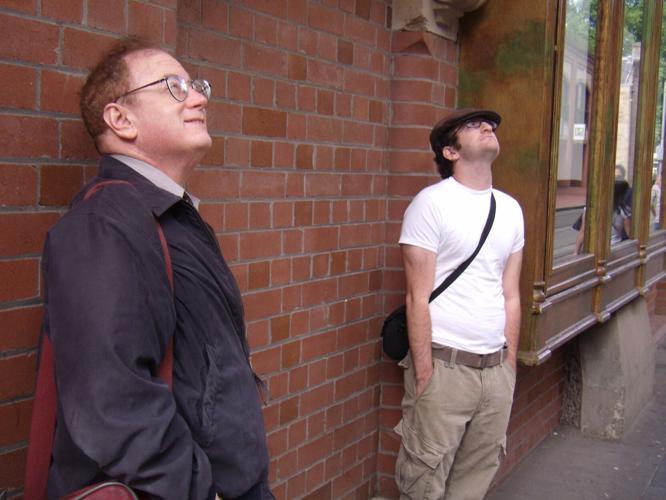
Danny Jacobs (left) with his father Richard

Richard Jacobs with his son Danny
How to spot a narcissist (and what to do about it)
Telltale signs of a narcissist

A true narcissist has a lot more going on than just a devoted relationship with their phone camera. (Viorel Sima/Dreamstime/TNS)
Previously, the American Psychiatric Association stated Narcissistic Personality Disorder (NPD) is diagnosed when a person shows five or more of the traits below. But many in the medical community aren't satisfied with this criteria and find, in practice, diagnosing NPD is much more nuanced.
— a grandiose sense of self-importance
1. They'll do and say anything to prove they're the best
When it comes to OTT, narcissists have exaggerating down to, well, a T. They believe they're superior to those around them and will lie to build up the grand image they have of themselves.
A narcissist might claim to be the driver behind that recent multimillion dollar deal, even though they only typed up the meeting minutes.
2. They're desperate for your affirmation
One of the most important things to understand about a narcissist is that they feed off other people's attention.
"Narcissists require something called 'narcissistic supply,' which is basically attention," explains Martin. You might compliment their new bag. But they'll push for more. "Isn't the color amazing? Guess which designer it's by?"
3. They're entitled AF
They show up for work late, leave early and miss deadlines. But they definitely deserve that pay raise, right?
A narcissist believes they're entitled to the best with very little effort. Unfortunately, when this doesn't come to fruition, the result is often drama and tantrums, a la toddler-style.
4. Sneering is their preferred form of congratulations
Narcissists are perpetually envious of others, while also believing, (usually without good cause) that others are envious of them. They deserve the very best, and woe betide if you have something they don't.
If you achieve something, it's common to be put down instead of congratulated. The offhand snide remark or negative comment can sting, and when it's a regular part of the relationship it can become a form of emotional abuse.
5. You always seem to hear from them when they need something
A narcissist will do anything to get what they want — even if it means using you for their own gain.
Does that friend suddenly get in touch when they need a favor, drop you like a hot stone once they've got what they need, then call again the next time they require a hand? They're not afraid to scroll through their contacts and turn on the charm.

6. Somehow it's always your fault
Narcissists are skilled at turning around the facts to portray themselves as the victim. They might constantly tell you you're being too sensitive to make their own selfish actions seem less impactful.
Because of narcissists' lack of empathy, they're also prone to gaslighting. This essentially means they lie, manipulate and twist the facts to make the people around them doubt their perception of reality.
7. When you call them out, they lose their s***
Nobody loves to be called out — but narcissists tend to react with what Martin describes as "unexpected and uncontrollable anger and desire for revenge."
"Narcissists love to be in control, especially of their public image," explains Martin. "Remember, this is carefully contrived to preserve their fragile self-esteem. If they are challenged or exposed, it can trigger narcissist rage."
WTF can I do about it?
Being around a narcissist can be emotionally draining and destabilizing. You may be desperately in search of a fix or cure for their behavior, especially if they're a loved one of otherwise close to you.
"Narcissists are very, very hard to treat," says Sarah Davies, counseling psychologist and author of "Never Again — Moving On from Narcissistic Abuse and Other Toxic Relationships."