Marine archaeologists are racing to unearth the Danish warship Dannebroge, which took heavy fire from British Admiral Horatio Nelson’s fleet and later exploded during the 1801 Battle of Copenhagen. The wreck lies about 15 meters (yards) down in thick sediment, with near zero visibility.
COPENHAGEN, Denmark — More than 200 years after being sunk by Adm. Horatio Nelson and the British fleet, a Danish warship has been discovered on the seabed of Copenhagen Harbor by marine archaeologists.
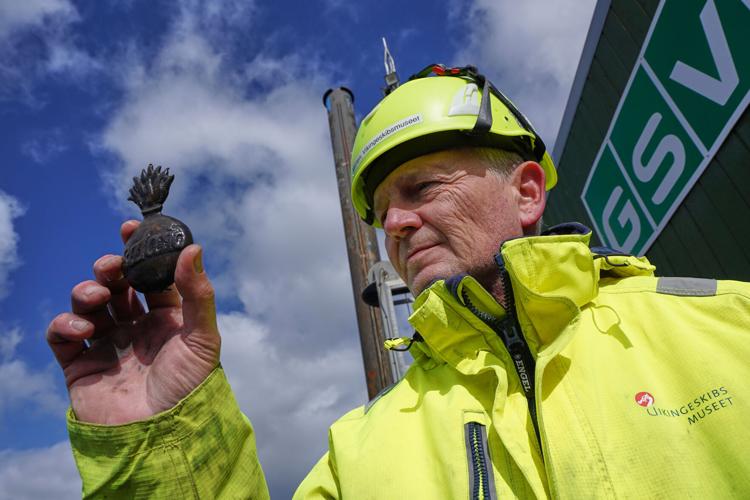
Morten Johansen, head of maritime archaeology at Denmark's Viking Ship Museum, shows a metal insignia recovered from the wreck of Danish flagship "Dannebroge" that sank during the Battle of Copenhagen in 1801, in Copenhagen, Denmark, Tuesday.
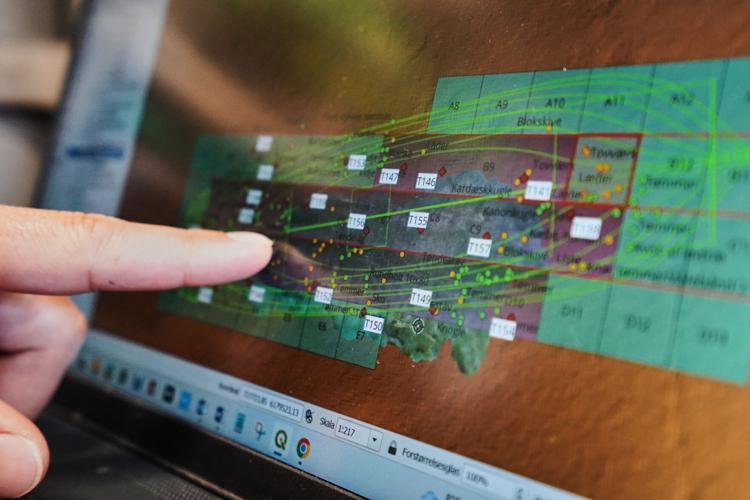
An archaeologist points to a computer screen, showing a map of the wreck of Danish flagship "Dannebroge" that sank during the Battle of Copenhagen in 1801. in Copenhagen, Denmark, Tuesday.
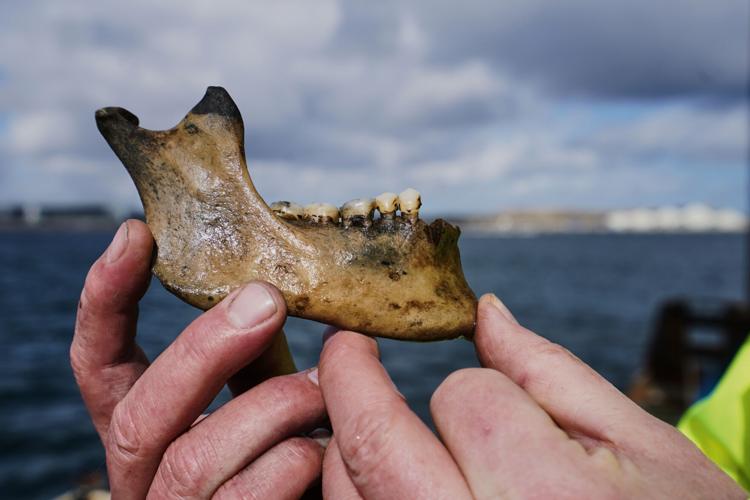
Morten Johansen, head of maritime archaeology at Denmark's Viking Ship Museum, shows part of a human lower jawbone recovered from the wreck of Danish flagship "Dannebroge" that sank during the Battle of Copenhagen in 1801, in Copenhagen, Denmark, Tuesday.
Marine archaeologists are racing to unearth the Danish warship Dannebroge, which took heavy fire from British Admiral Horatio Nelson’s fleet a…
Morten Johansen, head of maritime archaeology at Denmark's Viking Ship Museum, shows a metal insignia recovered from the wreck of Danish flagship "Dannebroge" that sank during the Battle of Copenhagen in 1801, in Copenhagen, Denmark, Tuesday.
An archaeologist points to a computer screen, showing a map of the wreck of Danish flagship "Dannebroge" that sank during the Battle of Copenhagen in 1801. in Copenhagen, Denmark, Tuesday.
Morten Johansen, head of maritime archaeology at Denmark's Viking Ship Museum, shows part of a human lower jawbone recovered from the wreck of Danish flagship "Dannebroge" that sank during the Battle of Copenhagen in 1801, in Copenhagen, Denmark, Tuesday.