
LOS ANGELES – Zachary Quinto considers it a sign: “Brilliant Minds,” his new medical series, started filming April 8, the day of the solar eclipse. His first big series, “Heroes,” showed how a solar eclipse awakened people’s powers.

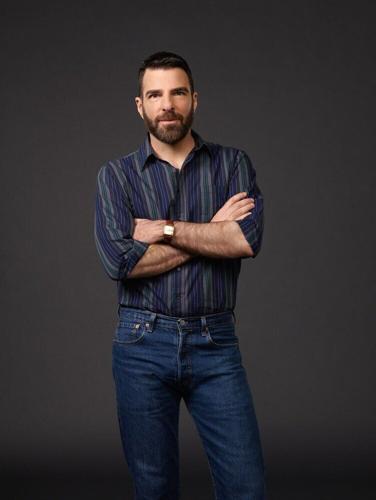
Zachary Quinto as Dr. Oliver Wolf
People are also reading…

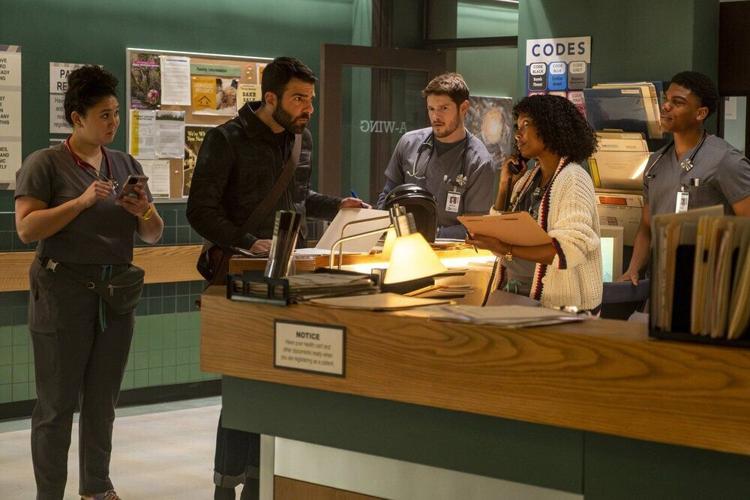
Aury Krebs, from left, Zachary Quinto, Alex MacNicoll, Ashleigh LaThrop and Spence Moore II star in "Brilliant Minds."

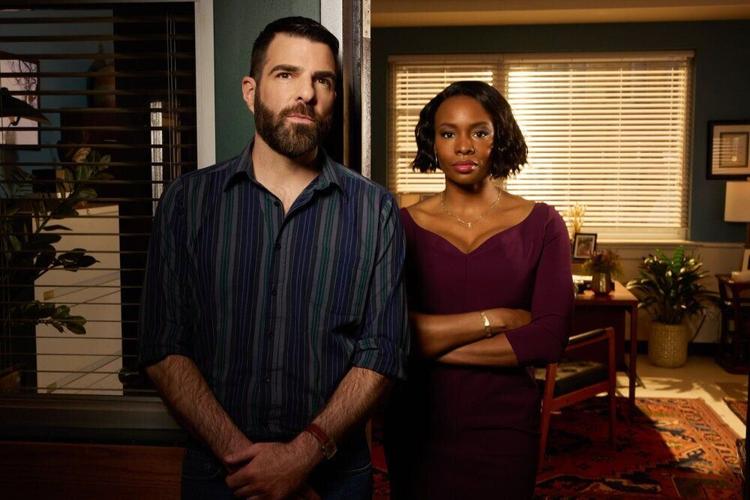
Zachary Quinto and Tamberla Perry star in "Brilliant Minds."

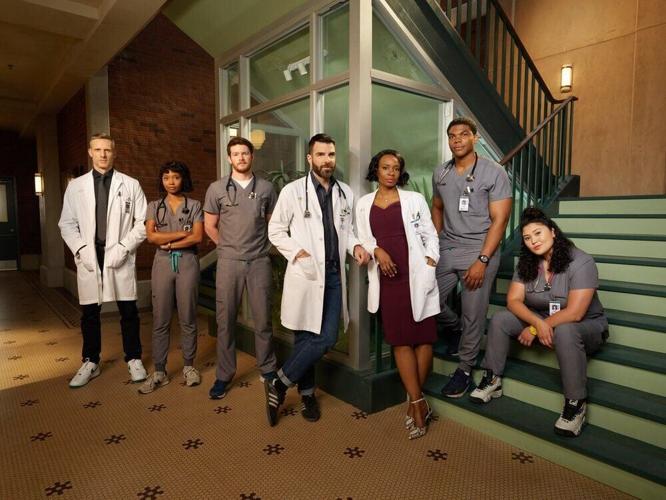
The cast of "Brilliant Minds," from left, Teddy Sears, Ashleigh LaThrop, Alex MacNicholl, Zachary Quinto, Tamberla Perry, Spence Moore II and Aury Krebs.
8 things medical TV shows get wrong
CPR procedures are highly successful or straightforward

In real life, cardiopulmonary resuscitation (CPR) does not save lives as often as it does on TV. A 2015 study from the University of Southern California found that CPR was depicted 46 times in 91 episodes of “House” and “Grey’s Anatomy,” and the survival rate was about 70%.
However, a 2020 study published in South Korea found that, among a group of almost 6,000 patients who received in-hospital CPR, less than 12% survived and were discharged from the hospital. Approximately 90% of those who experience cardiac arrest outside of a hospital die, according to data from the CDC, but administering CPR in the first few minutes following a cardiac arrest can as much as triple survival rates—hence the importance of ensuring automated external defibrillators (AEDs) are widely available.
Medical shows and movies also take artistic license with how CPR is administered. A study published in May 2021 in the International Journal of Medical Sciences found that the optimal bed height for performing CPR is knee height of the person administering the compressions. In addition, if the patient is not on a hard surface such as a floor, a hard board should be placed beneath the chest, as a mattress can affect the effectiveness of compressions—details most medical shows ignore.
Defibrillators are frequently used on flatlined patients

When you see squiggly lines on a heart monitor, you're looking at is the heart's electrical system. That system makes the heart beat rhythmically and pump blood to the body. Automated external defibrillators (AEDs) work like a "reset" button for your heart when the electrical activity isn't rhythmic. AEDs can serve as life-saving devices for sudden cardiac arrests or life-threatening arrhythmias. Used in such cases, defibrillators save an estimated 1,700 lives each year.
Asystole, the most life-threatening form of cardiac arrest, is often irreversible. Also referred to as cardiac flatline, asystole is the state of total cessation of electrical activity from the heart, which means no tissue contraction from the heart muscle and therefore no blood flow to the rest of the body.
When patients in hospitals flatline, the heart has no mechanical or electrical rhythm and is, therefore, considered non-shockable. Using an AED in this situation would be like pressing the power button on a desktop computer that isn't plugged in. Although TV doctors may use defibrillators to try and save flatlined patients, these machines would be of no use in real-life flatlining situations. The best treatments for asystole are high-quality CPR and epinephrine.
TV shows few instances of medical paperwork, health insurance issues, or high bills

Various studies have concluded that some doctors may spend up to half their time on administrative tasks, with one 2014 study published in the International Journal of Health Services finding that most doctors spend roughly 17% of their working hours on paperwork.
Real doctors spend a lot of time on the administrative tasks that come with the job, whether reviewing and filling out charts or dealing with pharmacies. Medical TV shows also often leave out health insurance discussions between patients and nurses or doctors, along with errors in hospital billing and related insurance issues.
Doctors know it all and are Swiss Army knives of care in medicine

Real-life physicians rarely venture outside their fields of expertise, and often involve other specialists while gathering mountains of consults to avoid dabbling in areas that aren’t their forte. Medical guidelines are so detailed for each subspecialty that it’s close to impossible to stay up to date on everything a single patient needs during a hospital stay, so calling in an expert is common when it comes to issues related to specialties other than their own.
“For example, my prescribing the wrong antibiotic for an ear infection may delay my patient from getting proper treatment and put him at risk for complications from the infection,” Dr. Sarah Hull, a cardiologist at the Yale School of Medicine and associate director for its Program for Biomedical Ethics, wrote in an editorial for STAT.
A diagnosis comes fairly quickly

Diagnosing certain conditions, particularly ones that are less common, can be extremely difficult because most doctors don’t regularly come across them.
“Patients may enter what we call a ‘diagnostic odyssey,’” Dr. Anne Pariser, director of the National Institutes of Health Office of Rare Diseases Research, told the American Association of Medical Colleges. They can spend years going from doctor to doctor, and still not get an answer. “Patients start losing hope until they finally get referred to a specialist familiar with the condition,” she said.
Births happen immediately after a person's water breaks

On TV, labor starts right after the water breaks and babies are born almost immediately thereafter.
In real life, contractions may start before the water breaks. Even if the water breaks first, it can be hours or even days before the baby arrives. In some cases, the water doesn’t break at all. That “water” is amniotic fluid that surrounds the baby during pregnancy. When the amniotic sac tears, that fluid spills out—sometimes dramatically, sometimes imperceptibly.
Often, labor can proceed without the water ever breaking and the nurses or doctors will break the water intentionally using special tools to speed up delivery.
This story originally appeared on Ro and was produced and distributed in partnership with Stacker Studio.