
Apple is unlikely to meet production goals for its iPhone 13 because of the global electronic chip shortage. Veuer’s Maria Mercedes Galuppo has the story.
People are also reading…

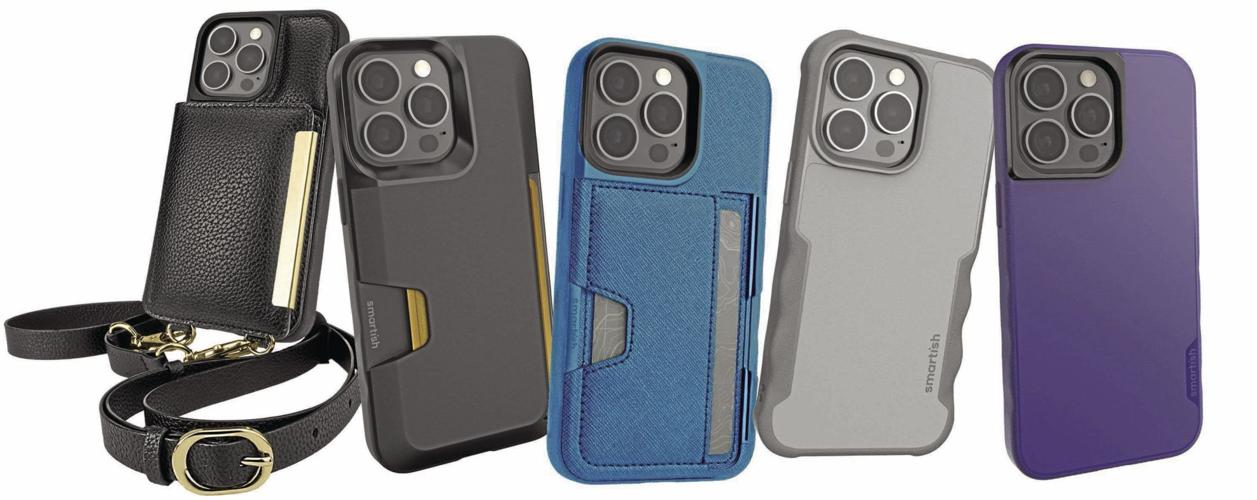
From left, Smartish cases for the iPhone 13, from left: Dancing Queen crossbody wallet, Wallet Slayer Vol. 2, Wallet Slayer Vol. 1, Gripzilla and Gripmunk

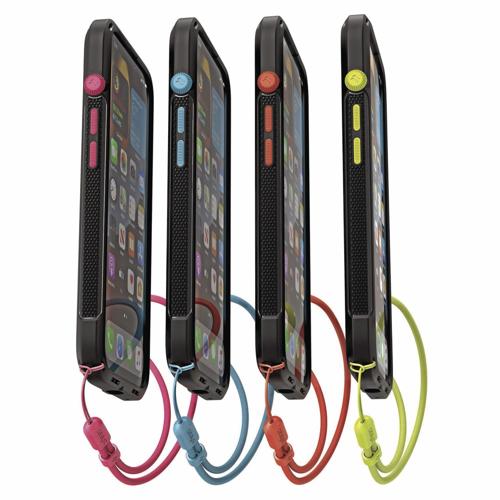
A textured carbon fiber pattern is featured on the Vibe Case. (Catalyst/TNS)

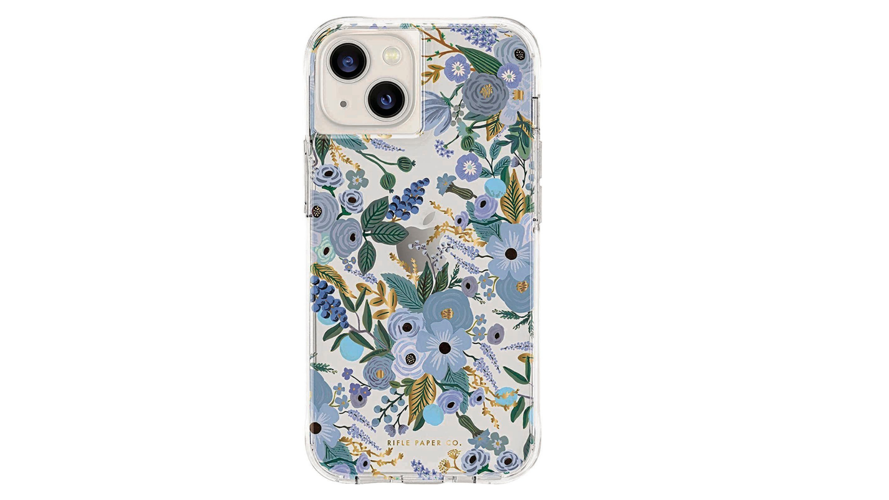
Case-Mate's new iPhone 13 collection includes their first-ever Apple AirTags dog collar holder. (Case-Mate/TNS)

The Protector series has a rigid, impact-resistant outer shell combined with a shock-absorbing rubber lining. (Pelican/TNS)

From net neutrality to clickwrap: 10 major internet law cases since 2000
From net neutrality to clickwrap: 10 major internet law cases since 2000

The internet has been available to the general public since the early 1990s—and those early days of the web were both rudimentary and fascinating.
There was a time in the not-too-distant past when you needed a phone line and a modem to get online; when Netscape Navigator and AOL were the dominating forces on the web; and when the ping of an instant message was as prevalent as the chirp of a text message today. Luckily, the days of long download times and fuzzy dial-up tones are far behind us. Technology has advanced at a lightning pace over the last few decades, with the evolution of the World Wide Web following suit.
As the internet has grown and evolved, so has the development of internet law—and the stacks of legal cases associated with it. The 1997 Reno v. American Civil Liberties Union case helped to protect online freedom of speech after an attempt to regulate “indecent” material on the web. Zeran v. America Online, Inc., filed in 1998, cleared the way for website owners to host third-party content without fear of being prosecuted over users publishing something illegal on their websites. Thanks to these types of landmark legal cases, we now have a clear idea of what we can and cannot do on the web. Yet, the ongoing battles over issues like how information is spread across social media or how censorship plays a role online and on social platforms will continue to refine how the laws are applied to issues with the web.
Ironclad recently reviewed 10 legal cases since 2000 that have helped define how we use the internet. From issues of data privacy to what free speech looks like in the online world, keep reading to learn about 10 major internet law cases.

National Cable & Telecommunications Association v. Brand X Internet Services

Net neutrality became a household phrase thanks to the National Cable & Telecommunications Association v. Brand X Internet Services case, which established that the Federal Communications Commission (FCC) had the authority to classify internet service as either an information service or a telecommunications service, even if that decision wasn’t necessarily aligned with the facts.
The case started in 2002 with a push by cable and telephone operators to have their businesses exempted by the FCC from the competitive requirements of the Telecommunications Act, which requires telecommunications services to sell access to their networks to the public. The FCC obliged, ruling that internet access was not a telecommunications service, which opened the door for telephone companies to have their own in-house operations pricing advantages over outside competitors and exempt them from having to offer access to their data lines with competitors. These policies would be illegal if telephone companies were forced to act as common carriers, and it led to numerous parties challenging the FCC's ruling in court.
Ultimately, the courts decided via appeals that, yes, the FCC can classify internet service as either an information service or a telecommunications service. As a result, cable companies are free to refuse to share their networks with competing ISPs.
Feldman v. Google, Inc.

The case of Feldman v. Google, Inc. was filed by Lawrence Feldman, an attorney who purchased advertising through Google, Inc.’s AdWords program. That program placed his ads at the top of the search results page and charged him each time an internet searcher clicked on one of them.
According to Feldman, this led to competitors or pranksters intentionally clicking on his ads to drive up his costs until they reached a total of more than $100,000 over a three-year period. Feldman argued that he was entitled to win his lawsuit because the clickwrap agreement—a common web-based form that requires the user to agree to terms and conditions before using a website, completing an installation, or making an online purchase—did not result in a mutual agreement for the parties and did have notice of and assent to the terms of the agreement. Therefore, Feldman argued, the agreement was not binding.
The courts disagreed, siding with Google on the basis that these agreements are printable and storable, and that they are written contracts.
A.V. et al v. iParadigms, LLC

The case of A.V. et al v. iParadigms, LLC was another one for the copyright and clickwrap books. In this case, several plaintiffs were suing iParadigms over alleged copyright violations that occurred from using Turnitin, a system used to detect plagiarism in written works submitted to the system by students.
As with a handful of other lawsuits on this list, the agreement with defendant iParadigms was electronically entered into via a clickwrap agreement. The agreement included a clause allowing Turnitin to archive a student’s work upon submission to the system—something done on a regular basis. However, only the schools using the software—not the students—had entered into the agreement permissions for archiving students’ work, leading to a lawsuit against iParadigms alleging copyright infringement based on the archiving of essays and other papers they’d turned in via the plagiarism detection software.
The courts ruled in favor of the defendants, using the four fair use factors to conclude that the website’s archiving of students’ papers was a fair use because it was aimed at detecting and discouraging plagiarism rather than being used in a creative capacity, which is what you’d typically see in a copyright infringement case.
Elonis v. United States

The case of Elonis v. United States had a significant impact on what is perceived as threatening on social media—an extremely important but tricky subject in the digital age. In this case, defendant Anthony Elonis was federally charged with threatening his ex-wife, co-workers, a kindergarten class, the local police, and an FBI agent on social media after his wife left him and he lost his job at an amusement park.
At his criminal trial, Elonis asked the court to dismiss the charges against him based on the argument that his Facebook comments were not “true threats,” and that, as an aspiring rapper, the posts were a form of artistic expression and a therapeutic release for him. The court refused to dismiss the case against Elonis, and the jury convicted him despite his defense.
Elonis appealed the conviction, arguing that “true threats” require a subjective intent to threaten. The appeals court affirmed Elonis' earlier conviction, reiterating that the law does not require proof of a subjective intent to convict someone of threatening someone else on social media.
Mahanoy Area School District v. B.L.

The case of Mahanoy Area School District v. B.L. revolves around the fallout over social media comments made by a high school student and cheerleader. That individual, known only as B.L., failed to make her high school's varsity cheerleading team and then posted a picture of herself with an expletive-filled caption to Snapchat the following weekend. School administrators saw the post and suspended B.L. from the junior varsity team for a year. B.L. sued her school in federal court, with the plaintiff claiming her suspension from the JV team had not only violated her First Amendment rights but that the rules of the school and team were overbroad, viewpoint-discriminatory, and unconstitutionally vague.
In a surprise move, the district court ruled in B.L.'s favor, noting that the school violated B.L.’s First Amendment rights by punishing her for off-campus speech. The school appealed, but the appeals court held the original judgment, making it clear that similar posts made to social media while off-campus are protected by the First Amendment.
People for the Ethical Treatment of Animals v. Doughney

People for the Ethical Treatment of Animals (PETA) sued defendant Michael Doughney after Doughney registered the domain name Peta.org and created a website entitled People Eating Tasty Animals, which was described as “a resource for those who enjoy eating meat, wearing fur and leather, hunting, and the fruits of scientific research”—a clear spoof or parody of the animal rights organization. At the bottom of the website was a text box: "Feeling lost? Offended? Perhaps you should, like, exit immediately,” which included a link to PETA's actual website.
In the lawsuit, PETA alleged that Doughney had infringed on its trademark with the creation of the site, which used the PETA acronym and was also diluting its trademark and cybersquatting. The district court that heard the case sided with PETA, making it clear that there can be legal consequences for those who intend to profit from using the parodied domain name if the domain name is identical or confusingly similar to the more famous name or mark.
Doughney later appealed the ruling to the circuit court, but the earlier ruling was affirmed.
A&M Records, Inc. v. Napster, Inc.

The case of A&M Records, Inc. v. Napster, Inc. was the first major case to address the issue of copyright law as it relates to peer-to-peer (P2P) file sharing—and it changed the face of sharing music as we know it in the process. Napster, a peer-to-peer music-sharing platform, was started in 1999 to allow users to access and download digital MP3s from other users' machines.
Unlike other music-sharing platforms, however, Napster’s central server was built to index its users’ music files and created a list of music that was available for download for free on the platform, removing the need for music fans to purchase MP3s of the music offered on the Napster platform. This led A&M Records to sue Napster for copyright infringement related to its role in distributing copyrighted works.
Napster’s defense was that it offered users a way to sample the music before making a purchase and that the users already owned the music, which it received via authorized distributions of the copyrighted works. The court agreed with A&M Records, ruling in part that Napster’s P2P file-sharing service was not a fair use of copyrighted works—making it much more difficult for copyrighted music files to be shared by using these types of platforms online.
This story originally appeared on Ironclad and was produced and distributed in partnership with Stacker Studio.