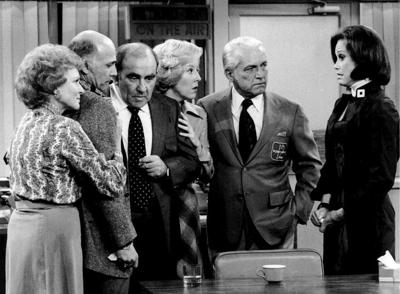

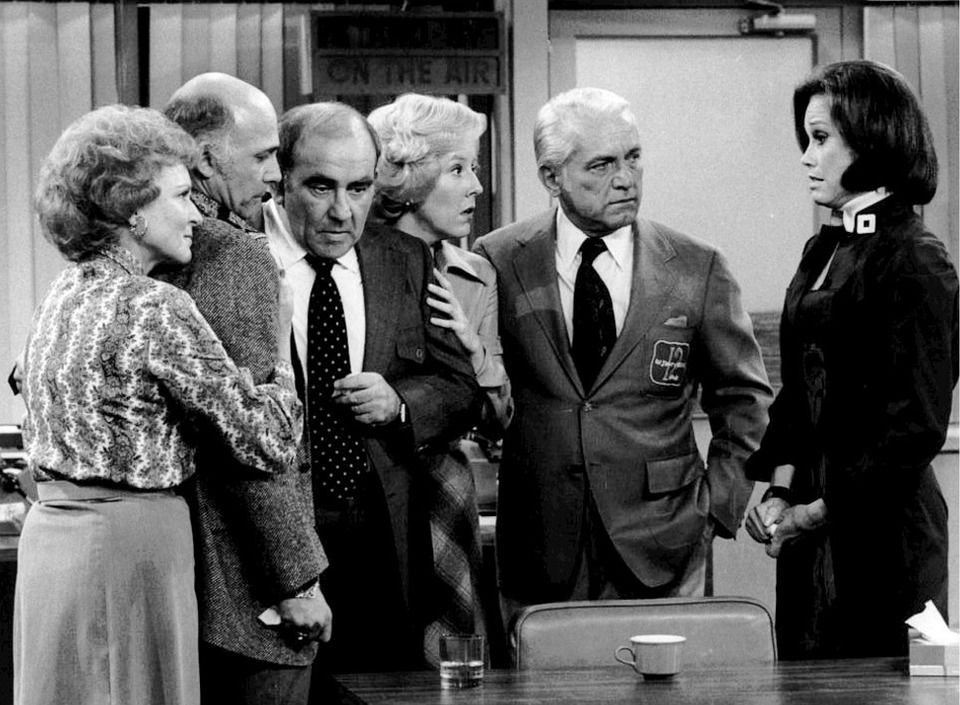
The world met Mary Richards in 1970, as the women's rights movement was roaring - seven years after "The Feminine Mystique" first encouraged housewives to dream of life outside their homes, two years after sex-segregated employment ads were outlawed, one year before Ms. Magazine hit newsstands.
For the very first time, a generation of young girls saw a new kind of role model onscreen: Mary Richards was 30 years old, independent and single. She had an impressive-sounding job in journalism - an associate producer at WJM-TV in Minneapolis - as well as an adorable apartment, fabulous friends and a famously winning smile. She and the other female characters on "The Mary Tyler Moore" show were ambitious, empowered, funny, flawed. They were the stars of a show that was widely hailed as the first female-centric sitcom on television.
And it made a powerful, lasting impression, paving the way for many women to enter the workforce - and newsrooms in particular. As word of Tyler's death spread Wednesday, scores of female journalists (and a few men, too) took to social media to share fond words about Moore - and to say that she was the reason they pursued journalism.
Moore's iconic character was a reminder of the importance of female representation on television and in film, a point that women's rights activists in Hollywood have long emphasized. Actress Geena Davis - who tweeted sympathy to Moore's family Wednesday - told The Washington Post in an interview last year that movies and television have the power to radically change the public's perception about gender roles.
"Media images are so powerful, and it's been proven again and again," she said. Seeing a female character with a powerful career can encourage young girls to rethink their own aspirations, added Davis, who founded the Geena Davis Institute on Gender in Media. She noted that, thanks to shows like "Law and Order" and "NCIS," colleges had reported a surge in the number of women who wanted to be forensic scientists.
"All because they saw it on TV and thought, 'Oh, a woman can do that - I would like to do that,'" Davis said.
Moore was recognized for her influential role by the National Association of Broadcasters, which awarded her a Distinguished Service Award in 2009: "Mary Tyler Moore is a television icon who not only entertained millions of Americans week after week with her quick humor and amazing talent, but inspired many women of her generation to pursue careers in broadcasting, journalism and related fields," said David Rehr, NAB president and CEO at the time, in a prepared statement. "We are proud to honor her with our Distinguished Service Award for the tremendous impact she's had on broadcasting and for her many years of public service."
Hoda Kotb, a co-host on NBC's "Today" show, was on the air during her Sirius XM radio show "The Hoda Show" when news of Moore's death broke. Kotb paused to recognize the impact of Moore's iconic character:
"I would guarantee you there are a whole bunch of people who are in the TV business right now of a certain age, who remember that it was possible because they saw Mary Tyler Moore doing it on TV," Kotb said. "You saw her in a room full of men. With Ted Baxter and all those guys. And she was able to keep who she was and still show that she could be a woman and successful, and she could do it by herself and she had a best friend."
But of all the high-profile women who were inspired to follow in Mary Richards' footsteps, one stands out as perhaps her most devoted admirer.
"I was the biggest Mary fan, like the biggest Mary fan," Oprah Winfrey told her studio audience in 2002. She recounted the moment when, during a 1997 taping of the Oprah Winfrey Show, Moore surprised Winfrey on the set: "I thought I was going to wet myself," Winfrey said. "I went into the ugly cry."
She wasn't exaggerating; in video from the 1997 taping, Winfrey leaps to her feet and screams the moment she sees Moore, who warmly embraces her.
"Mary Tyler Moore, one of the greatest ever. I love her," Winfrey says in the footage, moments before her hero walks out on the stage and Winfrey sobs with joy.
"Thank you, Mary," Winfrey says, "for being such an inspiration to us all."
Author Information: