


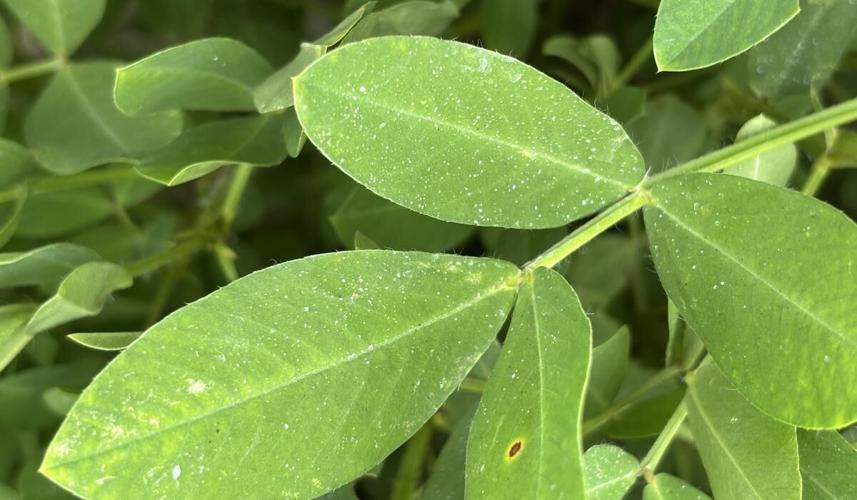
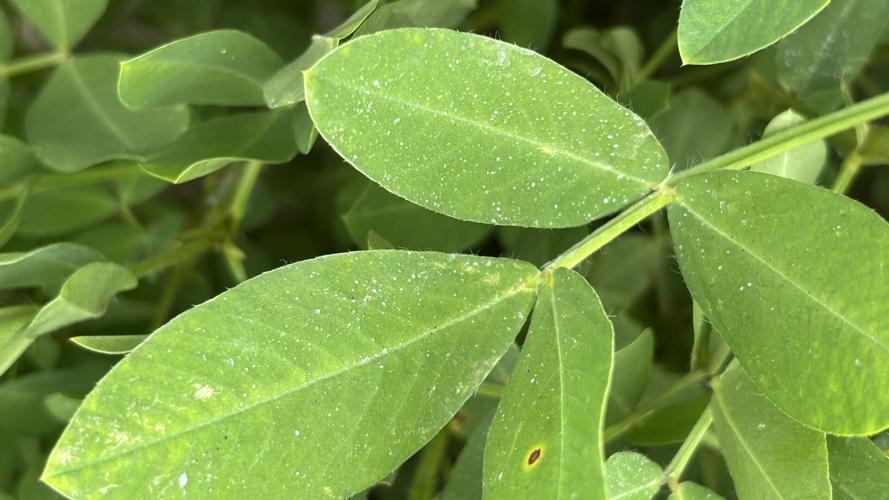
I was recently asked about drones and fungicides. We have very limited data across the peanut belt on delivery of spray through drones versus ground equipment. As regulations and license criteria become clearer, we hope to have more information. With that said, work out of UGA showed that leaf spot and stem rot protection were the same with ground equipment and drone application. The link to the article can be found below. They applied in 5 GPA (48 liters/hectare) and used chlorothalonil and chlorothalonil plus tebuconazole over the season. In one of two years, using spray cards, several measures of spray deposition that would be considered critical for spray coverage through the canopy were less ideal for the drone compared with ground equipment. However, disease suppression was not compromised. In my mind, if efficacy is not compromised for chlorothalonil on leaf spot (protection on the leaf surface only), other fungicides that have systemic characteristics would be effective. This, however, remains to be seen.
People are also reading…
I had a question from a grower this week who was about five days behind on his second spray and was worried about getting across acres with ground equipment because fields are wet and more rain could be coming. I recommended Provost Silver as it has a degree of curative activity (if a company has data for their products relative to curative action that would be great for us to know).
The grower has been using drones for several years but not for peanut sprays. He may try this time, likely with Provost Silver. My only concern (other than unknowns about efficacy) is the concentrated drops using Provost Silver. Occasionally we see some spots in the canopy with this product. He will likely use 2 GPA. That is very low.
Talking with some folks using drones in research, it is surprising that preconceived ideas about volume and efficacy with a drone compared with fixed-wing aircraft are likely not the same. Drones may be "pushing" material into the canopy while fixed-wing aircraft creates a spray that "settles" onto and into the canopy.
Lots of work to be done. Some of you recall Ethan Foote who worked with the peanut project on his PhD program. He did a lot of great and independent work that has helped improve our recommendations. His role now at Syngenta has been working with engineers on delivery of pesticides and other products using different modes of application. He brings his understanding of crops and biology to the engineering group.


