I had a question about whether some of the newer fungicides result in peanuts reaching optimum maturity more quickly than peanuts treated with older materials. I am going to hold back on the source until I follow up, but here are my thoughts.
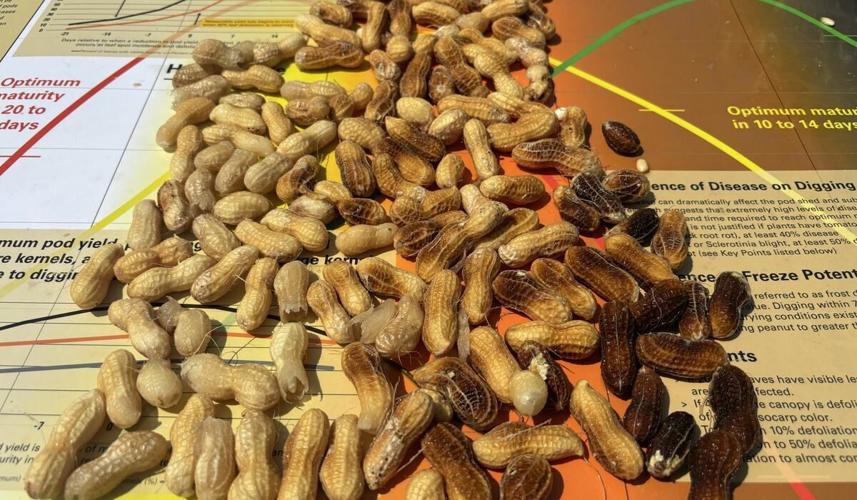
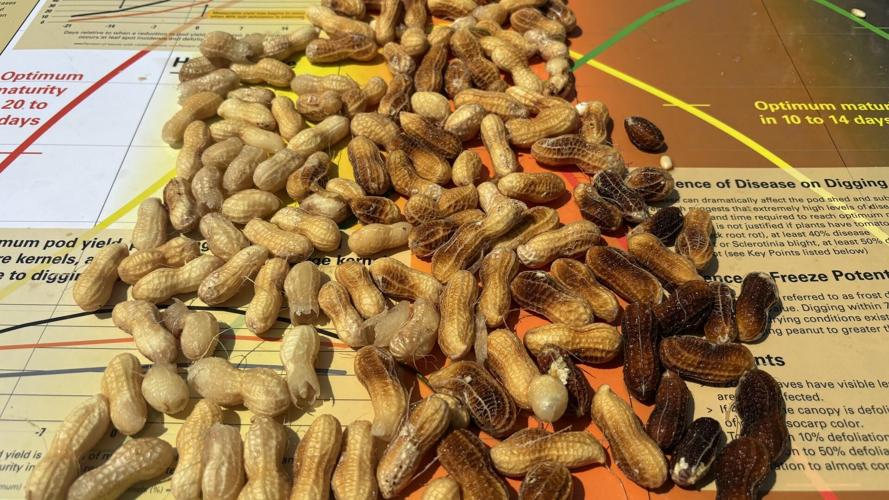
The conclusion on whether pod maturity occurs earlier versus the plant holding on the most mature pods longer depends on methodology. If you are using pod mesocarp color as an indicator of pod maturity, which is a good indicator, when you do that before versus after digging, or lose some mature pods when you sample, you could be making an incorrect assumption about maturity. However, it is a good thing to have a sample with more brown and black pods from a yield and quality standpoint.
So, I think the hastened maturity assumption using a certain group of fungicides compared to others might be due to more of the brown and black pods staying on the plant because of more effective protection from leaf spot. Pods on plants with more leaf spot disease are going to shed more quickly, and depending on when you assess maturity, the comparison of pod mesocarp color may be associated with less pod shed before the sample is observed rather than earlier maturity. There are certainly ways to test this.
Way back in the day, Drs. Culpepper and York did a lot of work with prohexadione calcium (BAS 125, Baseline or Apogee in the 1990s), and their work suggested that this PGR hastened maturity. If I recall correctly, they sampled, I think I might have helped my first fall on the job in 1996, after digging. This methodology would not have considered whether prohexadione calcium was holding the more mature pods on plants during the digging and inversion process. In retrospect, I think the conclusion about earlier pod maturity caused by this PGR was most likely incorrect and that the darker mesocarp color was due to less pod shed. After that realization a few years after the work was published, I am better at asking questions about methodology when a conclusion about pod maturity is made.
Either way, a higher percentage of darker pods after the exocarp is removed is a good thing.
This content is sourced from
NC Cooperative Extension Cabarrus County Center
. It reflects the author's views and has not been edited by our newsroom. It may have been generated using AI assistance.