This content is unavailable. Please contact customer service for more information.
Already a subscriber? Login or Activate your account.
You've reached the end of the standard E-Edition.
This content is unavailable. Please contact customer service for more information.
College to help community digitally preserve history
FROM STAFF REPORTS
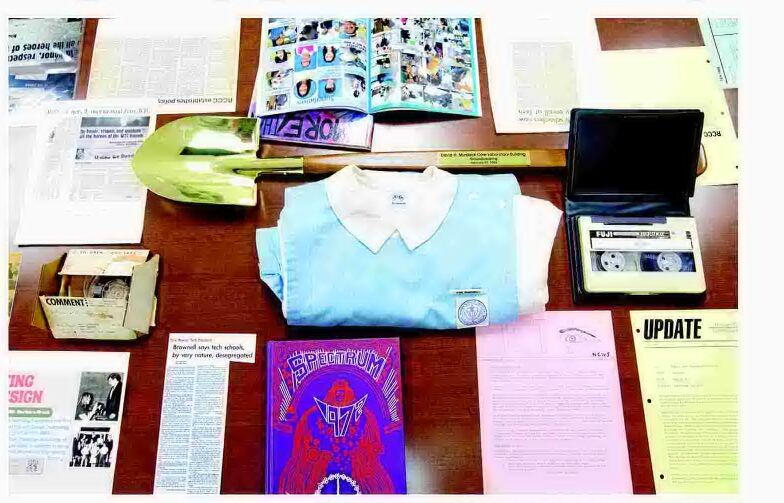
Participants are encouraged to bring photographs, documents,
memorabilia and objects that reflect the history of Rowan-Cabarrus
and the communities it serves.
CARTER WINGFIELD, ROWAN CABARRUS COMMUNITY COLLEGE
Rowan-Cabarrus Community College invites students, employees, retirees, alumni and community members to help preserve the stories, milestones and memories that have shaped the college and the region during Throwback Thursdays: Scan and Share Days at Rowan-Cabarrus. The latest event will be held from 2-6 p.m. on Thursday, April 23, at the College's North Campus Library in Salisbury.
Participants are encouraged to bring photographs, documents, memorabilia and objects that reflect the history of Rowan-Cabarrus and the communities it serves. Items may include classroom photos, event programs or student keepsakes that capture moments in the college's history. Archives staff will provide on-site scanning, allowing individuals to keep their original items while contributing digital copies to the college's growing digital collections. Those who wish to donate materials to the college archives may also do so.
"Every photograph, memory and milestone contributes to the story of Rowan-Cabarrus and the community we serve," said Rowan-Cabarrus President Dr. Carol S. Spalding. "These events create an opportunity for individuals to share their stories and help us document a legacy that continues to grow."
The initiative supports the college's ongoing commitment to preserving institutional and regional history while expanding access to archival materials. Digital copies collected during the event will support long-term preservation efforts and may be featured in future exhibits, publications and digital storytelling initiatives. These materials help tell not only the story of the college, but also that of the people and communities that have shaped its legacy.
"Some of the most meaningful items we see are everyday moments that might not seem significant at the time but become powerful pieces of history over time," said Archive Services Librarian Laura Silva. "These types of events allow us to capture those stories and ensure they remain accessible for future generations."
Community members may bring multiple items to be scanned during the event. Archives staff will be available to assist participants throughout the process and answer questions about the college's digital collections and archival preservation efforts. The event is free and open to the public.
Big Elm Ministries, Secord Harvest and Macy's team up to help families
FROM STAFF REPORTS
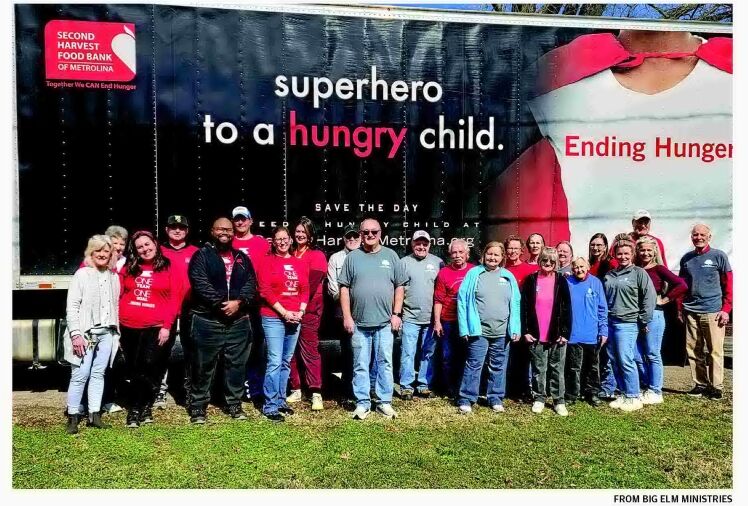
Second Harvest staff with Big Elm Ministries volunteers
celebrate their efforts to help families in the area.
FROM BIG ELM MINISTRIES
A partnership between Macy's Distribution Center in China Grove, Second Harvest Food Bank and local ministry organizations is bringing a touch of comfort and dignity to families across the community.
The Macy's facility recently donated a large supply of luxury bath and body products, fragrances and cosmetics to Second Harvest Food Bank. Employees from both organizations worked together to assemble more than 1,000 care bags, which are now being distributed to individuals and families who may not otherwise have access to such items.
While food assistance remains a primary need, organizers say personal care products can also have a meaningful impact on quality of life.
"Macy's Distribution Center of China Grove has a huge priority for combating hunger and improving the quality of life for those in their community," organizers said in a statement.
Big Elm Ministries, an outreach of Kannapolis Church of God, was selected to help distribute the bags due to its ongoing efforts to serve people in need. The ministry regularly partners with Advocate Health to provide a Faith Community Health Ministry, expanding its reach beyond food assistance to include broader wellness support.
The care packages were distributed during regular food bank events, where recipients were surprised with the additional gifts.
Leaders at Big Elm Ministries expressed gratitude for the collaboration and generosity behind the effort.
The organization also recognized Alisa Stone, senior director and facility leader of Macy's Distribution Center in China Grove, for fostering a culture of giving within the company. Jason Hairston, community development coordinator for the Rowan branch of Second Harvest Food Bank, was also acknowledged for helping coordinate the initiative.
Through the combined efforts of corporate partners, nonprofits and faithbased organizations, the initiative aims to "spread the love" while meeting both essential and personal needs within the community.
Kanthal celebrates center opening
New high-tech operation located in Concord
FROM STAFF REPORTS
Simon Lile, president of Business unit heating systems, and
Bruce Dionne, production unit manager, concord, are shown after the
ribbon-cutting at the plant off International Boulevard last
week.
SUBMITTED PHOTO
Kanthal, a world-leading brand in industrial heating technology and resistance material, celebrated the official inauguration of its new service center located in Concord.
Producers of electronics, glass and steel are increasing their demand for new high-temperature heating solutions. To meet this increased demand, Kanthal has expanded its Globar® silicon carbide heating element manufacturing capacity at the facility in Concord.
The heating elements enable heating processes up to 2,950°F and can replace fossil-fuel heating solutions. This enables customers to reduce CO2 emissions in their production and to make it more energy efficient, clean, safe and improve process control. The aim is to capture market growth with a local production footprint in the U.S. and support long-term product and application development.
Combustion emissions from the manufacturing sector accounts for 573 MMT (million metric ton), or 75% of the sectors' total emissions, according to the Congressional Budget Office (Emissions of Greenhouse Gases in the Manufacturing Sector, Congressional Budget Office). By electrifying the heating processes, these emissions could be reduced significantly.
Kanthal, a global leader in sustainable industrial heating technology, is experiencing increasing demand for its Globar® silicon carbide heating elements, driven by a need for new high-temperature heating solutions and customers aiming to reduce their carbon emissions. These elements can replace fossil fuel solutions, making production more energy-efficient, cleaner, and safer. This transition also ensures better process control while reducing CO2 emissions. To meet the increased demand, Kanthal has a new service center that will improve service and enhance lead times for its customers in the United States.
"We have served the U.S. market since the 1930s. We are already supporting our customers from Concord with a broad portfolio, and adding Globar® to the mix allows us to leverage existing infrastructure. The opening of our Concord service center is the next step in strengthening our local presence in the region which is experiencing a surge in advanced manufacturing," says Robert Stål, President of Kanthal.

The service center is part of an investment of approximately $11 million that also includes expanding the company's main site for production of Globar® silicon carbide heating elements in Perth, Scotland, with an additional 19,000 square feet manufacturing area, as well as new equipment, a new layout, and additional warehouse. Both locations are now fully operational and will increase production capacity by approximately 40%.


The facility in Concord produces products such as Metallic Heating Elements, Tubothal® Heating Elements, High-temperature Tubes, and Fibrothal® Heating Elements. Until now, U.S. customers have been supplied Globar® Heating Elements from the main production site in Perth, Scotland.
"This is not just a new service center. We have implemented technology improvements in Concord that allow us to adapt product configurations based on customer furnace setups and order cycles. The result is a more responsive operation, faster to quote, faster to ship, and better aligned with U.S. customer needs" says Simon Lile, President of Business Unit Heating Systems.
In 2022, Kanthal consolidated production from three U.S. locations into one large state-of-the-art manufacturing and distribution center in Concord, equipped with the latest technology to improve efficiency and lead times.
Peggy Jean Hopkins
January 31, 1934 - March 15, 2026
Peggy Jean Hopkins, 92, of Concord, passed away Sunday, March 15, 2026 at her home in Concord.
Peggy was born January 31, 1934 in North Carolina to the late Dewey Herman Stegall and the late Pauline Stegall.
She was also preceded in death by husband, Mickey Ray Hopkins sister JoAnn Duvall and brother John Stegall.
The family will receive friends from 10 a.m. to 10:4 5.a.m. at Epworth UMC. A memorial service will be on Friday, March 27, 2026 at 11 a.m. officiated by Rev. Dennis Marshall . Burial will follow at the Carolina Memorial Park Kannapolis at Hwy. 29N at I85, Exit 58, Concord.
Survivors include son, Alex Hopkins of Concord, NC, Mark Hopkins (Tonya) of Concord, NC, daughter, Becky Blackwell (Monty) of Concord, NC.; Siblings, Mike Stegall (Patricia) and Betty Hill; Grandchildren, Shawne, Brian, Taylor, Peyton; Great Grandchildren; Gracie, Brody, Ellie, Ryder and Arlin; and sister in law, Saundra Stegall.
Memorials may be made to Epworth UMC Church, 1030 BURRAGE RD NE, Concord NC 28025.
Hartsell Funeral Home of Concord is serving the Hopkins family.
Former FBI Director Robert Mueller dies
ERIC TUCKER Associated Press
Special counsel Robert S. Mueller III testifies July 24, 2019,
before the house Judiciary committee on capitol hill in
Washington.
SUSAN WALSH, ASSOCIATED PRESS
WASHINGTON — Robert S. Mueller III, the FBI director who transformed the nation's premier law enforcement agency into a terrorism-fighting force after the Sept. 11, 2001, attacks and who later became special counsel in charge of investigating ties between Russia and Donald Trump's presidential campaign, died at age 81.
"With deep sadness, we are sharing the news that Bob passed away" Friday night, his family said in a statement Saturday. "His family asks that their privacy be respected."
At the FBI, Mueller set about almost immediately overhauling the bureau's mission to meet the law enforcement needs of the 21st century, beginning his 12-year tenure just one week before the Sept. 11 attacks and serving presidents of both political parties. He was nominated by Republican President George W. Bush.
The cataclysmic event instantaneously switched the bureau's top priority from solving domestic crime to preventing terrorism, a shift that imposed an almost impossibly difficult standard on Mueller and the rest of the federal government: preventing 99 out of 100 terrorist plots wasn't good enough.
Later, he was special counsel in the Justice Department's investigation into whether the Trump campaign illegally coordinated with Russia to sway the outcome of the 2016 presidential race.
Trump posted on social media about Mueller's death: "Robert Mueller just died. Good, I'm glad he's dead." The Republican president added, "He can no longer hurt innocent people!"
The FBI did not immediately respond to a request seeking comment.
The second-longest-serving director in FBI history, behind only J. Edgar Hoover, Mueller held the job until 2013 after agreeing to Democratic President Barack Obama's request to stay on even after his 10-year term was up.
After several years in private practice, Mueller was asked by Deputy Attorney General Rod Rosenstein to return to public service as special counsel in the Trump-Russia inquiry.
Mueller's stern visage and taciturn demeanor matched the seriousness of the mission, as his team spent nearly two years quietly conducting one of the most consequential, yet divisive, investigations in Justice Department history. He held no news conferences and made no public appearances during the investigation, remaining quiet despite attacks from Trump and his supporters and creating an aura of mystery around his work.
All told, Mueller brought criminal charges against six of the president's associates, including his campaign chairman and first national security adviser.
His 448-page report released in April 2019 identified substantial contacts between the Trump campaign and Russia but did not allege a criminal conspiracy. He laid out damaging details about Trump's efforts to seize control of the investigation, and even shut it down, though he declined to decide whether Trump broke the law, in part because of department policy barring the indictment of a sitting president.
In perhaps the most memorable language of the report, Mueller pointedly noted: "If we had confidence after a thorough investigation of the facts that the president clearly did not commit obstruction of justice, we would so state. Based on the facts and the applicable legal standards, we are unable to reach that judgment."
The nebulous conclusion did not deliver the knockout punch to the administration that some Trump opponents hoped for, nor did it trigger a sustained push by House Democrats to impeach the president — though he was later tried and acquitted on separate allegations related to Ukraine.
Records shattered in Southwest
CLIMATE CHANGE
SETH BORENSTEIN Associated Press
WASHINGTON — The dangerous heat wave shattering March records all over the U.S. Southwest is more than just another extreme weather blip. It's the latest next-level weather wildness that is occurring ever more frequently as Earth's warming builds.
Experts said unprecedented and deadly weather extremes that sometimes strike at abnormal times and in unusual places are putting more people in danger.
For example, the Southwest is used to coping with deadly heat, but not months ahead of schedule, including a 112-degrees Fahrenheit reading in two Arizona communities Friday that smashed the highest March temperature recorded in the U.S. Two places in Southern California also hit that temperature. All are within about 50 miles of one another.
"This is what climate change looks like in real time: extremes pushing beyond the bounds we once thought possible," said University of Victoria climate scientist Andrew Weaver. "What used to be unprecedented events are now recurring features of a warming world."
March's heat would have been virtually impossible without human-caused climate change, according to a report Friday by World Weather Attribution, an international group of scientists who study the causes of extreme weather events.
More than a dozen scientists, meteorologists and disaster experts queried by The Associated Press put the March heat wave in a kind of ultra-extreme classification with such events as the 2021 Pacific Northwest heat wave, the 2022 Pakistan floods and killer hurricanes Helene, Harvey and Sandy.
The area of the U.S. being hit by extreme weather in the past five years doubled from 20 years ago, according to the National Oceanic and Atmospheric Administration's Climate Extremes Index, which includes various types of wild weather, such as heat and cold waves, downpours and drought.
The United States is breaking 77% more hot weather records now than in the 1970s and 19% more than the 2010s, according to an AP analysis of NOAA records.
In the United States, the number and average cost of inflation-adjusted billion-dollar weather disasters in the last couple years is twice as high as just 10 years ago and almost four times higher than 30 years ago, according to records kept by NOAA and Climate Central, a nonprofit group of scientists and communicators who research and report on climate change.
Trying to keep up
"It's really hard to even keep up with how extreme our extremes are becoming," said Climate Central Chief Meteorologist Bernadette Woods Placky. "It's changing our risk, it's change our relationship with weather, it's putting more people in risky situations and at times we're not used to. So yes, we are pushing extremes to new levels across all different types of weather."
For government officials who have to deal with disaster it's been a huge problem.
Craig Fugate, who directed the Federal Emergency Management Agency until 2017, said he saw extremes increasing.
"We were operating outside the historical playbook more and more. Flood maps, surge models, heat records — events kept showing up outside the envelope we built systems around. That's just what we saw," Fugate said via email.
'Virtually impossible'
Climate scientists at World Weather Attribution did a flash analysis — which is not peer-reviewed yet — of whether climate change was a factor in this Southwest heat wave. They compared this week's expected temperatures to what's been observed in the area in March since 1900 and computer models of a world with climate change. They found that "events as warm as in March 2026 would have been virtually impossible without human-induced climate change."
That warming, from the burning of coal, oil and natural gas, added between 4.7 degrees to 7.2 degrees F to the temperatures being felt, the report found.
Click and hold your mouse button on the page to select the area you wish to save or print.
You can click and drag the clipping box to move it or click and drag in the bottom right corner to resize it.
When you're happy with your selection, click the checkmark icon next to the clipping area to continue.