
BURDEN OF PROOF
Changes under proposed SAVE Act mean many US voters will spend time, money obtaining qualifying documents

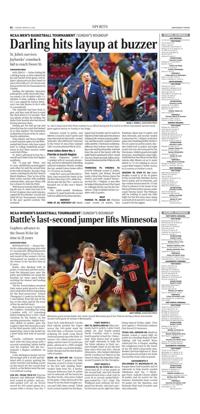
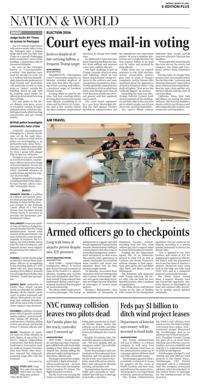
Customers stand in line to get birth and death certificates March 10 at the Columbus Public Health Department in Columbus, Ohio.
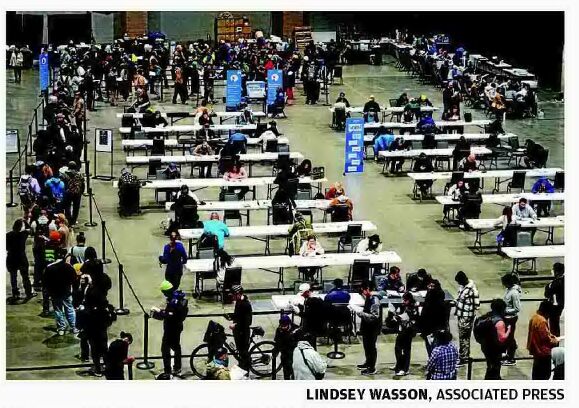
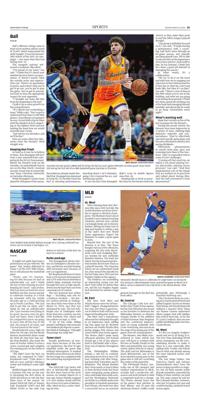
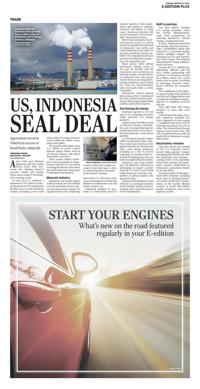
Voters wait in line and fill out their ballots on Election Day, Nov. 5, 2024, at Lumen Field Event Center in Seattle.
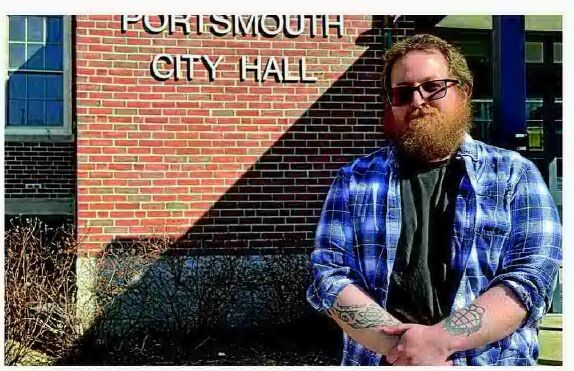
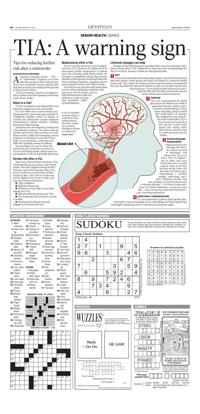
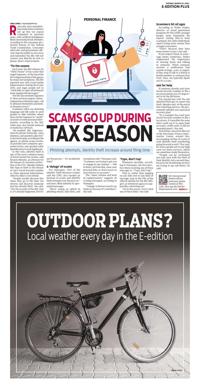
Joshua Bogdan, who faced new hurdles while registering to vote last year, stands March 10 in front of City Hall in Portsmouth, N.H.
ELECTIONS
Joshua Bogdan was born and raised in the United States. The only time the New Hampshire resident left the country was for a day and a half in seventh grade, when he went to Canada to see Niagara Falls.
Even so, that did not mean proving his U.S. citizenship in last fall's local elections was easy.
The 31-year-old arrived at his voting place in Portsmouth and handed the poll worker his driver's license, just as he had done in other towns when arriving to vote. She said that would no longer do.
The poll worker said that under the state's new proof-of-citizenship law, which took effect for the first time during town elections in 2025, Bogdan would need a passport or his birth certificate because he had moved and needed to reregister at his new address. A scramble ensued, turning the voting process that he always found fun and invigorating into a nerve-wracking game of beat the clock.
"I didn't know that anything had officially changed walking in there," he said. "And then being told that I had to provide a passport that I've never had or a birth certificate that's usually tucked away somewhere safe just to cast my vote — which I've done before — it was frustrating."
National push
Bogdan's experience in New Hampshire is a glimpse into the future for potentially millions of voters across the country. That is if Republican voting legislation being pushed aggressively by President Donald Trump passes Congress and a "show your papers" law is put in place in time for the November elections.
The Safeguard American Voter Eligibility, or SAVE America Act, cleared the U.S. House last month on a mostly party-line basis. Republicans say it would improve election integrity. Trump has called its safeguards common sense. The bill is scheduled to come up in the U.S. Senate for voting and debate in the coming days.
Republican messaging mostly highlights a less divisive provision in the bill that would require voters to show a photo ID, but the mandate for people to provide documentary proof of citizenship to register to vote in federal elections is likely to have the most wide-ranging consequences. Noncitizens already are prohibited from voting in federal elections, and it is not allowed by any state. Cases where it occurs are rare.
Obtaining the necessary documents under the SAVE Act is not as easy as it might sound. A similar effort was tried in Kansas a decade ago and turned into a debacle that eventually was blocked by the courts after more than 30,000 eligible citizens were prevented from registering.
A long list with caveats
Rebekah Caruthers, president and CEO at the Fair Elections Center, said the legislation's strict documentation requirements could move the U.S. "in the opposite direction" of representative democracy.
"If this bill passes, it would deny millions of eligible Americans their fundamental freedom to vote," she said. "This includes millions of people who make up your communities, including married women, people of color and voters who live in rural areas."
The list of qualifying documents in the SAVE Act for proving citizenship appears long, but many of them come with qualifiers.
Under the bill, a REAL ID -compliant driver's license would have to indicate that "the applicant is a citizen," but not all do. Five states — Michigan, Minnesota, New York, Vermont and Washington — offer the type of enhanced REAL IDs that explicitly indicate U.S. citizenship.
Standard driver's licenses, generally available to both citizens and noncitizens, often do not include a citizenship indicator. Some states, including Ohio, recently added them.
Military ID stipulations
While military ID cards are listed as qualifying documents under the act, they will not suffice on their own. The bill says a military ID must be accompanied by a military "record of service" that indicates the person's birthplace was in the United States.
A DD214, the current standard-issue certificate of release or discharge for all military service branches, does not currently fulfill that requirement. According to the Pentagon, that document only lists where someone lived at points of entry and discharge and a person's current home of record. It does not list where someone was born.
Potential rush for passports
For most provisions, the SAVE Act contains no phase-in period that would give voters and local election offices time to adjust. If passed by Congress and signed by Trump, its documentary proof-of-citizenship mandate would apply immediately, meaning it would be in place for this year's midterm elections.
That could lead to a rush to obtain documents by those who want to register or need to reregister. A 2025 University of Maryland study estimates that 21.3 million Americans who are eligible to vote do not possess or have easy access to documents to prove their citizenship, including nearly 10% of Democrats, 7% of Republicans and 14% of people unaffiliated with either major party.
A passport would most effectively meet the requirement, but only about half of American adults have one, according to the State Department, and the SAVE Act requires the passport to be current. An expired one does not count.
Obtaining a passport in time for a looming voter registration deadline is another potential hurdle.
Workers who process passports had layoffs at the State Department reversed, but last month the department forbid passport processing at certain public libraries that long helped relieve pressure at the department. Government libraries, post offices, county clerks and others still provide the service.
It takes four to six weeks to get a passport, according to the department's website, excluding mailing time. A new passport costs $165 for adults and renewals cost $130. The photo costs $10 or $20 more. The turnaround time can be sped up to two or three weeks for an additional $60 — and for even faster processing, add $22 more. The fully expedited process for a new passport costs at least $257.
Birth and marriage certificates
A birth certificate may be a quicker and cheaper choice for most people, but there are twists.
The SAVE Act requires a certified birth certificate issued by a state, local government or tribal government. What does not appear to qualify is the certificate signed by the doctor that many new parents are given in the hospital when their child is born. It provides information similar to a certified birth certificate but would not meet the letter of the federal legislation.
Like passports, birth certificates can sometimes take weeks to obtain. Those who live near their birthplaces can visit the local vital statistics office, but staffing shortages and escalating demand for REAL IDs created significant backlogs in some states. In New York, the waiting period for certified copies is four months, the state said. Average processing times for online certificate requests vary by state, from as few as three days to 12 weeks or longer.
People whose birth certificates don't match their current IDs — mostly women who changed their names when they married — would likely need additional documentation to register to vote under the bill. A 2023 Pew Research Center survey found about 80% of women in opposite-sex marriages in the U.S. take their husband's last name.
No funds for implementation
Notably, the SAVE Act does not provide any money to help states and local governments implement the changes or promote them to voters.
For Bogdan, that was part of the problem when New Hampshire's proof-of-citizenship law took effect. People who voted elsewhere in the state are not required to show proof of citizenship in their new towns if poll workers confirm their registration history, but Bogdan said workers at his polling place did not seem to know that or try to look up the information.
He eventually was able to cast his ballot because, by luck, he recently retrieved his birth certificate from his parents' house more than an hour away so he could apply for a REAL ID. He said government notices to voters would help prevent possible disenfranchisement.
"Young voters like myself don't always carry around our birth certificate, Social Security card, all that important stuff, because it's not used ever or very often," he said. "And so all those young kids who are going to go out and try and vote will be held back from that."