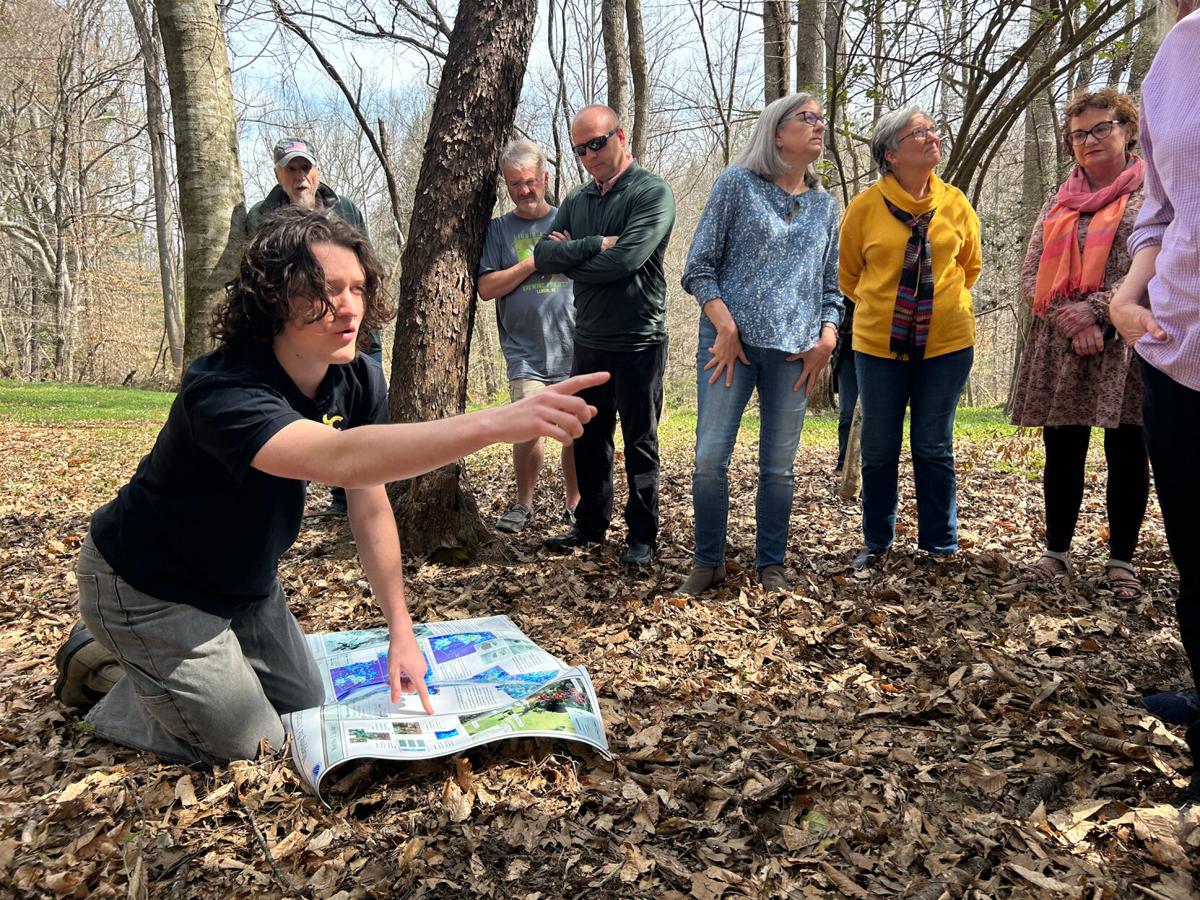
Tucker Terrell, who graduated from App State in May with a bachelor’s degree in geology-environmental geology, far left, shows community members where a single headstone was located by App State researchers trying to determine the position of grave sites in an area formerly covered with brush behind the Fort Defiance site in Caldwell County.
BOONE — In a newly discovered graveyard at Fort Defiance in Caldwell County, an interdisciplinary effort led by Appalachian State University is establishing “a place where science can meet humanity,” as App State researcher Dr. Ellen Cowan describes it. The confirmation of the previously undocumented resting place of enslaved people follows the discovery in 2023–24 of the fort’s buried footprint by the same researchers on a separate project, deepening the history of the Lenoir-area landmark.
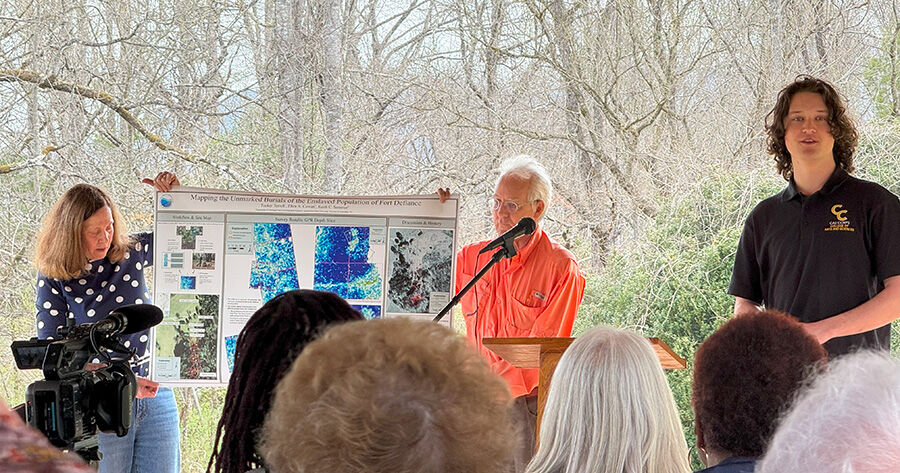
App State alumnus Tucker Terrell, right, explains to a group how he used ground-penetrating radar to locate more than 100 graves of enslaved people at Fort Defiance in Caldwell County. Holding the poster displaying Terrell’s findings are project leader Dr. Ellen Cowan, professor in the Department of Geological and Environmental Sciences (GES), far left, and Keith Seramur, adjunct research and teaching professor in the GES department.
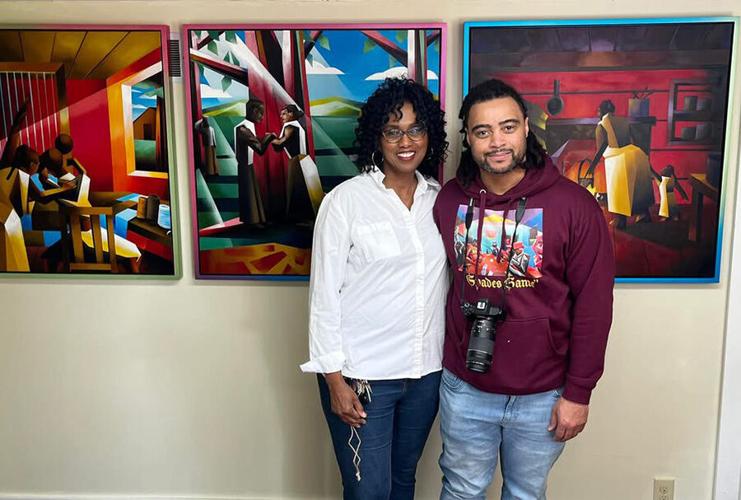
App State affiliate faculty member Dr. Leslie McKesson, left, and Indianapolis-based artist Israel Solomon stand in front of his art exhibit honoring the role of enslaved people at Fort Defiance, the Lenoir-area historical plantation site founded by American Revolutionary War figure Gen. William Lenoir. The mural series was unveiled March 29 in the summer kitchen at Fort Defiance.
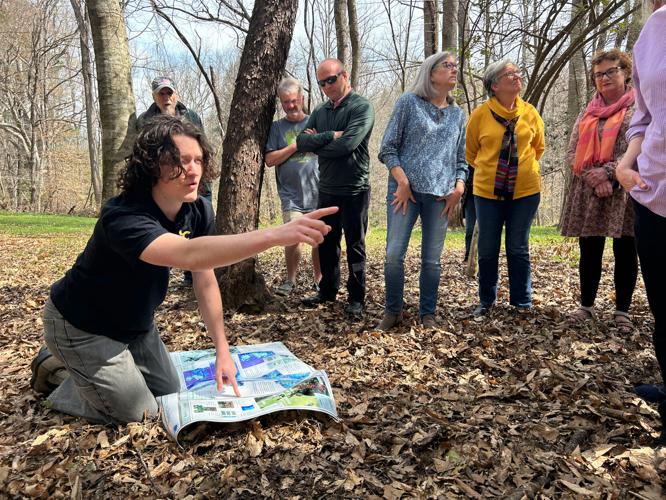
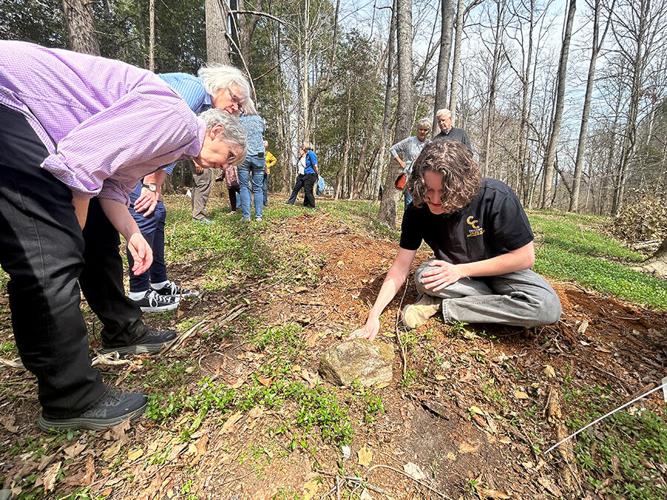
App State alumnus Tucker Terrell, in foreground, explains how faint engravings on a stone indicate it was a headstone for enslaved people at Fort Defiance in Caldwell County. The marker was retrieved from beneath a log by researchers working the site in recent months.
Appalachian Today is an online publication of Appalachian State University. This website consolidates university news, feature stories, events, photo galleries, videos and podcasts. You can access the information at https://today.appstate.edu/
Tucker Terrell, who graduated from App State in May with a bachelor’s degree in geology-environmental geology, far left, shows community members where a single headstone was located by App State researchers trying to determine the position of grave sites in an area formerly covered with brush behind the Fort Defiance site in Caldwell County.
App State alumnus Tucker Terrell, right, explains to a group how he used ground-penetrating radar to locate more than 100 graves of enslaved people at Fort Defiance in Caldwell County. Holding the poster displaying Terrell’s findings are project leader Dr. Ellen Cowan, professor in the Department of Geological and Environmental Sciences (GES), far left, and Keith Seramur, adjunct research and teaching professor in the GES department.
App State affiliate faculty member Dr. Leslie McKesson, left, and Indianapolis-based artist Israel Solomon stand in front of his art exhibit honoring the role of enslaved people at Fort Defiance, the Lenoir-area historical plantation site founded by American Revolutionary War figure Gen. William Lenoir. The mural series was unveiled March 29 in the summer kitchen at Fort Defiance.
App State alumnus Tucker Terrell, in foreground, explains how faint engravings on a stone indicate it was a headstone for enslaved people at Fort Defiance in Caldwell County. The marker was retrieved from beneath a log by researchers working the site in recent months.