


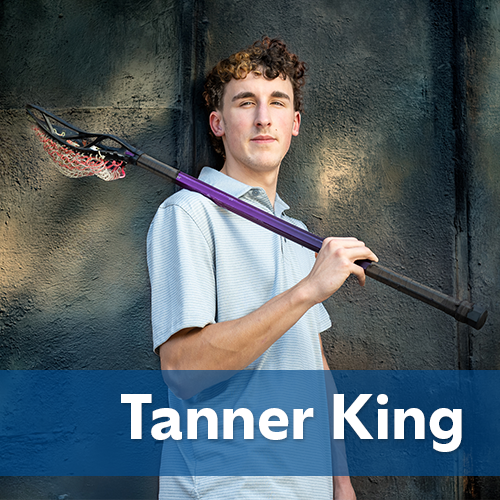

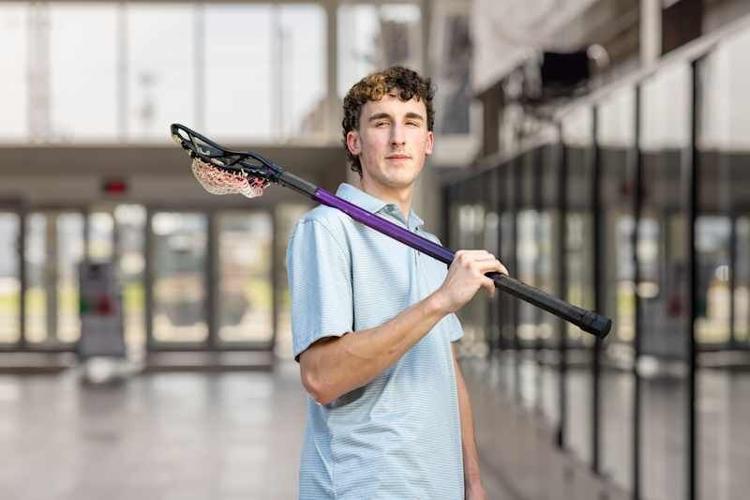
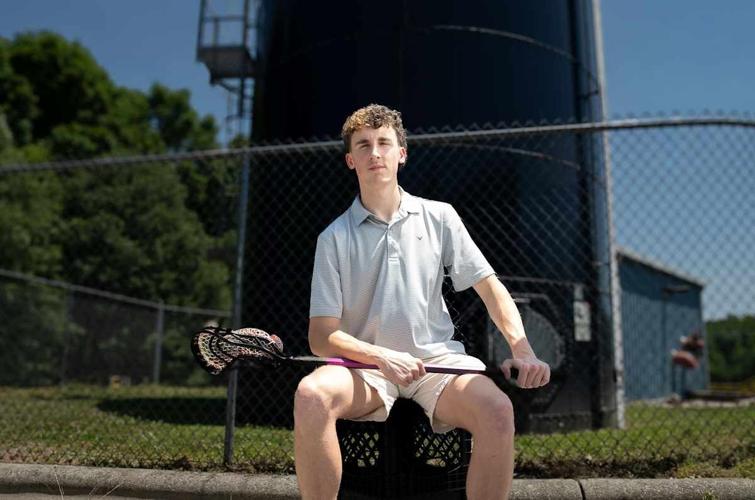
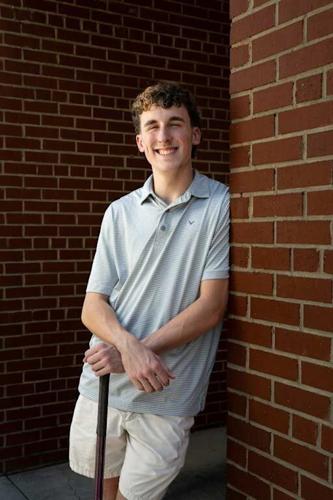
When Tanner King lost both parents his sophomore year, his brothers and the Southeast Guilford community stepped up to provide the support he needed.
It’s unimaginable to unexpectedly lose a parent while in high school. But nothing prepares you for losing both parents — about six months apart — when you’re just 15 years old.
Tanner King’s poise and positive attitude through losing his parents have earned praise from teachers and counselors at Southeast Guilford. He’s responded with grace and gratitude, says Melissa Rich, media specialist.
“He has taken an unbearable situation and truly made the very best of it,” she says. “I cannot think of another kid who has been more resilient than Tanner.”
King relied on a network of support that included his older brother, Hunter, a science teacher at Southeast, teachers and school counselors. He will attend Appalachian State University — Hunter’s alma mater — to major in kinesiology.
People are also reading…
He had an idea that he wanted to go to Appalachian State because he’d visited the campus and surrounding area numerous times with Hunter. But such a transition can still be daunting.
“At the beginning of this year, the idea of college was just terrifying,” Tanner King says. “The idea of being away and leaving the support system that I have here is definitely scary because everything and everyone I know is here. Going outside of my comfort zone is still scary to think about. But people at school helped me and it’s worth it.”
Lessons through loss
King says his father had suffered back pain in the weeks leading up to his death in mid-June. His dad worked in construction, though, so it didn’t seem unusual. A hospital visit didn’t reveal anything wrong. But King’s father had an abdominal aortic aneurysm, a condition that’s called “the silent killer” because it often goes undetected until it becomes a medical emergency or is fatal.
His mother, who had a history of COPD and lung issues, suffered a small heart attack the day his father died and never fully recovered. That fall, the family learned that she was in stage three heart failure. It quickly accelerated to stage four and by King’s winter break, the family lost her too.
At times, it felt awkward, initially, to face his peers, King says. Most teenagers haven’t faced the magnitude of such losses and don’t often know how to verbalize their sympathy. King says he got through it by staying active and continuing to play sports. He also had a lot of support from his older brother, Hunter.
“There were moments when I needed to step out of class and he made sure the teachers knew that I needed that time to regain myself, then get back and start learning again,” Tanner says.
Returning to a routine and staying involved in sports and extracurricular activities helped. Remaining involved in football was especially important, he says. His father had always attended his games, either as a coach or spectator. Disappointed with his performance after a game, he shared with Hunter that he just wanted to make their dad proud. Their parents had instilled in them the importance of working hard, trying their best and never doing anything halfway. If they were going to do something, they needed to give it their all and see it through to the end. Hunter and Tanner keep these lessons in mind with anything they set out to do.
In his sophomore year, King got involved in the Falcon Friends Club, which pairs students like he and his friends with students with special needs. Some of their activities include after-school field trips, craft projects or Special Olympics. King says his friends encouraged him to join because it was fun.
“So I went to a meeting, and it was pretty fun, so I continued going,” he says.
Tanner says grief gets easier with time.
“It does get better. It might not seem like it at first, but it does get better if you continue to push yourself and just stay in a positive mindset no matter how hard it gets,” he says.
Brotherly love
Hunter King was at the beach with his wife’s family celebrating Father’s Day and their one-year wedding anniversary when he got the phone call that changed his life.
“It was the last thing that we expected to hear,” he recalls. “The first question I asked my mom was ‘Does Tanner know? Is he okay?’”
It was instinctual for Hunter to think of Tanner.
“You want to look after him, so you put your own grief and your own feelings aside in the moment to protect them as much as you can,” he says.
He says it felt natural that he and his wife assumed the role as guardians for Tanner. These early losses have taught the brothers how to cope through hardship and armed them with the kind of strength and maturity that many young people don’t need to develop until they’re much older. Hunter was just 25 when he became Tanner’s guardian. He hadn’t yet become a father, himself.
“It taught me humility and how precious those moments are with your family,” Hunter says. “But it’s also doable to persevere through the loss and maintain those relationships with people around you.”
Still, it can be a fine line between offering support and overprotecting someone, Hunter says. He’s witnessed students handle similar losses differently. It’s hard to predict, he says, how someone responds to grief. He just tried to offer his brother as much love and support as possible.
“The hardest truth we have to learn is that eventually things will come to an end and you’re gonna lose your parents,” he says. “We just had to learn it earlier.”


