



A breast cancer diagnosis can bring many questions about treatment options, recovery, and what to expect in the months ahead. For many women, radiation therapy plays an important role in breast cancer treatment, helping reduce the risk of cancer returning while protecting healthy surrounding tissue.
Fortunately, advances in radiation oncology are making treatment more precise, convenient, and effective than ever before.
Dr. Ariel Choi, a radiation oncologist at the McLeod Center for Cancer Treatment and Research, explains when radiation therapy may be recommended, how it works, and how new technologies are helping improve the treatment experience for breast cancer patients.
How common is radiation therapy after a breast cancer diagnosis?
Radiation therapy is a common part of breast cancer treatment, particularly for women with early-stage breast cancer who undergo a lumpectomy.
People are also reading…
A lumpectomy, also known as a partial mastectomy, removes the cancer while preserving most of the breast. Following surgery, radiation therapy is often recommended to target microscopic cancer cells that may remain in the breast tissue.
According to Dr. Choi, approximately three out of four women with early-stage breast cancer who undergo a lumpectomy will receive radiation therapy as part of their treatment.
However, radiation is not necessary for every patient. Some older women with small, favorable, hormone-sensitive breast cancers may be candidates for hormone-blocking medication without radiation therapy, Dr. Choi says.
Ultimately, the recommendation depends on several factors, including the type and stage of breast cancer, the patient’s overall health, and the risk of recurrence.
“As the risk of recurrence goes up or if we have a higher risk cancer that we’re dealing with, radiation is more likely to play a role,” Dr. Choi says.
How does radiation therapy work to treat breast cancer?
Although chemotherapy and radiation therapy are both used to treat cancer, they work in very different ways.
Dr. Choi explains that radiation therapy is a localized treatment. Chemotherapy, on the other hand, is a systemic treatment that travels through the bloodstream to address cancer cells throughout the body.
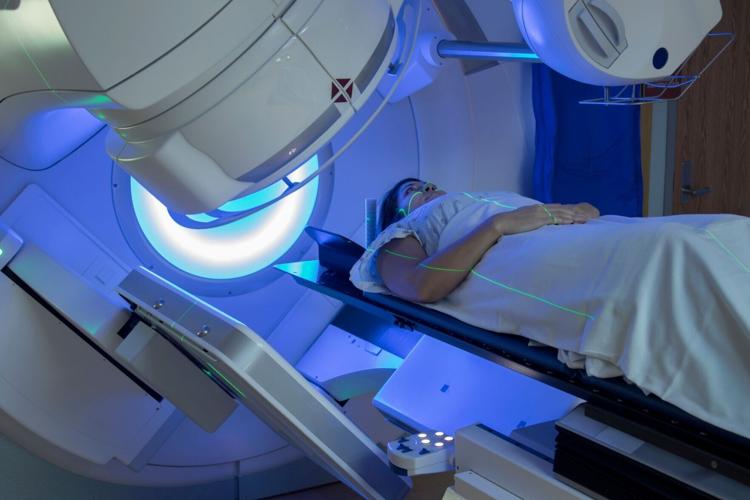
Radiation therapy uses focused, high-energy X-rays to target a specific area, such as the breast, where microscopic cancer cells may remain after surgery.
The difference is that surgery removes the cancer that doctors can see, while radiation targets cancer cells that are too small to be detected through imaging, touch, or visual examination.
By delivering radiation directly to the treatment area, physicians can address these microscopic cells and help reduce the likelihood of breast cancer returning.
This targeted approach makes radiation therapy an important component of breast-conserving treatment for many women.
Advances in radiation therapy are shortening treatment times
One of the most noticeable advancements in breast cancer radiation therapy is the amount of time patients may need to spend receiving treatment.
In the past, five to six weeks of daily radiation treatments were commonly recommended. Over time, research supported shorter treatment schedules, making three weeks a standard option for many patients.
Today, some appropriately selected patients may be eligible for an even shorter course of treatment.
According to Dr. Choi, certain patients can complete breast radiation therapy in as little as one week, with five treatment sessions.
How technology is making breast cancer radiation more precise
In addition to shorter treatment schedules, advances in radiation oncology have improved how precisely radiation is delivered.
Modern radiation treatment planning uses CT-based imaging to create a detailed, three-dimensional view of the breast and surrounding structures.
This allows radiation oncologists to better identify the tissue that needs treatment while minimizing radiation exposure to nearby healthy organs, particularly the heart and lungs.
Dr. Choi says there are a few technologies and techniques that have helped improve radiation delivery.
Intensity-modulated radiation therapy (IMRT)
Intensity-modulated radiation therapy, commonly known as IMRT, allows radiation oncologists to fine-tune how radiation is delivered to the treatment area.
This technology helps physicians shape and adjust radiation doses to better target the intended tissue while limiting exposure to surrounding healthy structures.
The result is a more personalized and precise approach to breast cancer radiation treatment.
Deep inspiration breath hold (DIBH)
For women receiving radiation treatment for left-sided breast cancer, protecting the heart is especially important.
One technique used at McLeod Health is called deep inspiration breath hold (DIBH).
During treatment, patients take and hold a deep breath. This naturally expands the lungs and helps move the heart farther away from the breast, creating more distance between the heart and the radiation treatment area.
“This sounds simple, but it actually has a tremendous impact on minimizing cardiac radiation exposure,” Dr. Choi says.


