

People are also reading…

Since it was signed by President Richard Nixon on December 28, 1973, the ESA has protected more than 2,000 animals and plants, becoming one of Earth’s most far-reaching laws.

A century ago, we stocked non-native trout throughout national parks. Now native species like cutthroat trout must be transplanted in experimental habitats if they're to survive through this decade.

“The Endangered Species Act only protects that relatively small number of species that are right on the precipice of disappearing."

Guard dogs and range riders have protected people against bears for millennia. They may offer solutions for co-existing with grizzlies as the recovered trouble-maker of the West nears ESA delisting.

Would Arctic grayling in the Big Hole River benefit from federal protections afforded by being listed as an endangered or threatened species under the ESA? Some stakeholders don't think so.

Getting Yellowstone National Park bison protected under the ESA might break "the stranglehold Montana has placed on recovering wild bison." But those aren't the only bison.

Montana Untamed: Often called “the pit-bull of environmental statutes,” the ESA has given federal protection to nearly 2,000 animals and plants.

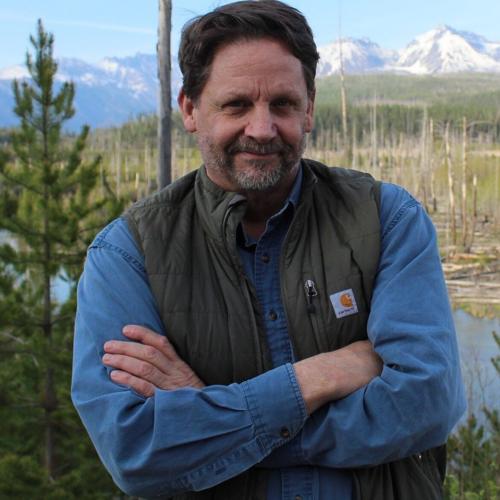

Meet the reporters behind ESA at 50

Rob Chaney reports and edits statewide projects for the Missoulian and Lee Montana newspapers. He’s been reporting on the Rocky Mountain West since 1987. His 2021 book “The Grizzly in the Driveway” won honors from the Society of Environmental Journalists, NPR’s Best Books of the Year and High Plains Book Awards. Chaney served a fellowship at the Harvard University Nieman Foundation for Journalism in 2020 and has led statewide reporting projects with Solutions Journalism Network, Stanford University Big Local News, American Reporting Project, and MIT Tech Review. He prefers to sleep somewhere in Glacier National Park.
50 years of the ESA: Explore this series, in photos

Erin Fenger, conflict prevention specialist for Montana Fish, Wildlife and Park, throws old cattle bones into a dump trailer on a ranch outside Valier, Mont. in Sept. 2023. Montana FWP’s prairie bear team routinely picks up bone pits and carcasses from ranches to prevent grizzly bear attraction to the operations.

Henry Becker, pets Zia, an anatolian shepherd, on the Stickleg Ranch outside Conrad, Mont. in Sept. 2023.

Range rider Sigrid Olson rides her horse Jake on public land in search of cattle outside Potomac, Mont. in Oct. 2023.

Range rider Sigrid Olson rides her horse Jake on public land in search of cattle outside Potomac, Mont., in October 2023.

Range rider Sigrid Olson rides her horse Jake on public land in search of cattle outside Potomac, Mont. in Oct. 2023.

A major aspect of Sigrid Olson’s job as a range riding is documenting the condition of cattle on the range and signs of predators in the area. She produces a report from her notes that she shares with producers and wildlife agencies.

Range rider Sigrid Olson poses for a portrait after a day of range riding outside Potomac, Mont. in Oct. 2023.

Range rider Sigrid Olson loosens the saddle on her horse Jake after a day of range riding outside Potomac, Mont. in Oct. 2023.

Kristina Harkins of the Montana Department of Fish, Wildlife & Parks walks down a hillside near Ambrose Creek northeast of Stevensville after using a radio receiver to locate sharp-tailed grouse on Nov. 16. Harkins is a field coordinator for FWP's effort to reintroduce the species west of the Continental Divide, where they haven't been seen for decades.

Harkins uses a handheld radio antenna to listen for collared sharp-tailed grouse near the MPG Ranch in the northern Bitterroot Valley on Nov. 16.

Kristina Harkins, in the driver seat of an FWP truck near the MPG Ranch Nov. 16, listens for signals from radio-collared sharp-tailed grouse using an omnidirectional antenna mounted atop the truck cab.

Male sharp-tailed grouse dance on a lek in early morning light in spring 2023.

An estimated 300 wolverines prowl the snowy elevations of the Rocky Mountains in Montana, Idaho, Wyoming and parts of Washington, Utah and Colorado. Their hard-to-find nature has challenged the ability of biologists to confirm wolverines' population in the Lower 48 states.

A wolverine triggers a remote camera in the Helena National Forest. The elusive carnivore depends on deep snow for breeding and scavenging food. Climate change and habitat fragmentation have made it a candidate for listing under the Endangered Species Act on its 50th anniversary.

Staff from the Montana Department of Fish, Wildlife & Parks re-introduced Arctic grayling in French Creek in the Mount Haggin Wildlife Management Area in early October 2023. The fish have genetic ties to river-dwelling Arctic grayling in the Big Hole River. French Creek is a tributary to the river.

Fish, Wildlife and Parks Fisheries Biologist Jim Olsen, right, and Region Three Supervisor Marina Yoshioka hold buckets for transporting Arctic grayling during a repopulation project on French Creek on Oct. 2 in the Mount Haggin Wildlife Management Area.

Fish, Wildlife & Parks fisheries technician Lance Breen releases Arctic grayling into French Creek during a repopulation project in the fall of 2023 in the Mount Haggin Wildlife Management Area near Anaconda.

Fluvial Arctic Grayling

Fluvial Arctic Grayling

It's unusual to see Park Service personnel, or anyone, in Yellowstone National Park carrying a weapon. But this summer a crew used an air rifle to shoot darts to collect DNA samples from bison. The sampling is a small part of the work being conducted as the animals are considered for protection under the Endangered Species Act.

Bison close up in a snow storm in Yellowstone National Park.

Bison herd with calves in Lamar Valley of Yellowstone National Park.

A herd of bison in Yellowstone National Park.

A bison cow and calf walk in the road in Yellowstone National Park.

A herd of bison move through the Lamar Valley in Yellowstone National Park.

Cow and calf run through the sage in Lamar Valley in Yellowstone National Park.

The ancient bison, Bison antiquus, was taller, had longer horns, and was 25% more massive than living American bison (Bison bison). It was roughly 7.5 feet tall and 15 feet long, weighing approximately 3,500 pounds. Bison had bone horn cores on their skull that served as a base for a longer horn made of keratin, the protein that makes up our fingernails. The span of the horns of Bison antiquus was approximately 3 feet.

Wesley Sarmento, prairie bear specialist for Montana Fish, Wildlife and Parks, left, talks with Jennie and Seth Becker on the Stickleg Ranch outside Conrad, Mont. in Sept. 2023.