


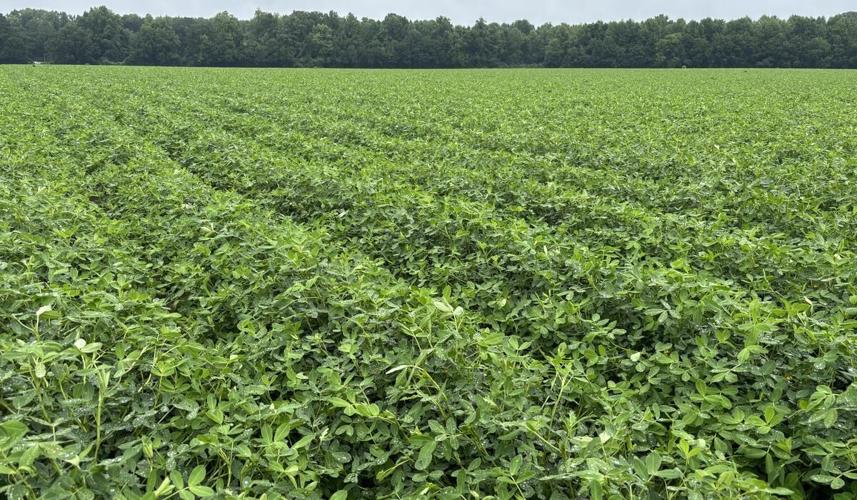
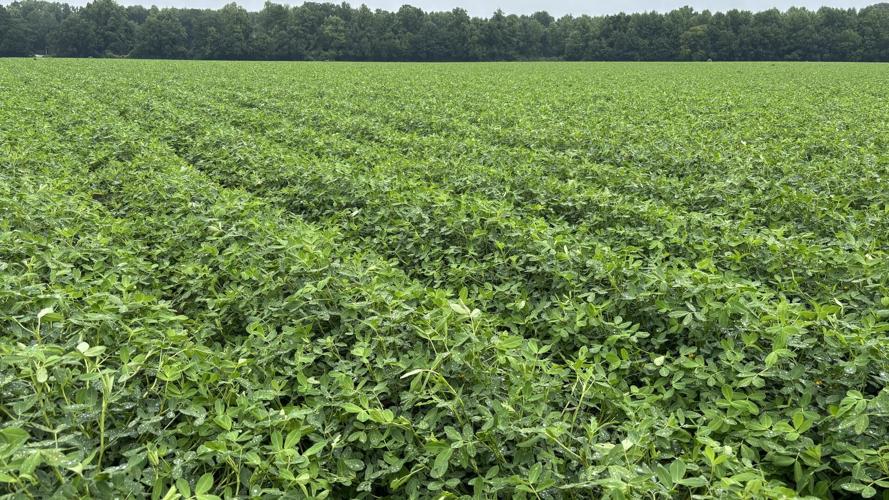
I was recently asked what are the ramifications of excessive rain on peanuts this time of year? The context was 15 inches of rain over a two-week period of time in late July and early August. Peanuts during this phase of the crop are in the pod fill stage of development if planted in May. Peanuts are resilient, but this much water can take a toll. Here are possible factors that will likely impact peanut yield and market grade characteristics.
Fields will likely have greater disease as we move into late August and September. Wet and saturated soil conditions are ideal for the pathogens that cause leaf spot, stem rot, Sclerotinia blight, and pod rot to develop. Based on advisories, risk for leaf spot and Sclerotinia blight have been high since mid-July. Most growers spray on a two-week schedule, and fungicide applications have been delayed in areas with excessive rain and saturated soil. Some growers have applied fungicides using fixed wing aircraft. The combination of excessive vine growth, low spray volume, and inability to push fungicide into the lower areas of the canopy where pathogens are active creates even greater risk of disease.
Excessive rain will move calcium out of the pegging zone, where it is needed for pod and kernel development. Gypsum is water soluble and can move out of the upper two inches of soil with this much rain.
Biological nitrogen fixation has likely decreased under cloudy conditions and saturated soil. This can adversely affect nitrogen nutrition at a critical time in the crop’s development.
Cloudy conditions for two to three weeks can impact photosynthesis in a major way. This could either decrease yield directly or delay crop development and subsequent kernel maturity.
Inability to apply prohexadione calcium to manage vine growth could impact efficiency of digging and vine inversion, in addition to creating challenges with tracking rows in the fall.
In low areas of fields where water has stood for multiple days, some peanuts will die and others will have lower yield due to stunting.
There are likely other impacts not listed here.
People are also reading…
Peanuts can overcome many but likely not all these stresses even if conditions improve. If rain and cloudy weather are more modest but extend into the future, we could experience an even further risk to yield. Dry conditions for several weeks could help the crop in a major way.
Most peanuts in NC have not experienced this much water for an extended period. But some acres have.
We often worry about impacts of hurricanes on peanuts. A single event may not be catastrophic, but multiple events can be. If we continue in the current weather pattern, areas with excessive water up to this point will have major yield reductions. The causes of yield reduction is the crop’s inability to handle the stress brought about by excessive water and challenges we have in helping the crop buffer against stress through our management.


