Approximately 98% of peanuts across the region have been dug and threshed. The pace of harvest in the region has been more rapid than in many of the previous years. Limited rainfall allowed farmers to complete field operations in a timely manner with minimal interruptions. Average rainfall across the region reported in the table was 1.65 inches (42 mm) and 2.19 inches (56 mm) in September and October, respectively. The region avoided major tropical events during these months. Occasional rainfall was beneficial in promoting digging and vine inversion, especially in reduced tillage fields.
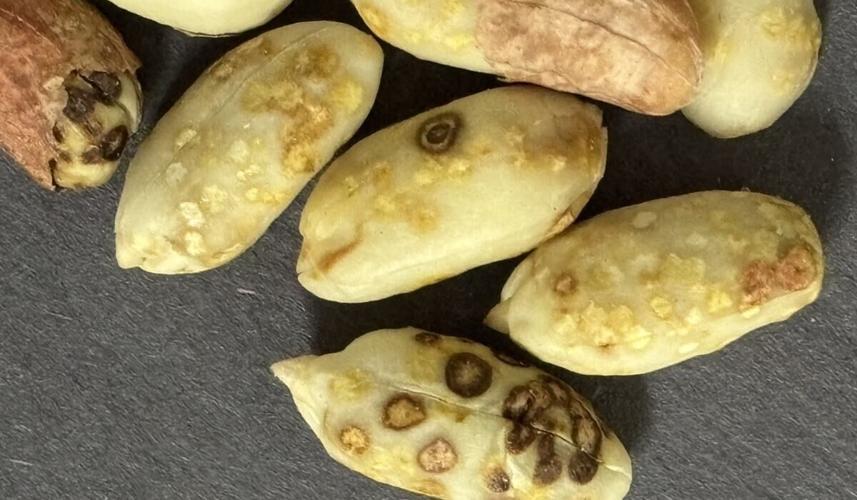
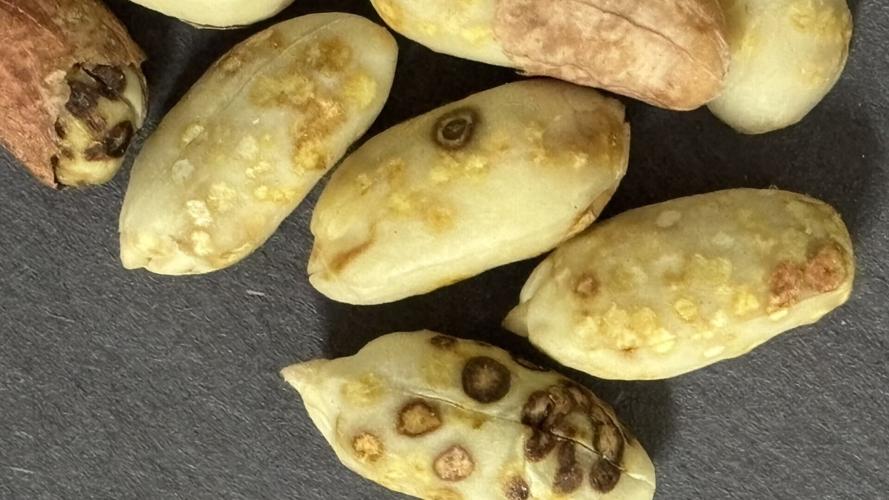
Aspergillus flavus mold has been reported at slightly higher levels than in recent years but not at tremendously high levels. Segregation 2 damage caused by burrower bug has been reported at levels higher than in the past several years. Farmers have been able to clean some loads but, in some cases, a financial loss will occur as peanuts defined as Segregation 2 or 3 are crushed for the oil market at a value of approximately 35% of Segregation 1 peanuts.
Approximately 40% of the peanuts in North Carolina and Virginia and a smaller fraction in South Carolina are used for the in-shell trade. The focus of this market is bright pods with minimal discoloration. Several modest rainfall events during September and October resulted in discoloration of peanut pods that had been dug but not threshed. Peanuts can be dug more quickly than they can be threshed, and this can lead to a significant period when peanuts are exposed to weather conditions after digging prior to threshing. Current fuel prices encouraged farmers to leave peanuts in the field longer to minimize costs associated with drying, and this has contributed to delays in threshing. Limited availability of trailers slowed the threshing process as well.
Yield potential is estimated at 3,975 pounds per acre (4,452 kg/ha) across the region. This lower average reflects dry and hot conditions during flowering and pegging and limited rainfall for pod fill.
This content is sourced from
NC Cooperative Extension Cabarrus County Center
. It reflects the author's views and has not been edited by our newsroom. It may have been generated using AI assistance.