




Many imagine a stroke as something dramatic — a lightning bolt headache, a collapse to the floor, a sudden onset of paralysis. In reality, a stroke can have a subtle onset.
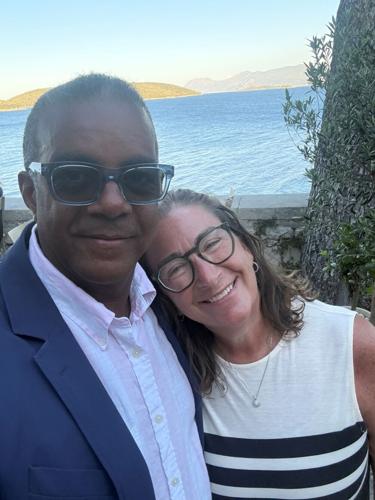
For Brian Jones, it was just a whisper.
One morning in October 2024, Jones was swimming in the ocean at Wrightsville Beach, a frequent pastime near his home in Wilmington. Suddenly, the vision in his left eye disappeared. No pain, no dizziness. Just blindness in one eye.
By the time he made it back to shore, his vision had returned. The episode lasted only minutes, and it would have been easy to dismiss it as a fluke. Instead, Jones paid attention. That decision changed his life.
Trusting his instincts, Jones went to see his trusted primary care doctor, Dr. Umar Bowers, who referred him to an eye doctor and a vascular surgeon. The vascular surgeon sent Jones to the emergency room at Novant Health New Hanover Regional Medical Center. Doctors there used imaging to discover that one of the major arteries supplying blood to his brain was severely blocked. The blockage had caused an ischemic stroke, the clot-based type that accounts for 87% of all strokes. Evidence suggested he had already experienced stroke-related events before the vision loss prompted him to seek care.
People are also reading…
What followed was more than treatment for a stroke. For Jones and his healthcare team, it became a months-long effort to understand why it happened. And even more importantly, what they could do to prevent another one — one in four clot-related stroke survivors will experience at least one more.
Today, Jones, 63, says the experience transformed his perspective on health, aging and the importance of asking questions.
“I'm reminded by this whole experience that the healthy person has 1,000 problems; the person with ill health has one problem. And that really makes you see the world differently,” he said.
A surprising diagnosis
After a CT scan in the ER revealed Jones’ left carotid artery was occluded (the medical term for blocked or closed off), he was admitted to New Hanover Regional Medical Center as a stroke patient.
In a vessel with a blockage between 70% and 99%, neurosurgeons would typically implant a stent — a tiny metal mesh tube that acts like a scaffold to hold a blood vessel open. But they found that Jones’ carotid artery was 100% blocked. This meant a stent could not be placed safely.
For several days, Jones focused on understanding what had happened and what came next. The diagnosis came as a shock; Jones exercised often, saw his primary care doctor regularly and believed he was doing the right things to protect his health.
“I’d always been told my numbers looked good,” he said of his routine bloodwork.
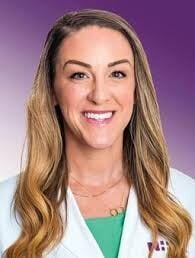
It was Carolina McCalmon, a neurology physician assistant at New Hanover Regional Medical Center’s Deloris P. Jordan Neurosciences Institute, who helped him piece together the full puzzle.
Looking beyond the immediate problem
As McCalmon reviewed Jones’ health history and test results, she saw clues that suggested a larger problem. Individually, none of his risk factors appeared alarming. But together, they told a different story.
Jones had evidence of plaque buildup in his arteries. He was prediabetic. His cholesterol levels fluctuated. McCalmon ran additional testing and eventually revealed elevated lipoprotein(a), or Lp(a), a largely inherited form of cholesterol linked to a higher risk of cardiovascular disease and stroke.
“Without that level, you don’t see the full risk,” McCalmon explained.
Because surgery was not an option for Jones’ blocked artery, reducing his future risk would depend on medication, lifestyle changes and aggressive management of the factors contributing to vascular disease. McCalmon began working with Jones to address each one.
“We have more tools available than ever before,” she said.
A prevention partnership
Jones approached the process the same way he approaches problems in his professional life. A former musician who now works with artificial intelligence and educational technology, he describes himself as someone who likes to understand how things work. He asked questions, researched and looked for answers, empowered by McCalmon’s determination.
McCalmon welcomed that curiosity.
Together, they worked through additional testing, medication adjustments and strategies to reduce his overall risk of future stroke and related complications.
Jones’ care plan eventually included more intensive cholesterol management, treatment for metabolic risk factors and ongoing monitoring of his vascular health.
His personal experience also reinforced something McCalmon had been thinking about for years: stroke prevention should extend beyond treating the immediate event. The goal isn’t just recovering from a stroke; the goal is preventing the next one.
“Antithrombotics (medications that help prevent clots from forming) are only one part of secondary stroke prevention,” she said. “There are other risk factors we can address.”
Jones credits McCalmon, his physicians, nurses and staff for helping him navigate an overwhelming experience with confidence and reassurance.
“I've had the best care. Every single person, top to bottom, every person in this hospital was kind and concerned. All the doctors, all the PAs, all the nurses,” he said. “Everybody has been great to me."
A new outlook
Like many survivors, Jones said his stroke left him with a new appreciation for how quickly life can change.
“I'm very grateful every time I wake up and both my eyes are on,” he said. “Every day is a good day.”
The experience motivated him to become more involved in his community. Today he serves on the board of directors for both the Cape Fear Museum of History and Science and Wilmington’s local NPR station, WHQR 91.3 FM. He’s back to regularly swimming at Wrightsville Beach and enjoying the natural beauty of the coastal region.
Jones’ experience has also encouraged family members to learn more about their own health risks. Because Lp(a) levels are genetically determined, relatives are pursuing testing as well.
Don’t ignore the whisper
Jones hopes others learn from his story. One reason strokes can be dangerous is that they don’t always look the way people envision; they can occur quietly. Vision changes, numbness, weakness or speech difficulties may come and go. They may cause no pain at all — in fact, McCalmon said they typically don’t. This is known as a negative symptom.
“If you think something’s happening to you, don’t panic, but also don’t procrastinate,” Jones said. “Do something.”
While advances in stroke treatment have saved countless lives, McCalmon believes the future of medicine lies increasingly in prevention: identifying risks earlier, personalizing care and helping patients stay healthy before a crisis occurs.
“The goal is to meet people before they have a stroke,” she said.
Jones agrees.
Looking back, he realizes how easily he could have ignored what happened in the water that morning. Instead, he listened. What seemed like a whisper turned out to be an alarm, and an opportunity to change the course of his health and his future.
"I've never felt better. I've never been happier. I've never felt more well. I've never felt more cared for,” Jones said.
Brain health and dementia prevention care at Novant Health New Hanover Regional Medical Center
Introducing Novant Health Preventive Neurology
Memory loss and dementia often start developing long before symptoms appear. Fortunately, there are proven ways to support brain health and reduce your risk. The care team at Novant Health New Hanover Regional Medical Center’s Deloris P. Jordan Neurosciences Institute can help you take action today to protect your cognitive health for years to come.
Consider a consultation if you:
- Have a family history of Alzheimer's disease or dementia
- Are concerned about memory changes or brain fog
- Have risk factors such as high blood pressure, high cholesterol, obesity, prediabetes or diabetes
- Are in midlife, including perimenopause or menopause
- Have had a stroke or transient ischemic attack (TIA)
- Want to know what you can do now to protect your brain for the future
Your personalized brain health plan may include:
- Cognitive and dementia risk assessment
- Screening and management of brain health risk factors
- Nutrition guidance, including the Mediterranean and MIND diets
- Exercise recommendations for brain health
- Sleep and lifestyle optimization
- Optional genetic risk testing
Take the first step with Novant Health Preventive Neurology
Don't wait for symptoms to appear. Early action can make a difference.
Call Novant Health New Hanover Regional Medical Center at 910-662-7500, press option 2, and ask about brain health and dementia prevention services with Novant Health Preventive Neurology.


