


How art communicates experiences
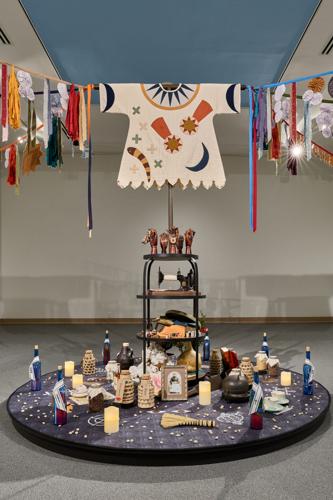
Greensboro, NC: Body and Soul, Humanist Visual Languages explores the ways art can communicate experiences—both tangible and intangible. Through their choice of subject matter, technique, and style, artists create visual languages that describe the world around us while also reaching inward, offering insight into our emotional and psychological states. In doing so, they open spaces for reflection, empathy, and dialogue, allowing individuals to see their own experiences in relation to those of others. Within academia, the visual arts are part of the humanities, whose areas of study explore the cultural, social, and personal dimensions of human life. The artworks in Body and Soul reflect these humanist concerns, addressing themes such as identity, memory, care, vulnerability, and the environments we inhabit. By situating works of art within that broader context, this exhibition highlights how artists grapple with fundamental questions about what it means to be human and how we come to understand ourselves and one another. Body and Soul is on view at the Weatherspoon Art Museum from August 15, 2026, through February 13, 2027.
People are also reading…
“Body and Soul complements the start of UNCG’s academic year and anticipates the opening of our Cole Levin Center for Art and Human Understanding,” says exhibition curator Elaine D. Gustafson. “The exhibition aims to provide campus and community members with various entry points for growth and understanding. The formal characteristics and humanist themes displayed in these artworks allows for both deep reflection and meaningful conversations.”
Body and Soul invites visitors to approach each artwork through two complementary modes of interpretation. The first, Body, focuses on careful observation of a work’s physical qualities—its materials, forms, and visual elements. The second, Soul, encourages reflection on the ideas, emotions, and lived experiences that the work may evoke. Together, these approaches demonstrate how close looking at works of art can enable both deeper insight and meaningful conversation. They also underscore the role of museums as places where observation, dialogue, and shared inquiry can foster curiosity, creativity, and an enhanced awareness of the human condition.
This exhibition was developed to complement the forthcoming opening of the Cole Levin Center for Art and Human Understanding at the Weatherspoon Art Museum, a campus and community facility likewise dedicated to the humanist possibilities inherent in the works and practices of the visual arts.
Programming highlights include a gallery talk on Friday, September 25, 12–1pm, with Body and Soul curator Elaine D. Gustafson, curator of collections at the Weatherspoon, and Derek Skillings, associate professor, Department of Philosophy, Department of Biology, and adjunct associate professor, Department of Geography, Environment, and Sustainability, at UNCG; two “poetry in the gallery” events on Thursday, September 17, and Thursday, October 15, both 6–7:30pm, featuring poetry inspired by works on view in Body and Soul, and a guided visit in Spanish to the exhibition on Saturday, September 20, at 11am, offered by the museum in collaboration with Casa Azul of Greensboro. See the museum’s website for more information.
Organized by Elaine D. Gustafson, curator of collections and head of facilities at the Weatherspoon Art Museum.
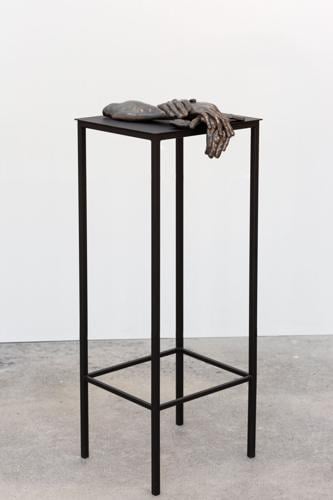
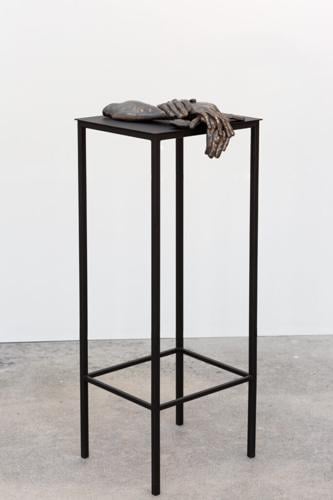
Image: Leslie Fry, Release, from the series Holding On, 2025. Ceramic with glaze on painted steel base, 43 x 21 x 14 in. Weatherspoon Art Museum. Gift of the artist; 2026.4ab © Leslie Fry, photograph by Lindsay Raymondjack, courtesy of the artist.
About the Weatherspoon Art Museum
Mission
Embracing its public service role, the Weatherspoon Art Museum at UNC Greensboro fosters the ability of art to impact lives and connect multiple communities.
History
The Weatherspoon Art Museum at UNC Greensboro was founded by Gregory Ivy in 1941 and is the earliest of any art facilities within the UNC system. The museum was founded as a resource for the campus, community, and region, and its early leadership developed an emphasis—maintained to this day—on presenting and acquiring modern and contemporary works of art. A 1950 bequest from the renowned collection of Claribel and Etta Cone, including prints and bronzes by Henri Matisse and other works on paper by American and European modernists, helped establish the Weatherspoon’s permanent collection. During Ivy’s tenure, other prescient acquisitions included a 1951 suspended mobile by Alexander Calder, Willem de Kooning’s pivotal 1949-50 Woman, and the first drawings by Eva Hesse and Robert Smithson to enter a museum collection.
In 1989, the museum moved into its present location in the Anne and Benjamin Cone Building designed by the architectural firm Mitchell Giurgola. The museum has six galleries and a sculpture courtyard with over 17,000 square feet of exhibition space. The American Alliance of Museums first accredited the Weatherspoon in 1995 and renewed its accreditation most recently in 2025.
Collections and exhibitions
The collection of the Weatherspoon Art Museum is one of the foremost of its kind in the Southeast. It represents all major art movements from the beginning of the 20th century to the present. Among the nearly 7,000 works in the collection are pieces by such prominent figures as Henry Ossawa Tanner, Edward Weston, Joseph Stella, David Smith, Jackson Pollock, Elizabeth Catlett, Louise Nevelson, Gordon Parks, Sol LeWitt, Robert Mangold, Cindy Sherman, Adrian Piper, Betye Saar, Amy Sillman, Nick Cave, Jennifer Steinkamp, and Sanford Biggers. The museum regularly lends to major exhibitions nationally and internationally.
The Weatherspoon is also known for its dynamic exhibition program. Through a lively annual calendar of exhibitions and a multidisciplinary educational program for audiences of all ages, the museum provides an opportunity for visitors to consider artistic, cultural, and social issues of our time—enriching the life of our university, community, and region.
About UNC Greensboro
UNC Greensboro is a learner-centered public research university with nearly 13,000 students in eight colleges and schools pursuing more than 150 areas of undergraduate and 200 areas of graduate study. Recognized nationally for helping first-generation and lower-income students find paths to prosperity, UNCG is ranked No. 1 most affordable institution in North Carolina for net cost by the New York Times and No. 1 in North Carolina for social mobility by the Wall Street Journal. Designated an Innovation and Economic Prosperity University by the Association of Public and Land-grant Universities, UNCG is a community-engaged research institution with a portfolio of more than $67M in research and creative activity. The University creates an annual economic impact for the Piedmont Triad region in excess of $1B. Please visit uncg.edu and follow us on FacebookX, Instagram, Bluesky and LinkedIn.


