In Indianapolis, home to major automotive manufacturers like Duesenburg and Stutz over the years, the fascination with cars dates back to the demise of streetcars after World War II.
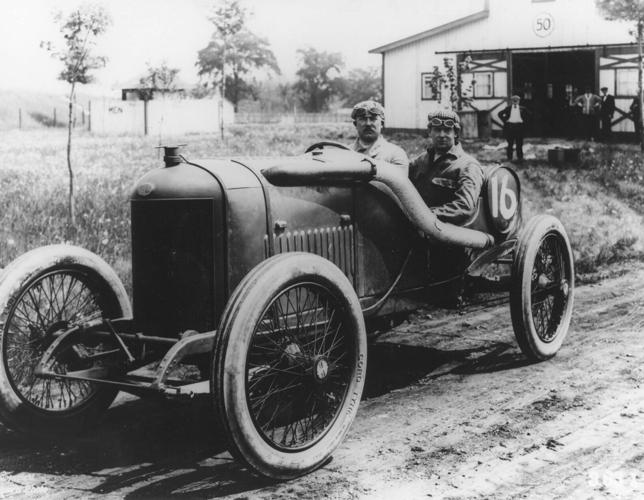
Rene Thomas, behind steering wheel, and Robert Laly, riding mechanic, in the #16 Delage car. The unidentified man in background is believed to be the team manager. Thomas won the May 30, 1914, Indianpolis 500 Mile race with an average speed of 82.474 mph.
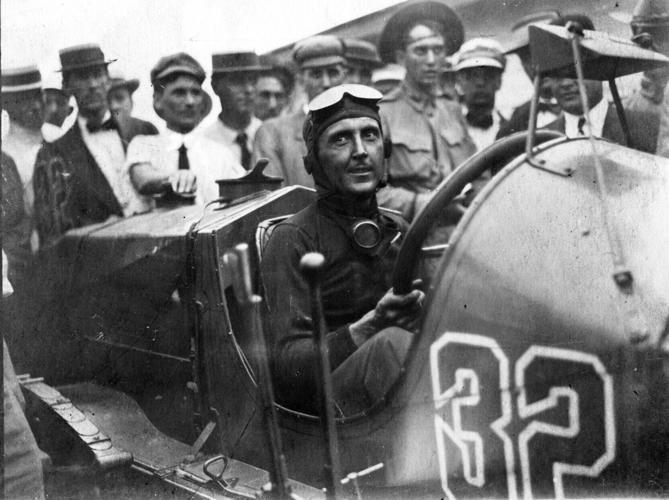
Ray Harroun sits in his Marmon Wasp after winning the first Indianapolis 500 in 1911. He averaged 74.602 mph in completing the first 500 in 6 hours, 42 minutes and 8 seconds. The Wasp's safety innovations, including the first known rearview mirror, allowed Harroun the car to be a singe seater without a mechanic reducing wait and aerodynamics.
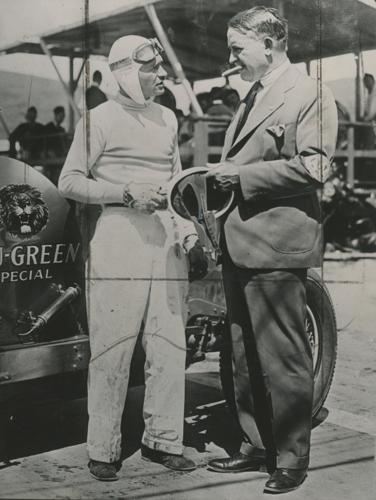
Three time Indy 500 winner Wilber Shaw, left, holds an early racing helmet while chatting with Barney Oldfield, the "Speed King,” at the Legion Ascot Speedway in California. Shaw used his experience working at Firestone to help develop synthetic rubber tires, The “channel tread" tire and self sealing inner tires to prevent blowouts. Oldfield is credited with wearing a safety harness long before it was standard and was the first to do a 100 mph lap at the Indianapolis Motor Speedway.
Rene Thomas, behind steering wheel, and Robert Laly, riding mechanic, in the #16 Delage car. The unidentified man in background is believed to be the team manager. Thomas won the May 30, 1914, Indianpolis 500 Mile race with an average speed of 82.474 mph.
Three time Indy 500 winner Wilber Shaw, left, holds an early racing helmet while chatting with Barney Oldfield, the "Speed King,” at the Legion Ascot Speedway in California. Shaw used his experience working at Firestone to help develop synthetic rubber tires, The “channel tread" tire and self sealing inner tires to prevent blowouts. Oldfield is credited with wearing a safety harness long before it was standard and was the first to do a 100 mph lap at the Indianapolis Motor Speedway.
Ray Harroun sits in his Marmon Wasp after winning the first Indianapolis 500 in 1911. He averaged 74.602 mph in completing the first 500 in 6 hours, 42 minutes and 8 seconds. The Wasp's safety innovations, including the first known rearview mirror, allowed Harroun the car to be a singe seater without a mechanic reducing wait and aerodynamics.